
Los lazos que nos unen: Las familias de Lincoln Park
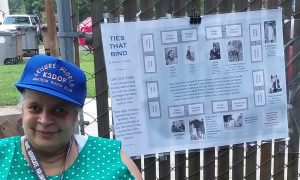
Contenido recopilado por Sharyn Duffin (en la foto de arriba, tomada en 2019 durante el «Lincoln Park Day»), con la colaboración de numerosos descendientes de Lincoln Park. [Foto de Dale Pastor]
Lincoln Park no es un asentamiento tradicional basado en los lazos familiares, pero, con el paso de los años, los matrimonios entre familias lo han convertido en uno.
Estas ocho parejas, que representan a siete familias, son un ejemplo perfecto de cómo las raíces de la comunidad se han entrelazado de forma indisoluble.
Frank Davis estaba casado con Annie Jackson.
La hermana de Annie, Ethel, se casó con Kenneth Shelton, y la hermana de Kenneth, Annie, se casó con Harold Lee Waters.
Anderson, el hermano de Harold, se casó con Vicella Howard.
El hermano de Vicella, Colston Howard, se casó con Estelle Prather.
Henry Prather, hermano de Estelle, se casó con Rhoda Duffin.
Roland, el hermano de Rhoda, se casó con Helen Howard.
La hermana de Helen Howard, Lucille Howard, se casó con James Davis, y Jim Davis es hermano de Frank Davis.
Esta cita, extraída de una carta de la madre de Wilma Bell, resume el sentimiento de unidad y fortaleza que se respira en Lincoln Park:
«… Espero vivir plenamente el presente y recordar el pasado con alegría… Sigo siendo una mezcla entre una niña eterna y una mujer fuerte y realista, una combinación cautivadora y tan pura como el acero sin alear».
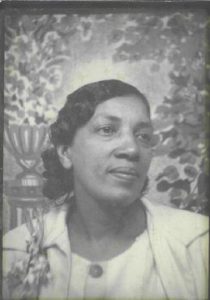
Arriba, en primer plano: Helen Howard Duffin
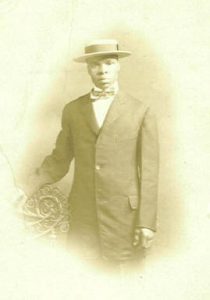
Arriba, abajo: Roland Duffin
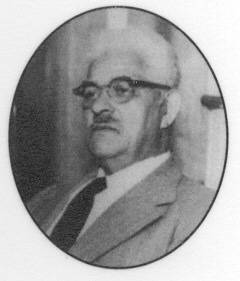

La familia Davis
Escrito por Ardell Hilliard
En 1922, el reverendo James W. Davis (en la foto de arriba, a la izquierda) se trasladó a Rockville con su familia desde Washington, D.C. El reverendo Davis era un hombre piadoso con una familia numerosa, a semejanza de Abraham, el personaje bíblico. Su descendencia se multiplicó en Lincoln Park y más allá. De sus ocho hijos, dos se convirtieron en pastores de iglesias en el condado de Montgomery. El reverendo Phillip Davis, de la Iglesia Interdenominacional de Dios, declaró recientemente en una entrevista que su profesión se consideraba la de «pescadores de hombres». Uno de ellos fue pastor en Mt. Calvary, tal y como había hecho su padre antes que él. La mayoría de los demás hijos ocuparon diversos puestos clave en la iglesia, como Henry Davis (en la foto de arriba, a la derecha). El señor James N. Davis, uno de los hijos del patriarca, construyó la iglesia de Mt. Calvary tal y como se conserva hoy en día. Tardó siete años en terminarla. El legado del reverendo James W. Davis continúa hoy en día con su nieto, el reverendo Rodney T. Davis, pastor de la Iglesia Bautista de Dios «Crusader». Él y su congregación han adquirido el recinto histórico del instituto Lincoln High School, situado en la comunidad de Lincoln Park. Al igual que sus antepasados, el reverendo Rodney Davis procede de una larga estirpe de personas que han servido a Dios, a la familia y a la comunidad de Lincoln Park.
Haz clic en las imágenes que aparecen a continuación para verlas una a una con sus pies de foto.
La familia Hicks
Louis Wood Hicks nació el 30 de septiembre de 1883, hijo de Joseph y Clarissa Hicks. Vivía en el número 308 de Lincoln Avenue, en Lincoln Park. Trabajó como albañil en la Casa Blanca de Washington hasta 1943. En la fotografía de la izquierda, tomada durante el primer mandato del presidente Franklin Roosevelt, aparece el Sr. Hicks junto a un mástil de la bandera de la Casa Blanca, cuyos soportes él mismo instaló. Prefería vestir de forma elegante, por lo que se le conocía como «El Profesor». El Sr. Hicks falleció el 13 de octubre de 1974.
Louise V. Hicks Tourney (7 de julio de 1887-13 de abril de 1965) se graduó en el Storer College de Virginia Occidental en 1906 y dio clases en una escuela de una sola aula en Rockville.
Horace B. Hicks (11 de septiembre de 1890 – 7 de febrero de 1976) era un masón del grado 33 que vivía en la avenida Douglas.
Clementine (Sedgewick) Smith (30 de marzo de 1901 – 21 de julio de 1986) vivía en el número 600 de la avenida Douglas. Daba clase en la escuela de una sola aula de Scotland, una comunidad afroamericana situada a tres millas al sur de Rockville.
Clinton Hicks (1906 – ) atendió a sus clientes en su peluquería de Lincoln Avenue durante dos décadas. Para saber más sobre él, consulta el artículo del Montgomery Journal del 19 de marzo de 1982 titulado «Old Drummer Clips Along in Rockville».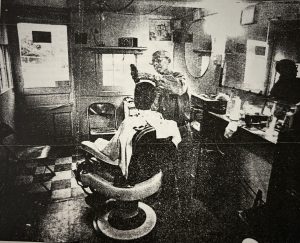
La familia Hill
de Rockville: Retrato de una ciudad, de Eileen S. McGuckian, 2001:
Reuben Hill Sr. (1829-1915) y Reuben Hill Jr. (1859-1936) eran jornaleros agrícolas y carpinteros que vivían en la zona que hoy se conoce como Lincoln Park. Cuando Reuben Sr. se comprometió en 1867 a apoyar una escuela para alumnos negros, es probable que cumpliera esa promesa aportando su mano de obra cualificada. Reuben Sr., que había sido esclavo hasta mediados de los treinta, compró un terreno en 1880 y se asoció con Simeon Berry, un antiguo soldado confederado y constructor de vallas, para construir una casa al noreste de Rockville. Ese mismo año, Berry legó a Hill sus herramientas, sus muebles y la casa. Reuben Sr. ayudó a construir una vivienda de ladrillo en la nueva urbanización de Lincoln Park en 1897. Cuando falleció en 1915, el Sentinel señaló que el «tío Reuben» saludaba a sus amigos con una reverencia cortés a la antigua usanza y se había «ganado el respeto y la confianza de ambas razas en esta comunidad». Reuben Thomas Hill, o Reuben Jr., heredó las herramientas y el talento de su padre. Amplió la vivienda familiar, construyó muebles para el hogar y casitas para los niños, y ayudó a levantar otras viviendas en Lincoln Park. La casa de Reuben Hill en Lincoln Avenue sigue siendo propiedad de la familia.
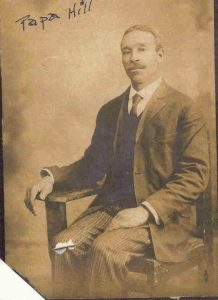
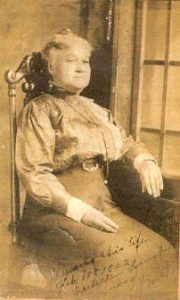
Reuben Hill, Jr. y su esposa Carrie Blair Hill [?-1922] (en la foto de arriba) vivían en el número 305 de Lincoln Avenue. Tuvieron tres hijos: Edith Hill Manly, Lloyd Carlisle Hill y Leola Hill Williams.
(Fuente de las fotografías de la familia Hill: Norma Hill Duffin y Barbara Hill Talley)
Henry T. Manly, 1879-1948
Su hija Edith se casó con Henry T. Manly [1879-1948] en junio de 1908. Manly había nacido en Wilmington, Carolina del Norte, en 1879. Se desconoce la fecha exacta de su llegada a la zona de Washington, D.C. Sin embargo, probablemente fue en 1898 o poco después. Ese año, los hermanos mayores de Henry, Alex y Frank Manly, que eran editores de periódicos, se habían visto obligados a huir de Wilmington en medio de unos graves disturbios raciales que se atribuyeron a sus «editoriales incendiarias».
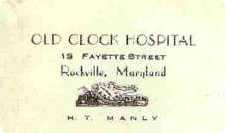 Henry Manly era relojero y propietario del «Old Clock Hospital», situado en el número 13 de la calle Fayette. La tienda abrió sus puertas ya en la década de 1920 y permaneció en funcionamiento hasta su fallecimiento, en enero de 1948.
Aunque Henry y Edith Manly no tuvieron hijos, el señor Manly era miembro activo y directivo de la Confederación de Asociaciones de Ciudadanos del condado de Montgomery, que abogaba por la mejora de las condiciones en las escuelas para personas negras. Su objetivo era conseguir un curso escolar más largo, salarios más altos para el profesorado, transporte, así como mejores instalaciones y materiales didácticos.
Bessie Johnson Hill, hacia 1895.
Vernon, el hijo menor de Reuben y Rachel (Martin) Hill, se casó con Bessie Johnson. Bessie construyó una casa en el número 602 de Falls Road, en Rockville, en 1902. Adquirió el terreno de sus padres, William Johnson y Eliza Davis Johnson, que vivían en la casa de al lado. La casa permaneció en manos de la familia Hill hasta su venta en 1945.
Los tres hijos de Bessie (que aparecen en la foto de abajo) eran Lillian Hill, Vernon E. «Sumner» Hill, Jr., y Eustace Jerome «Fuzz» Hill. Su hermana, Lillian Johnson Finley, también tenía un hijo, Laurence D. Finley.
Maggie Wood Shelton y Henry Shelton, Sr., con su hijo Kenneth, hacia 1910
La familia Shelton
Escrito por Wilma Bell; fotografías cedidas por Wilma Bell
Maggie Wood (1873-1969) y Henry Shelton, Sr. (1878-1947) eran ambos de Keswick, un pueblo cercano a Charlottesville, Virginia. Se casaron el 2 de noviembre de 1898 en Rockville, Maryland.
En 1919, Henry y Maggie construyeron una preciosa casa de dos plantas en el número 606 de N. Horners Lane, en Lincoln Park, con porches tanto en la planta baja como en la superior, para criar a su familia, que no dejaba de crecer. Maggie y Henry tuvieron cuatro hijos: Kenneth, Henry, Jr., Annie (Waters) y Marilyn (Claggett).
Kenneth se casó con Ethel Jackson. Tuvieron seis hijos: Kenneth Jr., Melvin, Edison, Sylvia, Ethel y Daniel.
Annie se casó con Harry Lee Waters.
Henry, Jr. se casó con Lucinda Kearney. Tuvieron tres hijos: Clyde, Wilma (Bell) y Fran (Hawkins).
Marilyn se casó con Robert Claggett. Tuvieron dos hijos: Robert, Jr. y JoAnne (Flennoy).
Maggie y Henry Shelton, padre, hacia 1940
Henry trabajó como techador para Ed Viett durante casi 50 años, hasta su fallecimiento en 1947. Sus compañeros lo describían como un hombre reflexivo, inteligente y comprometido con la comunidad, con una visión adelantada a su tiempo. Apreciaba profundamente a su familia y a sus amigos. Se unió a otras personas para fundar una asociación cívica. Estos reconocieron la necesidad de contar con colegios y servicios de bomberos en la ciudad. Los Shelton también se encontraban entre quienes estaban dispuestos a utilizar sus viviendas como garantía para construir colegios que atendieran a la población negra de todo el condado. Henry también ejerció como capitán del primer cuerpo de bomberos de la ciudad, una organización poco estructurada, y tocaba la trompa en una banda local. Nota: Uno de sus bisnietos, Timothy Bell, se incorporó al Cuerpo de Bomberos Voluntarios de Rockville en 1985 y formó parte de la unidad de Materiales Peligrosos del condado de Montgomery.
Henry Shelton, Sr., con sus nietos, Clyde y Sylvia, que eran primos hermanos, hacia 1939.
A Maggie le encantaba estar en casa con su familia. Mujer profundamente espiritual, Maggie se unió a otras personas para contratar a un pastor para la iglesia de al lado, la Mt. Calvary Baptist. Le encantaba cocinar y recibir invitados, y se convirtió en la matriarca de una familia numerosa y cariñosa hasta su fallecimiento en 1969, a los 96 años. Su elegancia y encanto hacían que el porche de su casa se convirtiera a menudo en el lugar donde familiares y amigos se reunían para hablar de todo, desde el tiempo hasta la política. Su mesa del comedor siempre estaba magníficamente puesta para recibir a cualquier visitante. Su té helado, su pan casero y su arroz con leche se convirtieron en los platos favoritos de la familia.
La familia de Henry Shelton, Jr. y Lucinda Kearney Shelton
Anderson Waters y Vicella Howard Waters
La familia de Annie Shelton Waters y Harold Lee Waters
Fotografías cedidas por Anderson Waters
La familia Waters celebraba reuniones anuales en Purcellville, Virginia. La familia Lewis, descendiente de la familia Waters, sigue viviendo en Lincoln Park, en la casa adosada situada en el número 302 de Lincoln Avenue.
Haz clic en una de las fotos de abajo para verlas una a una con sus pies de foto.
La familia Howard
Las madres de Maggie y Henry, Polly Wood y Margaret Shelton, también se marcharon de Keswick, junto con varios de sus hermanos.
Henry tenía dos hermanas, Alice (Pinkett) y Amanda. También tenía un hermano, Wilbur.
Las hermanas de Maggie eran Carrie (Pagan), Annie (Offutt), Josephine (Breckenridge), Hattie (Lewis), Marion y Mary (Howard). Sus hermanos eran William y James Wood.
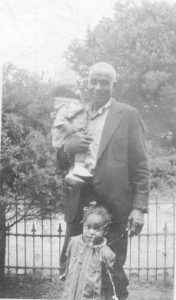
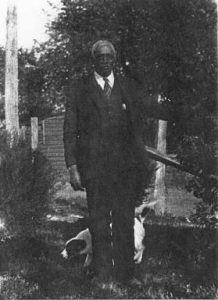
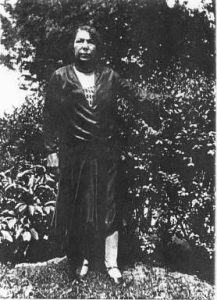
Las fotografías que se muestran a continuación, que datan de la década de 1920, son de Fred y Mary Howard. Los Howard eran los padres de Lucille (Howard) Davis, Vicella (Howard) Waters, Helen (Howard) Duffin, y de Colston, James, John y Nanny Howard. La familia vivía en el número 604 de North Horner’s Lane. El señor Howard era el jefe de pintores en Chestnut Lodge, el conocido hospital psiquiátrico de Rockville.


Raymond Smith ordeñando a Rosie, Lincoln Park, fecha desconocida
La familia Smith
Recopilado por Beverly Hawkins Canaday, adaptado de su obra *Our Story: As Remembered by the Descendants of Mabel and Raymond Smith* (2020), con la colaboración de Autumn Canaday y Sondra Stevenson. Actualizaciones a cargo de Jacqueline DuPuy. Fotografías procedentes de las colecciones de los Canaday y los Stevenson.
Entre las familias de Avery Road destacaba la de Benjamin Smith, abuelo de Raymond Smith y de Lillian (Bea) Smith Brown. Su presencia en Lincoln Park se remonta a mediados de la década de 1930, cuando Raymond Smith se mudó a Lincoln Avenue con su esposa, Irene Boardley Snowden Smith. Para ambos se trataba de un segundo matrimonio, y se esforzaron por construir no solo una unión sólida, sino también una base económica firme. Trabajando en equipo, Raymond e Irene crearon un pequeño imperio inmobiliario basado en numerosas propiedades en Lincoln Park. La mayoría de las propiedades eran viviendas situadas en Lincoln Avenue. Sus posesiones también incluían propiedades en North Horner’s Lane y en Frederick Avenue. Raymond alquilaba las viviendas de Lincoln Avenue y, con el tiempo, vendió varias parcelas sin urbanizar para que otros construyeran viviendas en ellas.
Raymond Smith trabajando en el jardín, Lincoln Park, fecha desconocida
La hija de Raymond, Mabel, se instaló en Lincoln Park tras casarse con Raymond Hawkins en 1941. Sus hijos y nietos siguieron viviendo y siendo propietarios de terrenos en Lincoln Park hasta bien entrado el siglo XXI.
Durante la década de 1970, la presencia de la familia Smith en Lincoln Park se consolidó cuando Lillian (Bea) Smith Brown construyó una casa en Lincoln Avenue y se convirtió en una residente activa de la comunidad. Bea era una reconocida educadora que prestó sus servicios al condado de Montgomery durante 36 años como profesora en las Escuelas Públicas del Condado de Montgomery. Cuando se jubiló, comenzó a participar activamente en numerosas organizaciones comunitarias, entre ellas la Iglesia Clinton AME Zion. En 1978, escribió junto con su amiga íntima y compañera de profesión, Nina Clarke, la obra «Historia de las escuelas públicas negras del condado de Montgomery, Maryland, 1872-1961». Por este logro, Bea fue homenajeada en 1980 en la sede del Parlamento estatal de Maryland. La Universidad de Bowie le concedió el «Premio Legado a la Excelencia» y la Junta de Educación del condado de Montgomery le otorgó el «Premio Pionero al Servicio Distinguido a la Educación Pública» en 2001. Poco después de recibir este premio, el comité de nominaciones para una nueva escuela primaria en Germantown recomendó, sin éxito, que la nueva escuela recibiera su nombre en su honor. Una segunda recomendación en 2018 tampoco prosperó.
Lillian (Bea) Smith Brown, educadora y escritora, hacia 1978
La familia Prather
Información facilitada por Sharyn Duffin; fotos cedidas por Sharyn Duffin, Karlton Jackson, Warren G. Crutchfield y Peerless Rockville
Evelyn Martin se casó con William Henry Prather, Sr. en agosto de 1889. El 17 de marzo de 1896, Evelyn y William Henry Prather compraron a William W. Welsh la parcela situada en el número 315 de Lincoln Avenue, en su nueva urbanización de Lincoln Park. Los familiares de Evelyn, Ella y Wallace Martin, también poseían una propiedad en la misma calle y, en 1902, la madre de William Henry, Hester Butler, compró una parcela adyacente a la de él. La casa de los Prather fue construida por Adam Powell, y la mayoría de sus hijos nacieron en el número 315 de Lincoln. La casa se reformó en la década de 1950, y la hija menor de los Prather, Elsie Prather Jackson, vivió allí hasta su fallecimiento. Los Prather patrocinaron una vidriera en la Iglesia Metodista Episcopal de Jerusalén y fueron miembros fundadores del Eureka Tabernacle Número 29 de la orden de los Pescadores de Galilea.
George y Gertrude Prather, junto con Len y Bessie O. Meads, disfrutan de un picnic juntos el 30 de mayo, el día tradicional del «reencuentro» para las comunidades negras del condado de Montgomery. Fotografía de la década de 1920
Sus hijos eran:
Mamie (nacida el 17 de marzo de 1891)
William Henry, Jr. (11 de septiembre de 1893 – 14 de febrero de 1967), conocido como «Henry», estaba casado con Rhoda Duffin. Tuvieron una hija, Frances.
George (n. 1895) se casó con Gertrude y tuvo un hijo, Claude (15/6/1915 – febrero de 1986). Claude Prather era propietario y dirigía la Rockville Ice Company, situada en el número 736 de Montgomery Avenue.
Charles (nacido el 15 de septiembre de 1896) prestó servicio en el ejército durante la Primera Guerra Mundial como soldado de primera clase en la 154.ª Brigada de Apoyo y, posteriormente, en la 593.ª Compañía de Transporte Motorizado, hasta su baja con honores en mayo de 1919.
Estelle (7 de febrero de 1897 – hacia 1923)
Henson (marzo de 1900 – 10 de junio de 1964)
Arthur (fallecido el 13 de noviembre de 1964)
Spencer (27 de julio de 1904 – 21 de noviembre de 1966)
Elsie (nacida el 20 de febrero de 1911)
Alice y Willis Isreal, padres de Frank, en Georgia, fecha desconocida.
Las familias Isreal y Summerour
Texto de Rockville: Retrato de una ciudad por Eileen S. McGuckian (2001), con nuestro agradecimiento al alcalde y al Ayuntamiento de Rockville.
McGuckian cita una entrevista con Violet Isreal y Willie Mae Carey, realizada en 1983, que forma parte de las Colecciones Peerless Rockville.
Fotografías cedidas por Sandra Summerour-Jackson
La familia Isreal emigró a Rockville desde Georgia en 1923, en busca de una vida mejor. Frank Isreal trabajó inicialmente como conserje y manitas en Chestnut Lodge, mientras que Violet Isreal se encargaba de las tareas domésticas en Rose Hill Farm, en Falls Road. El apellido de soltera de Violet Isreal era Dobbs. Estaba emparentada con John Wesley Dobbs (1882-1961), una figura destacada de la comunidad afroamericana de Atlanta, y con Mattiwilda Dobbs (nacida en 1925), la primera mujer negra en interpretar un papel protagonista en el mundialmente famoso Teatro de la Ópera La Scala de Milán, Italia.
La familia compró una parcela a Harrison England por $250 y construyó una casa en Lincoln Park, donde criaban pollos, cerdos y cultivaban hortalizas. Sus doce hijos asistían a colegios segregados en Rockville y Washington. Los nombres de los hijos son Louise, Willie Mae (Isreal) Carey, Dewey, Goldie, Clarence, Frank, Elbert, Beatrice (Isreal) Smith, Irene (Isreal) Hayes, Violet (Isreal) Rabey, James y Freddie.
La familia Summerour está emparentada por matrimonio con los Isreal. Ida Isreal se casó con Sherman Summerour.
LORENZO DOW TURNER: De Lincoln Park a destacado académico
Extraído de una exposición de las Bibliotecas Públicas del Condado de Montgomery basada en la muestra elaborada por el Museo Anacostia de la Institución Smithsonian, «Palabra, grito, canción: Lorenzo Dow Turner, uniendo comunidades a través del lenguaje», escrita por Alcione Amos
Lorenzo Dow Turner contribuyó a forjar la identidad afroamericana a principios y mediados del siglo XX como profesor de inglés y a través de su investigación pionera sobre la lengua gullah en las Islas del Mar de Carolina del Sur y Georgia. Comenzó su distinguida carrera académica en su alma máter, la Universidad Howard de Washington, D.C. Obtuvo su máster en inglés en 1917 en la Universidad de Harvard y su doctorado en inglés en 1926 en la Universidad de Chicago. Turner fue el primer profesor afroamericano nombrado para impartir clases en una universidad para blancos y se convirtió en el primer miembro afroamericano de la Sociedad Lingüística de América. Turner desempeñó un papel fundamental en el desarrollo del campo de los Estudios Afroamericanos.
Antes de que el Dr. Turner llevara a cabo su trabajo de campo en lingüística en la década de 1930, los expertos no se habían dado cuenta de que la lengua gullah, hablada por los afroamericanos residentes en la costa este, no era un «mal inglés». El gullah era, en realidad, una lengua criolla influenciada por más de treinta lenguas africanas que habían sido traídas a la zona por sus antepasados esclavizados.
Pero mucho antes de que el Dr. Turner llevara a cabo su trabajo pionero en lingüística y sentara las bases de un campo de estudio completamente nuevo en torno a las lenguas criollas, era un alumno de primaria en las escuelas segregadas del condado de Montgomery, donde su padre, Rooks Turner, había desarrollado una larga carrera como profesor y director de colegio.
El joven Lorenzo Dow Turner perfeccionó sus habilidades en el béisbol en los campos locales, habilidades que pronto utilizaría como forma de ocio mientras formaba parte de los equipos ganadores de la Universidad de Howard en 1912 y 1913 y, más tarde, para financiar sus estudios como jugador en las populares ligas amateurs negras. Fue aquí, en Rockville, donde el Dr. Turner pudo dedicarse de lleno a su educación formativa, en una comunidad que consideraba la educación como el principal medio para superar las limitaciones derivadas de la esclavitud. Lincoln Park sería el preludio de una vida llena de logros intelectuales y éxitos.
Turner asistió al colegio situado en el número 246 de la calle N. Washington, en Rockville, entre 1901 y 1906. Es el séptimo por la derecha, arrodillado en la segunda fila. El hombre del sombrero era probablemente Charles P. Jenkins, a quien recordaba como su profesor principal. Turner recibió una medalla de oro y veinte dólares de oro por su oratoria y fue aclamado como el «mejor orador de las escuelas públicas para negros del condado de Montgomery». La medalla, fechada en 1906, forma parte de la colección del Museo Smithsonian de Anacostia.
Equipo de debate de la Universidad de Howard, 1917 (Turner en el centro)
Tras terminar el instituto en la Howard University Academy en 1910, Turner ingresó en la universidad. Afirmó que sus dos actividades extraescolares favoritas eran el debate y el béisbol.
En 1917, obtuvo un máster en inglés en la Universidad de Harvard y, en 1926, se le concedió un doctorado en inglés por la Universidad de Chicago.
Regresó a la Universidad de Howard para dar clases y, entre sus alumnos, se encontraba Zora Neale Hurston. Ella describe al profesor Turner en Huellas de polvo en una carretera «alto, delgado, con una mata de pelo negro y ondulado que le enmarcaba el rostro fino y elegante… Su forma de hablar era suave y comedida. Al escucharlo, decidí que tenía que ser profesora de inglés».
Turner, acompañado de su mujer y sus hijos, visitó Lincoln Park, en Rockville, en 1957 y fue fotografiado en la casa de Lincoln Avenue donde había vivido de joven.