
Montgomery County History Timeline, 1776-2026
For the 250th Anniversary of Montgomery County, we invite you to explore our county’s history through the last 250 years, from its formation in 1776 through 2026.
Entries marked with orange dots highlight Montgomery County events while events shown in gray on the left side provide national and worldwide context. Click on an orange dot (or its description) to see more information and images.
(Any images not specifically credited come from the collections of Montgomery History).
1776
- Declaration of Independence adopted by the Second Continental Congress
- Formation of Montgomery County
Formation of Montgomery County
September 6, 1776
Montgomery County was founded in 1776 when Dr. Thomas Sprigg Wootton, a member of the Maryland Constitutional Convention, introduced a bill to the Maryland General Assembly to divide a much-larger Frederick County into three smaller counties: Frederick, Washington, and Montgomery. The bill passed on September 6, 1776. Montgomery County was named for General Richard Montgomery, a Revolutionary War hero who died in action in 1775 fighting for the Continental Army in Quebec. Montgomery and Washington counties (the latter named for George Washington) were the first in the nation established by elected representatives, and the first in Maryland named for popular Americans as opposed to old world aristocracy.

Dr. Thomas Sprigg Wootton, 1775. (Drawing by Carol Stuart Watson, 1976)
1777
- County seat established
County seat established
1777
In the 18th century, the county seat (now Rockville) was called “Williamsburgh,” site of Hungerford’s Tavern where Patriots of Lower Frederick County met in 1774 to protest British injustices to the colonies and to draft the “Hungerford Resolves.”

Artistic rendering of Hungerford’s Tavern, as it might have appeared in the 18th century. (Ruth Lozner, c.1976)
1779
- First courthouse built
First courthouse built
1779
Williamsburgh (now Rockville) was also frequently called “Montgomery County Courthouse” for its most popular landmark, the first of which was complete in 1779 in adherence to an act of the General Assembly. No known depiction of this original courthouse building has been discovered.

Colorized sketch by notable architect Benjamin Latrobe, who visited Montgomery County in search of stone for buildings he was commissioned to design in Washington, D.C. This sketch was titled “Out of Robb’s Window,” referring to the home of Rockville resident Adam Robb, dated October 9, 1811, and giving a flavor of the appearance of the town in the early colonial era
1781
- Revolutionary War Ends with Surrender of Cornwallis
1786
- White’s Ferry begins operation
White’s Ferry begins operation
1786
White’s Ferry (originally called Conrad’s Ferry) was one of many ferries that once operated on the Potomac River connecting Maryland and Virginia. Following the Civil War, each boat was named “Jubal Early” in honor of the Confederate general who in 1864 led an army into Maryland on his way to attack Washington, D.C. In 2020, White’s Ferry ceased operation because of a dispute over ownership of the Virginia side landing, and has not reopened despite many attempts to revive it.

White’s Ferry on the Potomac, c. 1970s
1788
- U.S. Constitution ratified
1791
- Georgetown ceded to D.C.
Georgetown ceded to D.C.
1791
The port city of Georgetown, then part of Montgomery County, was ceded to the Federal government along with additional territory to form part of the new capital city, the District of Columbia.
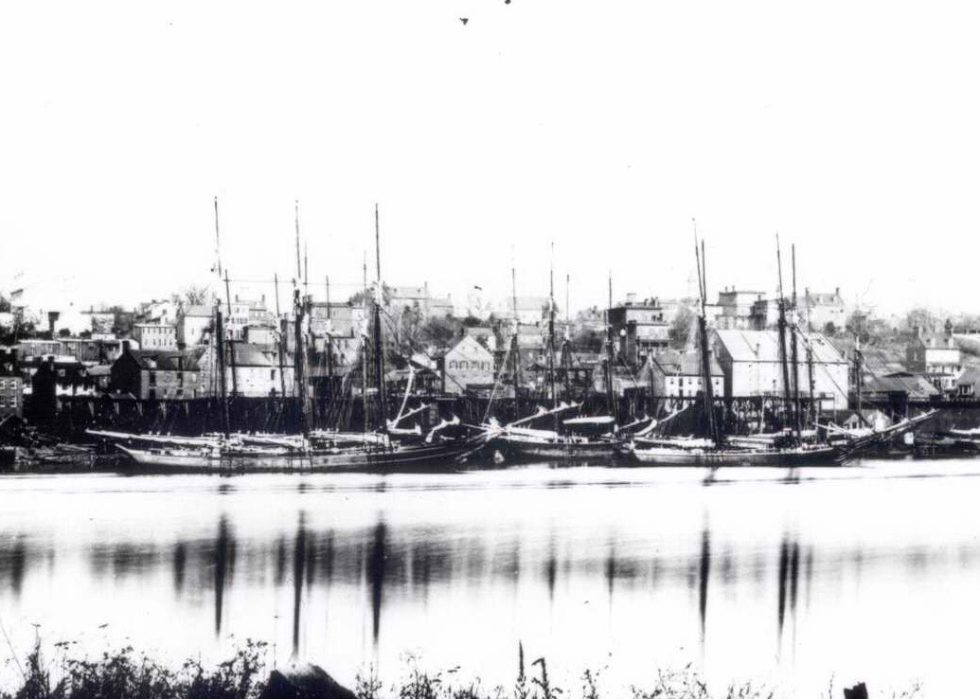
Photo of Georgetown taken November 13, 1865 from Mason Island (Library of Congress)
1800
- U.S. capital moved from Philadelphia to the District of Columbia
1801
- Town of Rockville established
Town of Rockville established
1801
The Maryland General Assembly passed an act to survey, mark, bound and erect Rockville into a town (previously called Williamsburgh and/or Montgomery County Courthouse). The name Rockville was ostensibly chosen for nearby Rock Creek. The surveying was completed in 1803 (pictured below).

1803
- Rockville boundary stones erected
Rockville boundary stones erected
1803
After the plan of Rockville was drawn, the first boundary stones were placed: the B.R. (Beginning of Rockville) stone on Vinson Street at Maryland Avenue, and a second stone at West Jefferson Street between Adams and VanBuren Streets. The B.R. stone was rediscovered during construction of the Rockville Public Library in 1971 and re-placed close to its original site, now the location of City Hall.

“B.R.” boundary stone at Vinson St. (Jeff Peterman, 2025)
1805
- Rockville Pike begins construction
Rockville Pike begins construction
1805
The Washington Turnpike Company was chartered to build a road from Georgetown to Rockville along the route of a Native American trail and later colonial-era “rolling road” used by farmers to transport tobacco crops to Georgetown.

Road crews paving the Pike with macadam in the late 19th century
1807
- Patrick Magruder becomes Librarian of Congress
Patrick Magruder becomes Librarian of Congress
1807
The sons of Samuel Wade Magruder, Patrick and his brother George, built Magruders Mill on Cabin John Creek. Prior to becoming Librarian of Congress, Patrick Magruder served one term in the U.S. House of Representatives, 1805-1807.
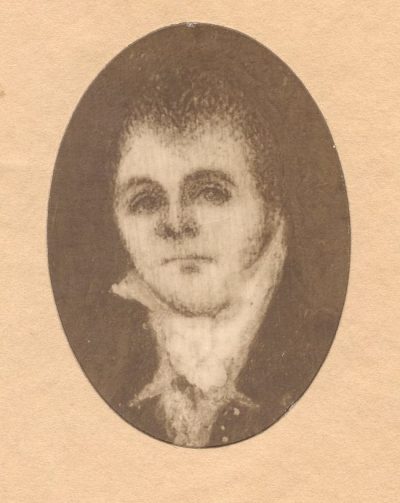
Depiction of Patrick Magruder, from the inside of a locket, undated
1812
- War of 1812 begins
- Rockville Academy opens
Rockville Academy opens
1812
The first class had 30 male students who often boarded with teachers or local residents. Early principals and teachers were religious leaders who offered a classical education. Students without means were able to attend thanks to funds appropriated by the Maryland General Assembly. The Academy closed after World War I.

The original Rockville Academy building with students outside, taken in 1881
1813
- The African American community “Big Woods” founded
The African American community “Big Woods” founded
1813
Considered to be the oldest African American community in upper Montgomery County, Big Woods was first settled by James Spencer in 1813, and later expanded with adjacent land purchased by Rev. Elijah Awkard in 1846, both free Black men. The site of the community is located along Route 118 between Beallsville and Barnesville.

James Spencer (b.1815), the son of the founder of the Big Woods community (from “Black Historical Resources in Montgomery County,” 1979)
1814
- Brookeville is the nation’s capital for a day
Brookeville is the nation’s capital for a day
1814
In 1814, the last year of the War of 1812, retreating troops from the Battle of Bladensburg, along with government officials and citizens, fled the burning of the Capitol Building by British troops and found refuge in Montgomery County. President James Madison spent two nights in Brookeville. The Brookeville Academy was incorporated shortly afterward, in January 1815, and given to the care of Trustees who reported to the General Assembly.

It was in this house that President James Madison and Richard Rush, Attorney General of the United States, were sheltered after the British burned the public buildings at Washington, August 24-25, 1814. The house still stands in Brookeville (Photo taken in 1955)
1815
- Beall-Dawson House completed
Beall-Dawson House completed
1815
This house was originally built by Upton Beall, who served as Clerk of the Court in the county seat of Rockville from 1795 until his death in 1827. Designed in the Federal style after the houses in which Beall had lived in Georgetown, it was the grandest structure in Rockville at the time, and the only one made of brick. Beall’s daughters–Matilda, Jane, and Margaret–lived in the house their entire lives without marrying, and were later joined by a cousin, Amelia Somervell Dawson and her family. The home continued to be used as a private residence until 1965, when it was purchased by the City of Rockville and used for many years as the headquarters of the Montgomery County Historical Society.

The Beall-Dawson house in 1890, when Upton Beall’s daughter Margaret lived here with her cousin, Amelia Somervell Dawson. It still stands today at 103 W. Montgomery Avenue
1817
- Construction of St. Mary’s Church
Construction of St. Mary’s Church
1817
The oldest church still in use in Rockville, St. Mary’s historic building still stands near the “mixing bowl” intersection of Veirs Mill Road, Route 355, and Jefferson Avenue. The congregation made plans to erect a modern church building to replace it in 1966, but some parishioners protested the demolition of the old chapel. The modern building was built adjacent to Our Lady’s Chapel (as it is known today) which was added to the National Register of Historic Places. Renowned novelist F. Scott Fitzgerald and his wife, Zelda, originally buried in Rockville Cemetery, were re-interred in St. Mary’s cemetery in 1975.

View of the church and cemetery, c. 1890s
- Sandy Spring Meeting House constructed
Sandy Spring Meeting House constructed
1817
Founded as early as 1753, the Sandy Spring Meeting of the Religious Society of Friends is one of the oldest Quaker Meetings in Maryland. Property for the Meeting was first donated by James Brooke in 1770, at which time a modest log house was used for worship. The brick Sandy Spring Meeting House was constructed in 1817 and has been in continual use since then.
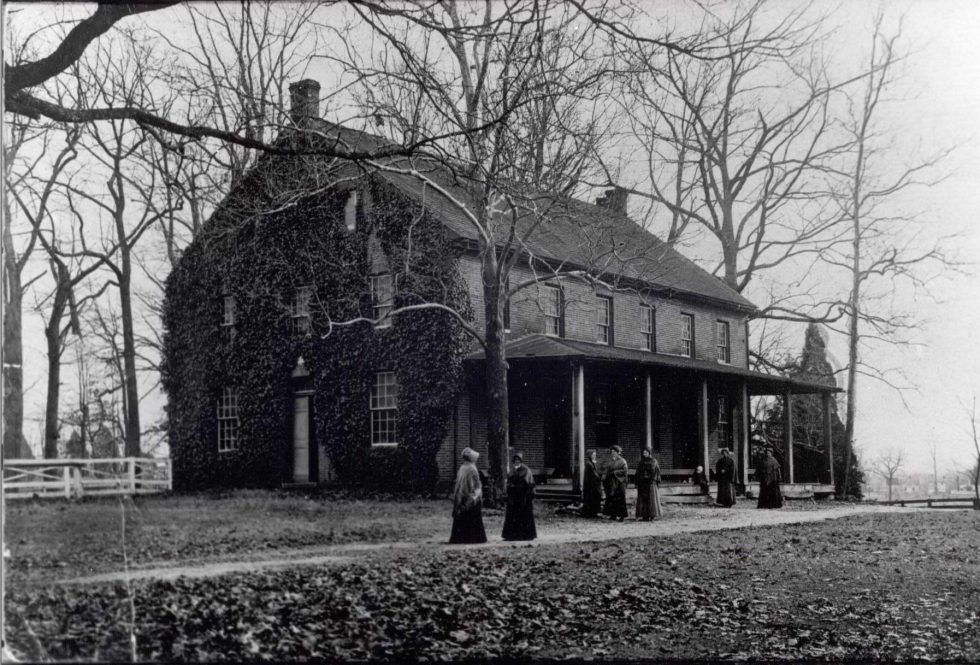
Sandy Spring Friends Meeting House, pictured c.1910.
1822
- Sharp Street Methodist Episcopal Church founded
Sharp Street Methodist Episcopal Church founded
1822
Originally known as “An Independent Methodist Church for Colored People of Sandy Spring,” this was the first Black church established in Montgomery County. The Sandy Spring area was home to one of Maryland’s earliest free Black communities, formed by the people emancipated by the surrounding Quaker community shortly after the Revolutionary War.

Plaque on the modern-day Sharp St. Church that reads “Sharp Street ME Ch. 1863 Remodeled, Rebuilt 1923” (from the Montgomery County Sentinel)
1824
- Bureau of Indian Affairs created
1828
- Construction of both the B&O Railroad and C&O Canal begins
Construction of both the B&O Railroad and C&O Canal begins
1828
Construction of the two behemoths of transportation trade routes began the very same day—July 4th. They would compete for dominance over the entirety of their early years. The C&O Canal was completed in 1850, costing approximately $11 million, while the Main Line of the B&O Railroad was finished in 1853, with several branches still in the planning stages (Montgomery County’s Metropolitan Branch to Washington, D.C. would be opened in 1873). The B&O Railroad would ultimately win as a faster, more reliable, and more sustainable mode of transportation for goods.
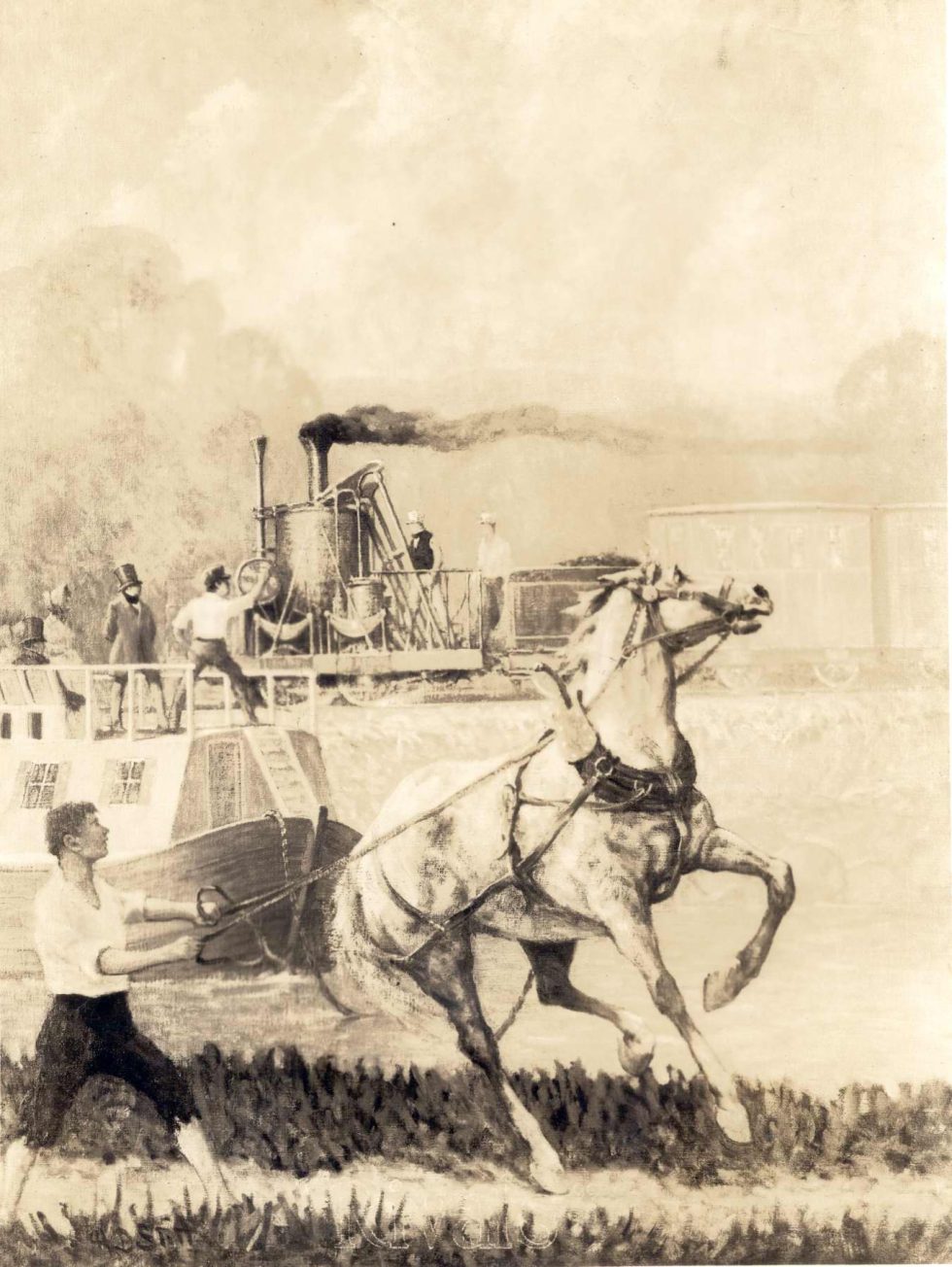
“Canal vs. Railroads” from a painting by H.D. Stitt, depicting the rivalry existing between the railroad and the canal company in the early days of the development of the B&O
1830
- Germantown established
Germantown established
1830
This settlement received its name for the large number of German immigrants coming to the area in the 1830s. Jacob Snyder and his family were the first, followed by the Metzes, Richters, Stangs, and Grusendorfs, among others.
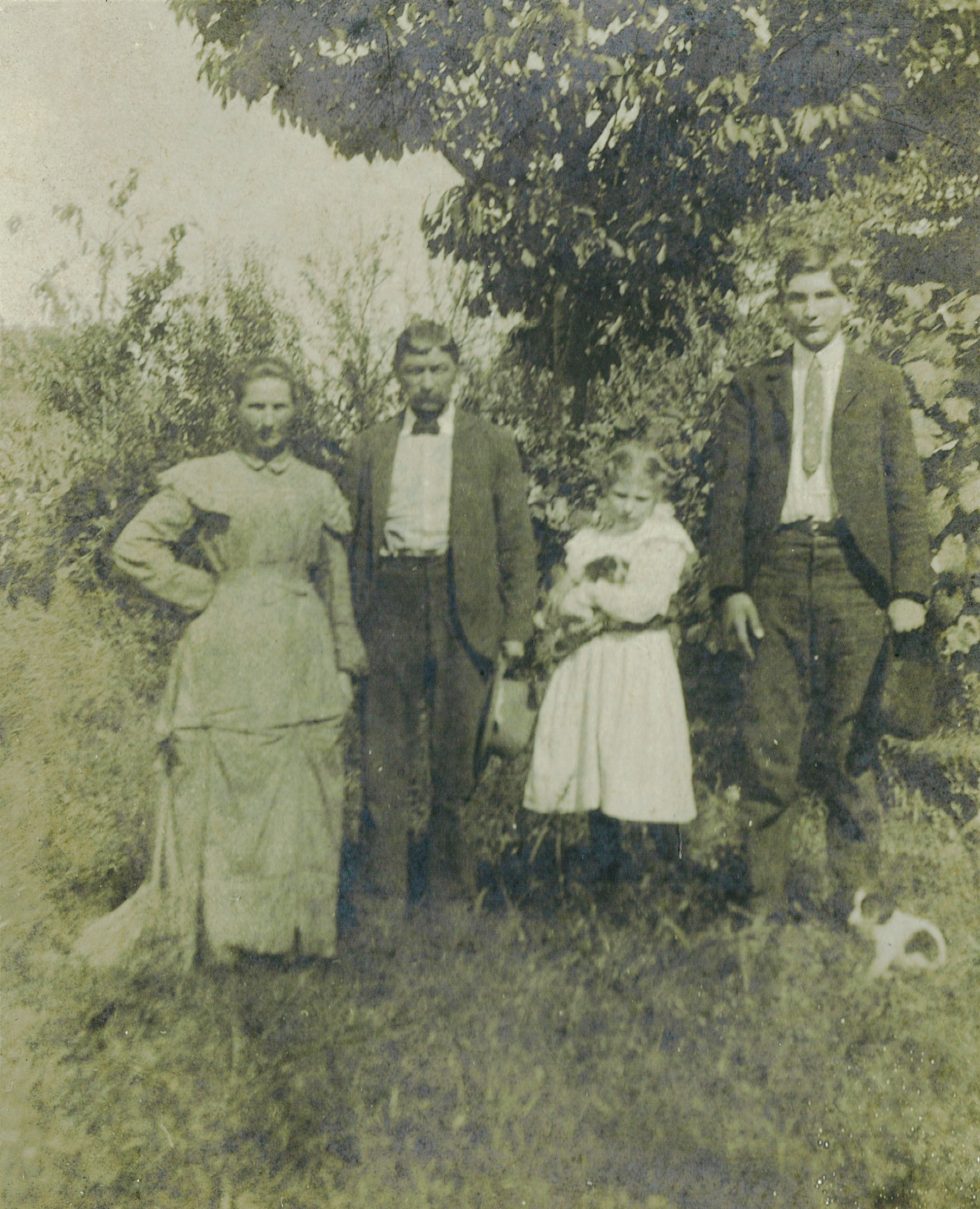
Mr. and Mrs. Joseph D. Stang with their children Marie and Joseph A., c.1900
1834
- Clopper Mill erected
Clopper Mill erected
1834
Mills became prevalent throughout the county once the tobacco-ruined soil was rejuvenated and grains became the predominant farming product. Clopper Mill was built in 1833 by Francis Cassatt Clopper, who also designed the first Rockville courthouse, and stood until a fire destroyed it in 1947.

Clopper Mill as it appeared c.1910
1837
- Samuel Morse patents the first electric telegraph
1840
- Second Montgomery County Courthouse constructed
Second Montgomery County Courthouse constructed
1840
By 1835, Montgomery County had outgrown the first courthouse and petitioned the General Assembly for approval to construct a new courthouse. The petition was granted to erect a courthouse on public grounds in Rockville to include all offices necessary to conduct the duties of and secure the records/public documents of Montgomery County. The new courthouse, a two-story brick building with one-story wings, opened in 1840.
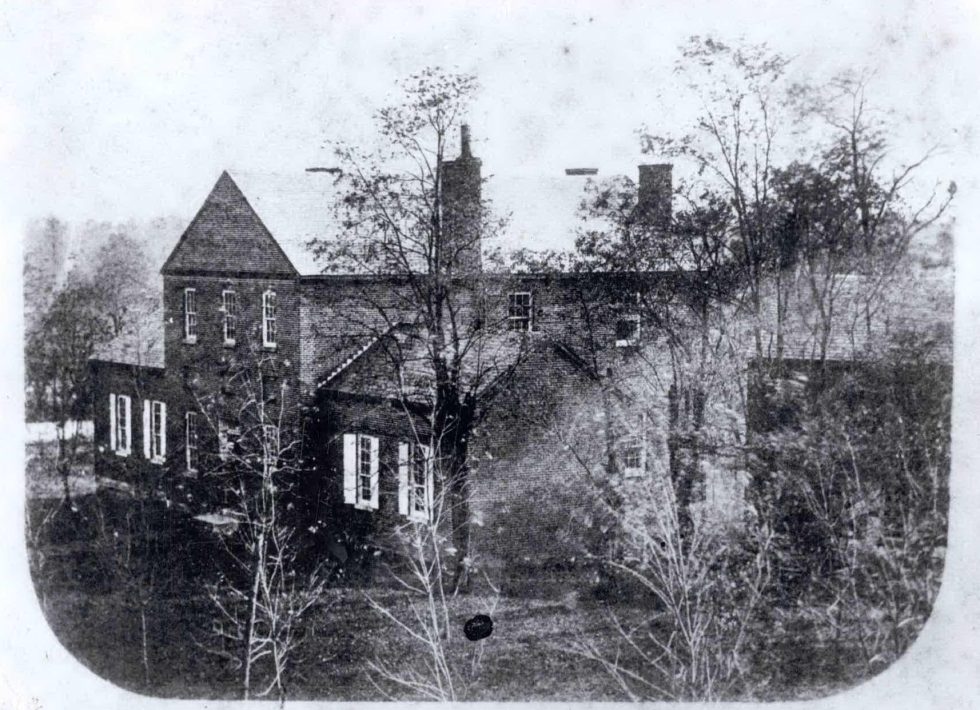
The only known photograph of the Second courthouse, dated c. 1870
1842
- Discovery of spring at Silver Spring
Discovery of spring at Silver Spring
1842
The spring was discovered by Francis Preston Blair and was so named because mica sand particles made the water sparkle. He purchased one thousand acres of land that he named Silver Spring and built a summer home on it for his family. A boundary marker between Montgomery County and the District of Columbia stands on the property owned by Blair.

The famous spring as pictured c.1894, surrounded by a stone grotto constructed by Blair’s son-in-law, Samuel Phillips Lee, and featuring a statue of a water nymph.
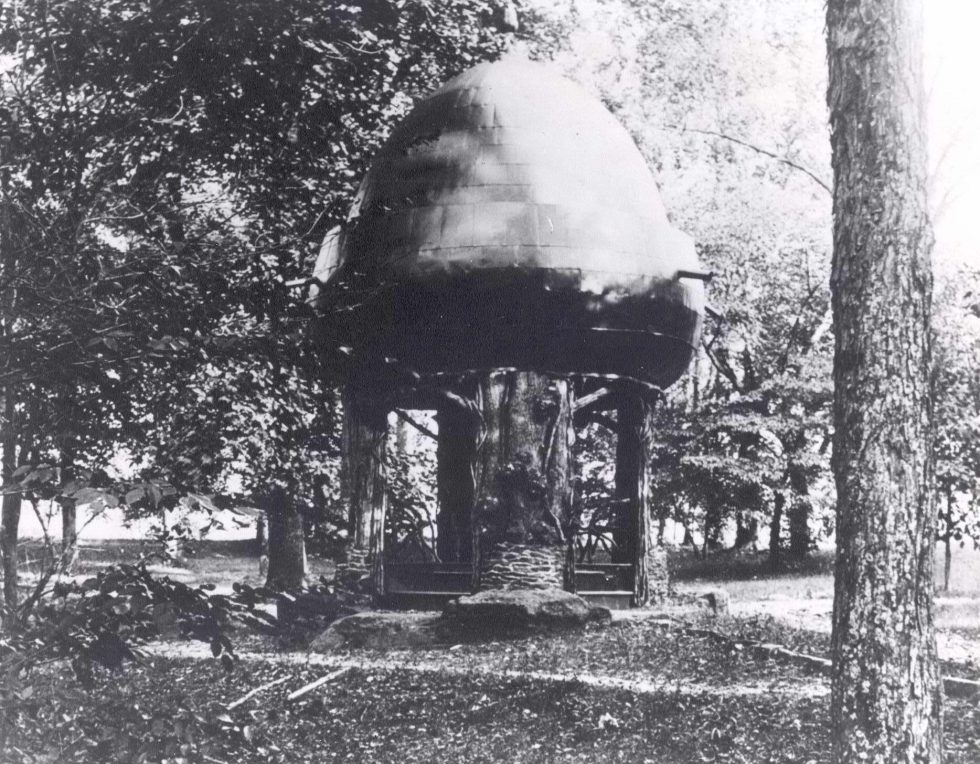
The park surrounding the landmark contains an acorn-shaped gazebo, built in 1842 by Benjamin C. King, and refurbished in 1955.
1846
- Smithsonian Institution established
- Montgomery County Agricultural Society formed
Montgomery County Agricultural Society formed
1846
The Montgomery County Agricultural Society was organized in 1846 to promote improvements in farming and soon began holding annual fairs. The first fair held at the Rockville Fairgrounds, now the site of Richard Montgomery High School, was in 1849. The fairgrounds later included a racetrack and grandstand, built in the early 1900s for horse and bicycle racing. The first automobile race was held in 1923. The Rockville Fair continued until 1932 when the Society ran into financial difficulty during the Great Depression, and the land was sold to the School Board for construction of a new high school building.

Midway, grandstand, and horse races at the Rockville Fairgrounds, c. 1906
1849
- Josiah Henson’s memoirs published
Josiah Henson’s memoirs published
1849
In 1849, Josiah Henson published his first memoirs of his time enslaved on the Isaac Riley plantation near Bethesda. Harriet Beecher Stowe used elements from his life story as inspiration for events and characters in her novel Uncle Tom’s Cabin, published in 1852, fueling the abolitionist movement nationwide.
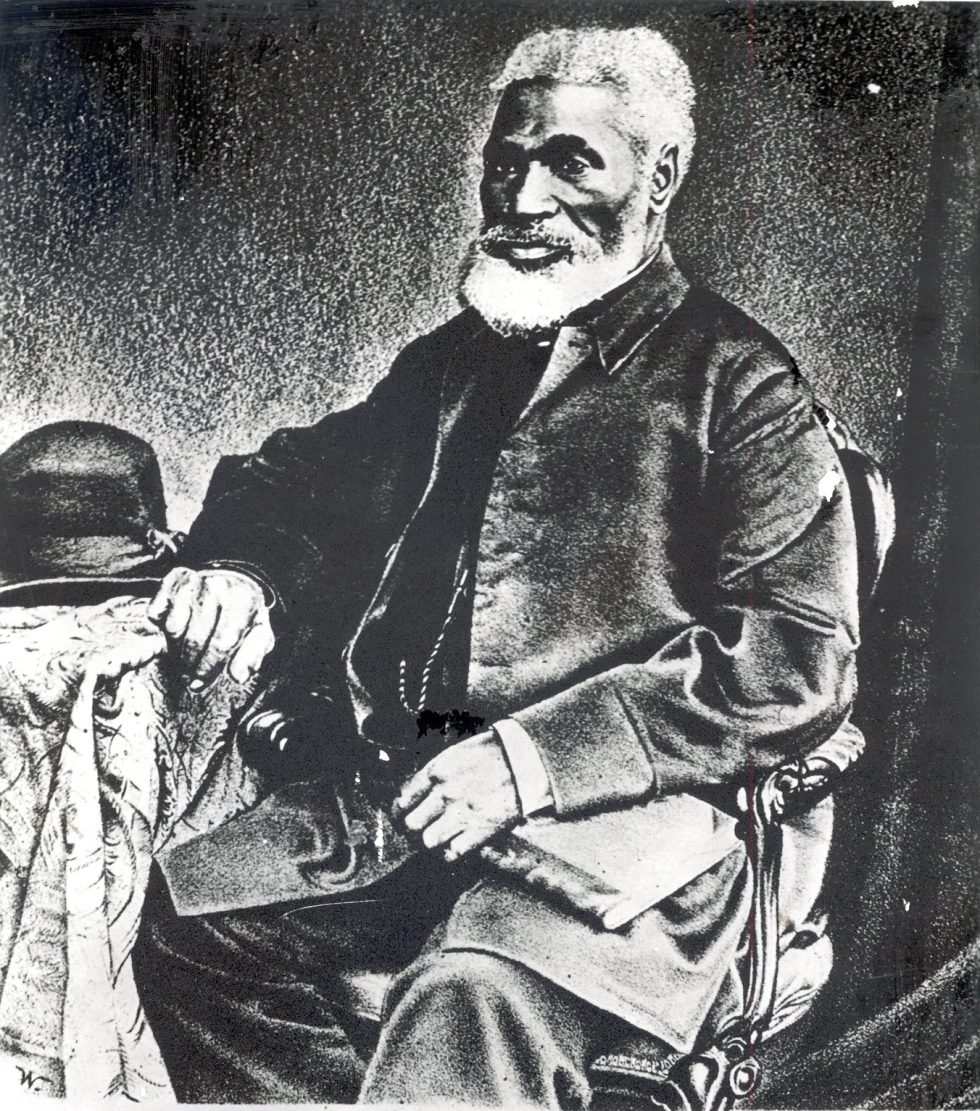
(Library of Congress photo)
1855
- “Montgomery County Sentinel” established
“Montgomery County Sentinel” established
1855
Though many newspapers were published during this time, the Sentinel is the paper that stood the test of time, remaining in publication until 2019. It was founded by Matthew Fields, an outspoken Confederate sympathizer. After his death in 1871, his wife, Rebecca Fields, and their children owned and published the paper for the next 60 years until they sold the business in 1932.

The header for the first issue of the Sentinel, published on August 11, 1855 and reproduced for the 100th anniversary edition in 1955
1860
- Abraham Lincoln elected and again in 1864
- Town of Rockville incorporated
Town of Rockville incorporated
1860
Rockville was governed by three commissioners until 1888, when the first Mayor and Council were elected.
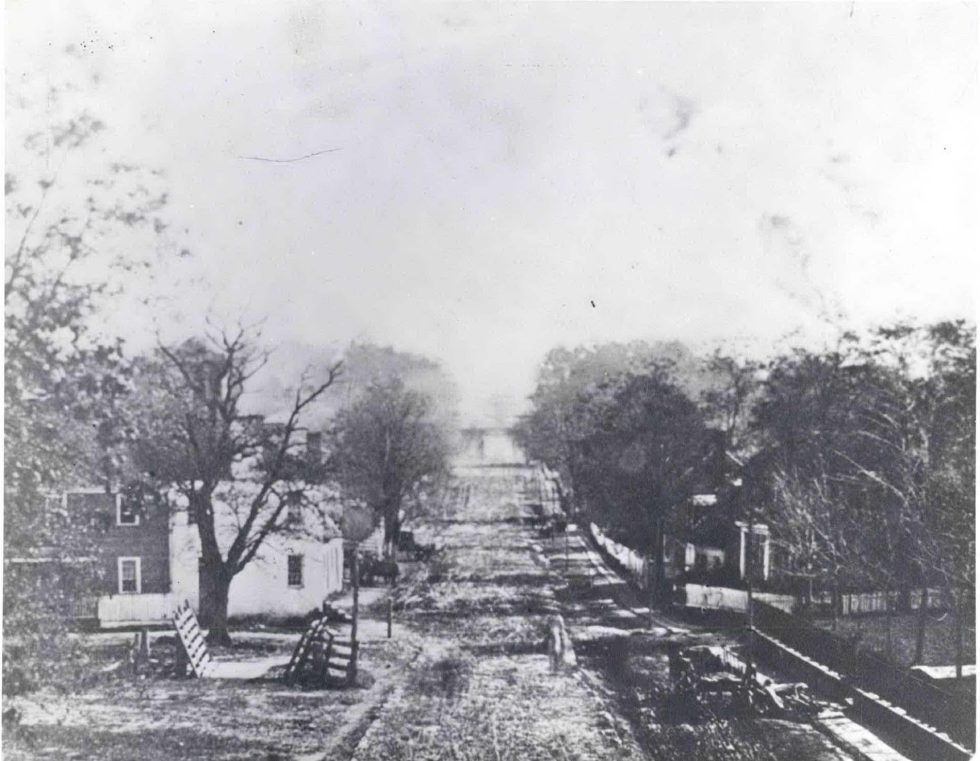
E. Montgomery at Perry St. looking east, c.1869 (earliest known photograph of Rockville)
- Public schools established
Public schools established
1860
The Maryland General Assembly passed legislation to create a countywide school system (for White children) with William H. Farquhar as superintendent, but limited funding meant schools remained few and far between for many years.
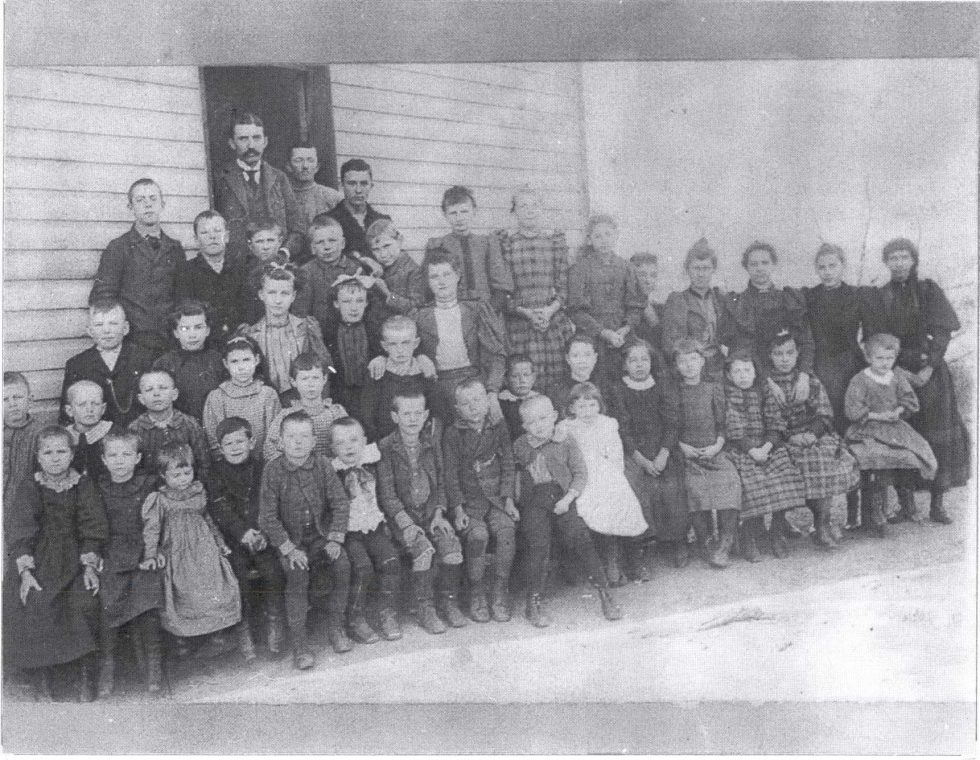
Cedar Grove School, class of 1894. Mr. William Baker, teacher
1861
- Civil War begins
- New jail building erected
New jail building erected
1861
The Montgomery County Jail in Rockville, built in 1801, burned to the ground in 1861. A new stone jail building was erected on the same site, which was used for the next 70 years.
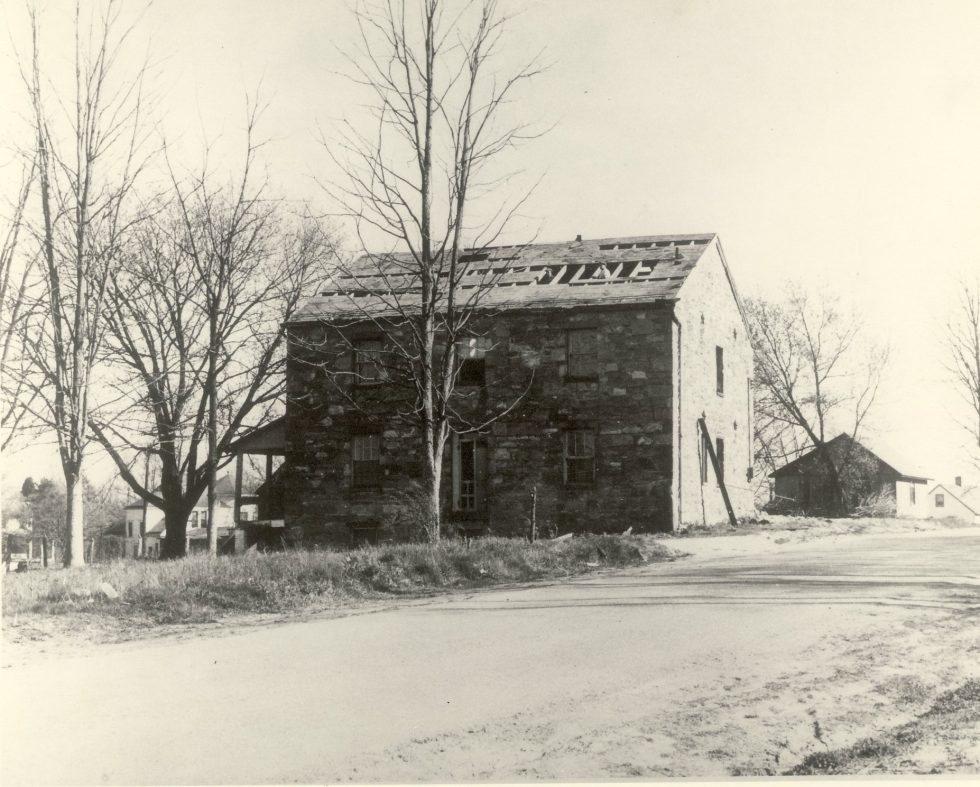
Jail built in the 1860s, pictured just before its demolition in the late 1930s
1863
- Lincoln issued the Emancipation Proclamation
1864
- Emancipation in Maryland
Emancipation in Maryland
1864
By referendum and by a razor-thin margin, Marylanders voted to end slavery in the state after more than 200 years. Soldiers voting in the field in October 1864 ensured passage of the new Maryland State Constitution, which outlawed slavery effective November 1. Seventy-three percent of Montgomery County voters did not approve.
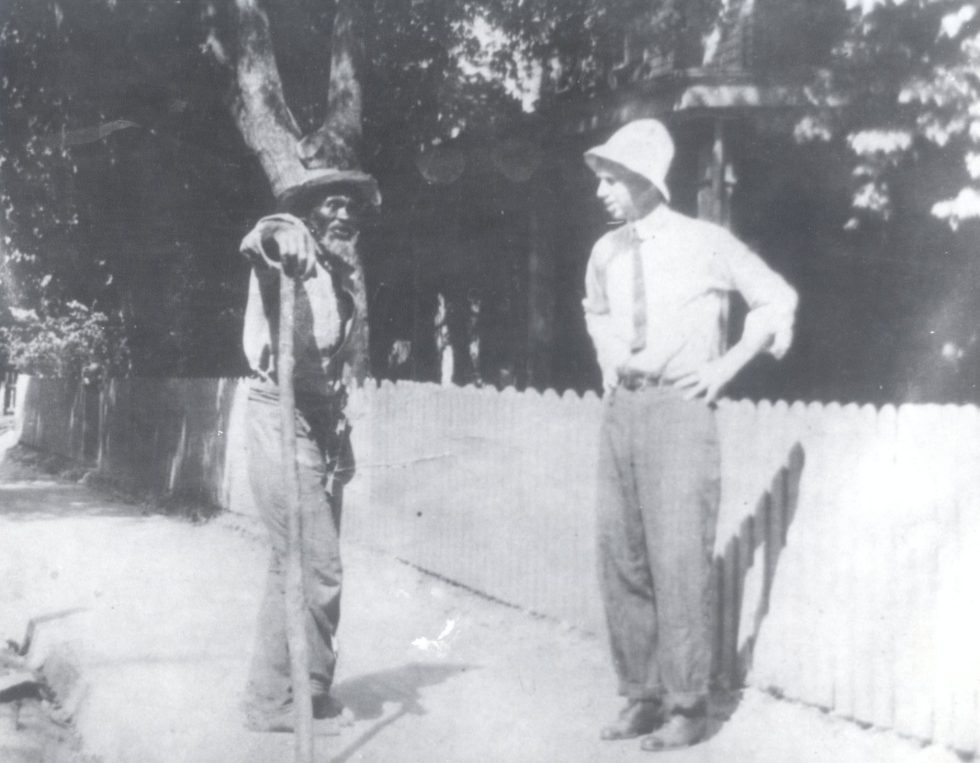
On the left is Joseph Crawford, pictured between 1910-1914, considered to be the last formerly enslaved person in Rockville still living at that time
- Jubal Early’s march
Jubal Early’s march
1864
Confederate troops under General Jubal Early skirmished with Union troops near Rockville en route to an unsuccessful attack on Fort Stevens in Washington. Union troops were commanded by Major General Frank Wheaton, who led troops stationed at the fort to successfully repel Early’s troops. In recognition of exceptional service, in 1869 the community of Leesborough/Leesboro was renamed Wheaton in the General’s honor.
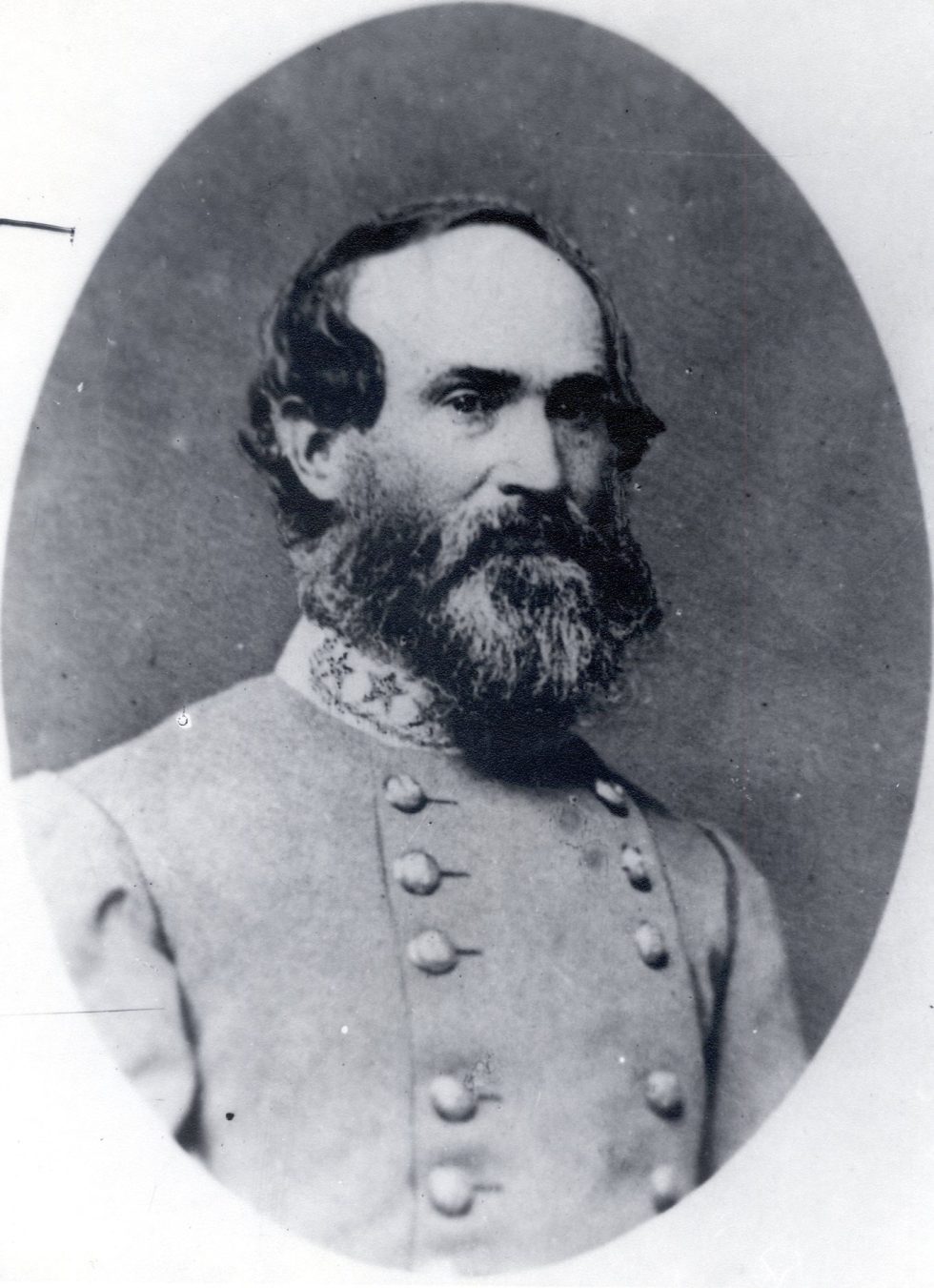
Confederate General Jubal Early (Library of Congress, c. 1860)
1866
- Freedman’s Bureau established in Rockville
Freedman’s Bureau established in Rockville
1866
A Freedman’s Bureau office opened in Rockville to assist formerly enslaved people. It was short-lived, closing in 1867.
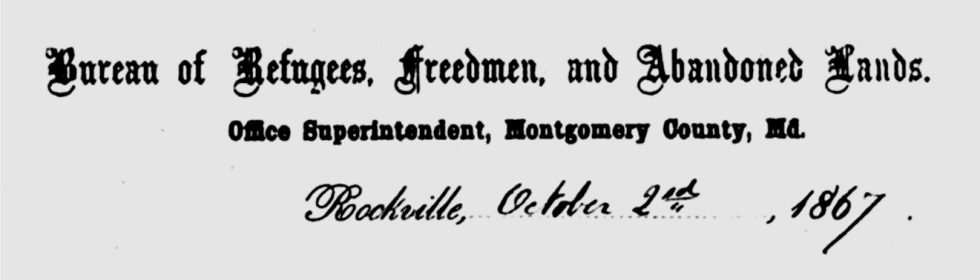
Letterhead for the bureau office in Rockville, administered by Lt. Col. Robert G. Rutherford
1867
- Poolesville incorporated
Poolesville incorporated
1867
Brothers John and Joseph Poole of Anne Arundel County bought 160 acres of land in 1760 in what would eventually become Poolesville. They established the first post office and set up stores and farms.
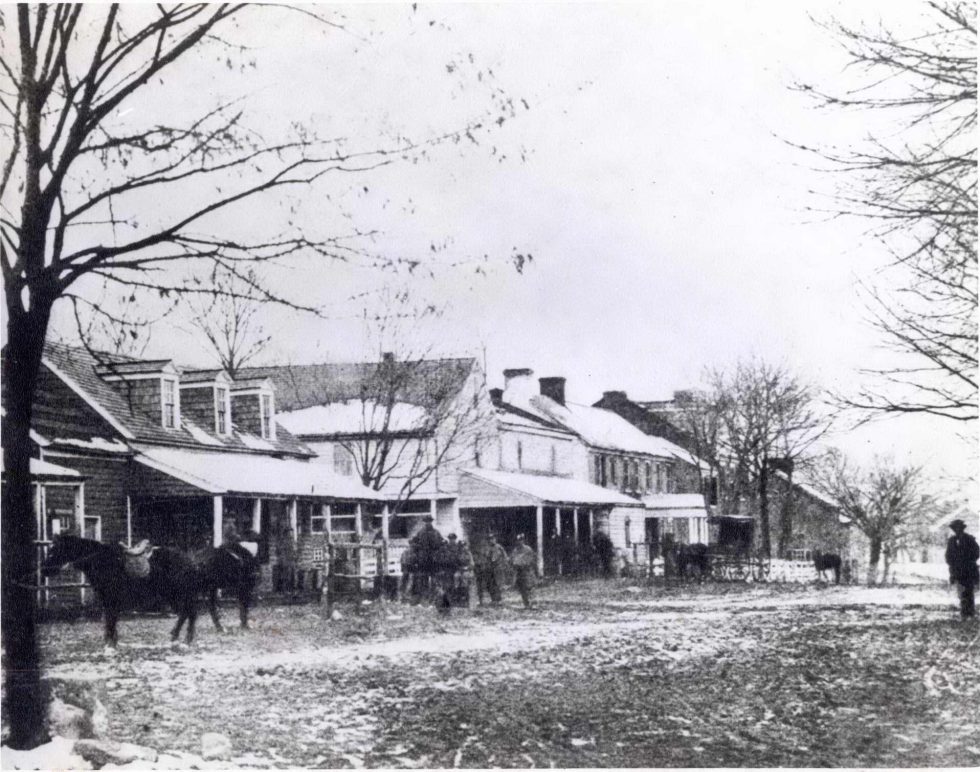
Earliest-known photograph of Poolesville, taken when the 8th Minnesota regiment camped there in the winter of 1862.
1868
- Congress passes the 14th Amendment guaranteeing citizenship to African Americans
1869
- Completion of the first transcontinental railroad
1872
- Public schools established for Black children
Public schools established for Black children
1872
The first public schools for the education of Black children were established by state law.
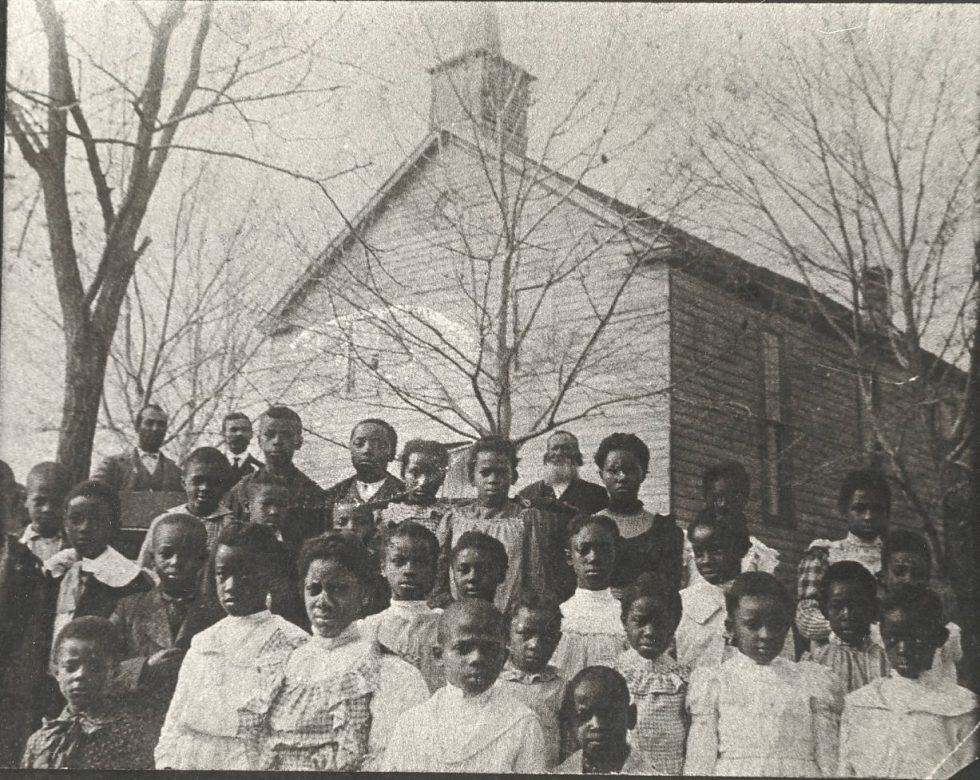
Poolesville School Class c. 1909. Behind the students is Loving Charity Hall, where classes were held downstairs. That building, now demolished, once stood behind the former Elijah Methodist Church on Elgin Road and served primarily as a community center
1873
- The Metropolitan Branch of the B&O Railroad opens
The Metropolitan Branch of the B&O Railroad opens
1873
The B&O Railroad’s Metropolitan Branch provided transportation to Washington, D.C. from Montgomery County. The opening of the railroad led to the development of suburban communities such as Chevy Chase, Kensington, Takoma Park and Garrett Park. It also allowed many of the grain farms in the county to transition to dairy operations, since products could be sent quickly to markets in the District without spoiling.
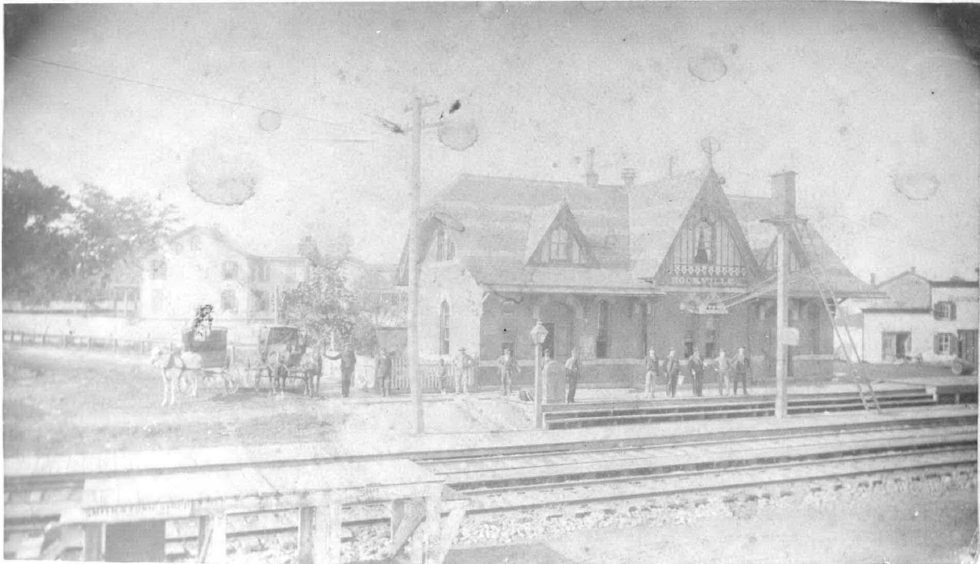
Rockville’s B&O station on the Metropolitan line, built in 1873, pictured here in 1884. Architect E. Francis Baldwin designed this and many stations on the Metropolitan line in the Victorian Gothic style
1876
- Alexander Graham Bell invents the telephone
1878
- Gaithersburg incorporated
Gaithersburg incorporated
1878
Originally settled in 1765 as “Log Town,” it was later called Forest Oak after a large tree that dominated the landscape, situated on the property of the Gaither family who were large landowners in the area. The Forest Oak cemetery, chapel, and hotel were all named for the stately landmark, but the town was finally incorporated as Gaithersburg in 1878, in homage to the founding family.
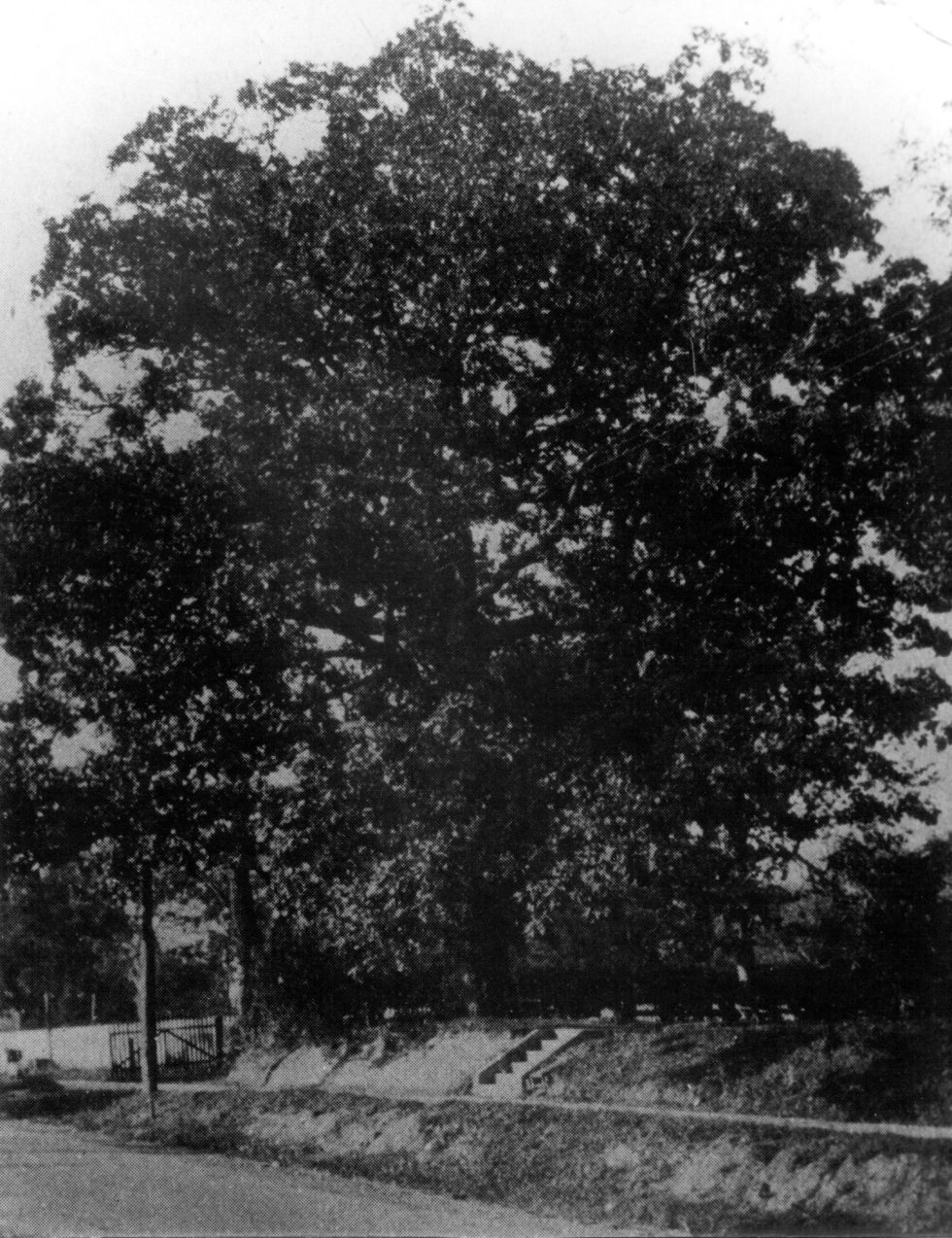
The tree that named the town: the Forest Oak standing on the Gaither/Gloyd property (date unknown). The nearly 300-year-old giant tree stood until 1997 when it was toppled by a storm.
1879
- Thomas Edison invents the lightbulb
1880
- Lynchings of George Peck and John Diggs-Dorsey
Lynchings of George Peck and John Diggs-Dorsey
1880
George Peck was the first of the three known men lynched in Montgomery County, Maryland in the 19th century. Born into slavery, Peck lived in the Poolesville/Beallsville area his entire life. In January 1880, the 22-year-old Peck was accused of attempted assault on a white girl and arrested by the constable. Before he could be transported to Rockville for any legal proceedings, a crowd of local men seized him in the night and hanged him from a tree in downtown Poolesville. No one was ever held accountable for his murder.
Less than six months later, John Dorsey (also known as John Diggs) a Black man in his early twenties, was living and working in Darnestown, as servant to a middle-aged couple: James and Linnie Tschiffely. On the morning of July 25, 1880, Linnie Tschiffely accused John Diggs-Dorsey of physically assaulting her the night before. Mr. Diggs-Dorsey was apprehended and placed in the county jail in Rockville. That night, a lynch mob dragged Diggs-Dorsey from his cell, marched him to a place one mile outside town on Route 28 and hanged him from the limb of a tree . The local jury of inquest as well as the grand jury convened four months later both returned a verdict of death by “violence committed by parties unknown.”
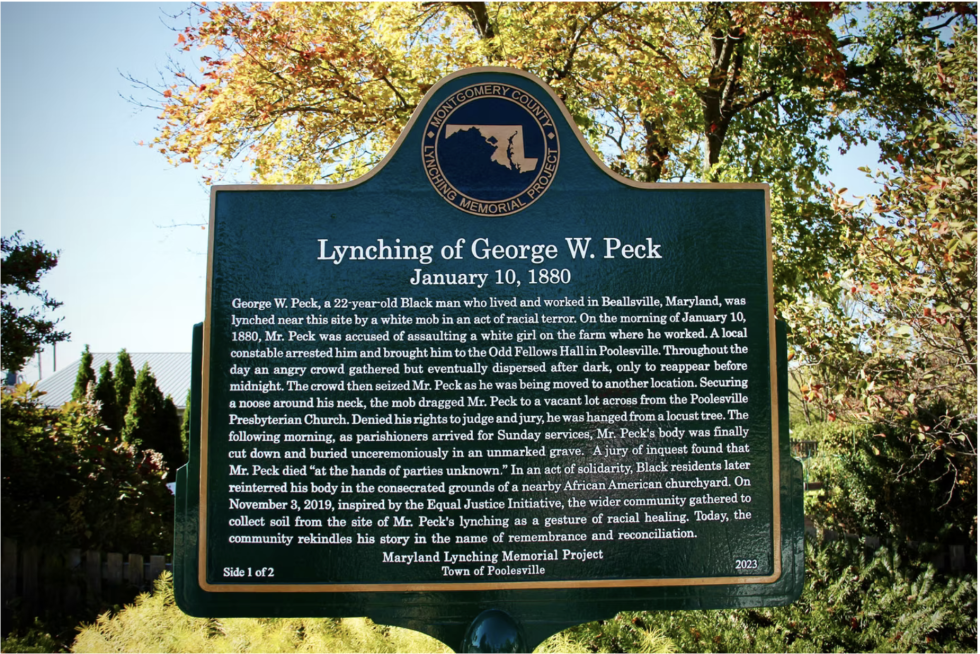
Marker erected in Poolesville in 2023 by the Montgomery County Lynching Memorial Project, acknowledging the lynching of George Peck in 1880. A similar memorial for John Diggs-Dorsey stands in Rockville, on the former jail property (now the site of the Montgomery County Council building)
1881
- Clara Barton creates the American Red Cross
1884
- Montgomery County National Bank established
Montgomery County National Bank established
1884
The first commercial bank in the county opened in Rockville, at the corner of Commerce Lane and Perry Street, across from the courthouse. In 1905, a new building was constructed a block away, designed by E. Francis Baldwin, the same architect who designed Rockville’s train station. The building was razed for urban renewal in 1968.
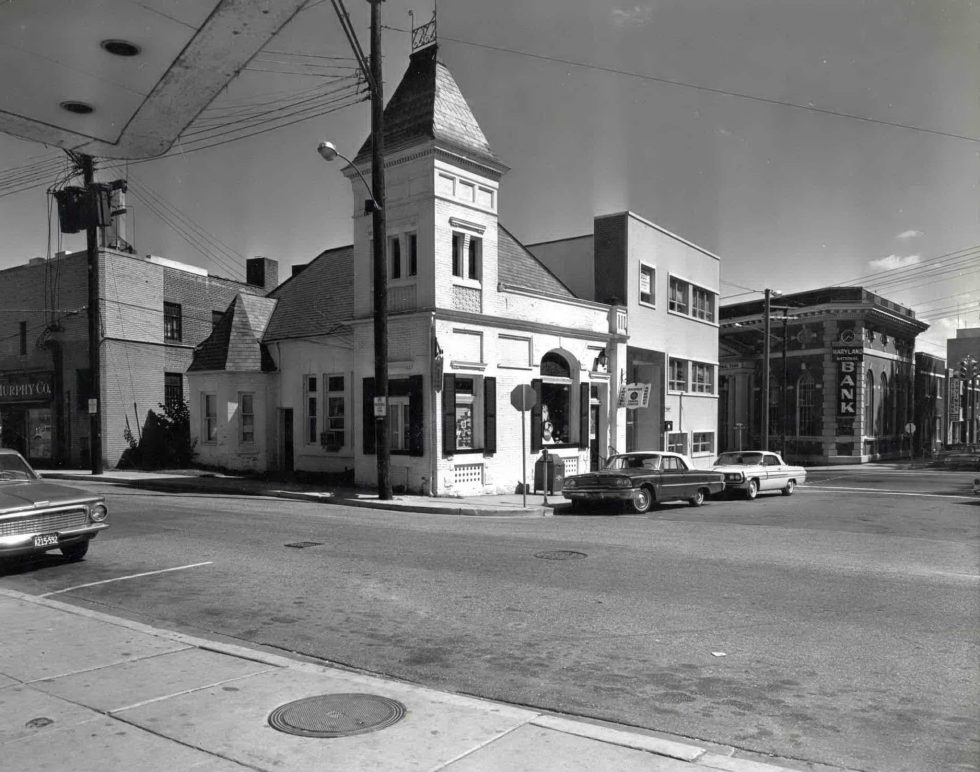
This early 1960s photo shows the original bank building in the foreground, and the new building a block away on the right, across from the courthouse
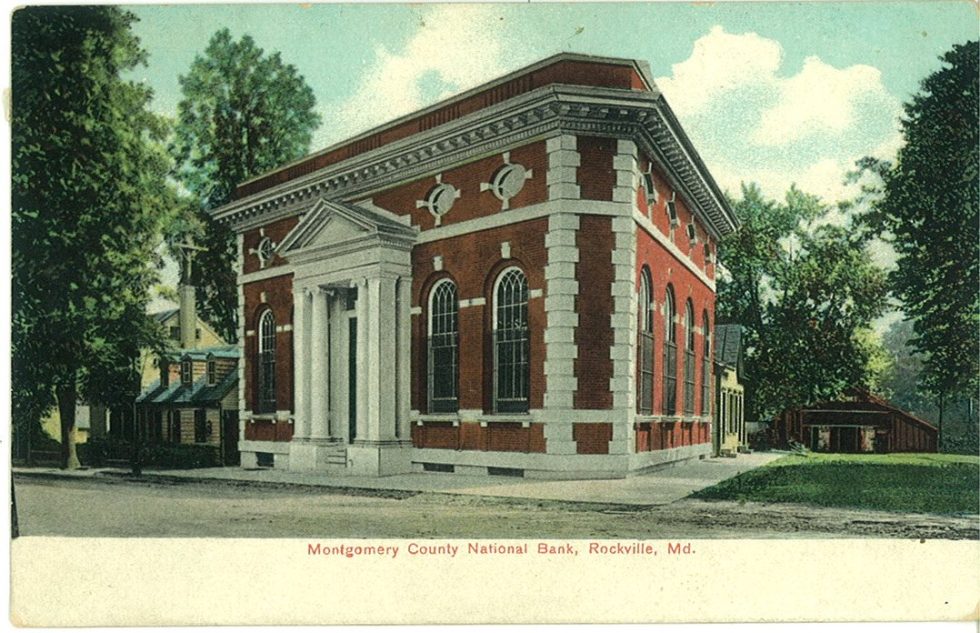
The 1905 bank building on the corner of Commerce and Perry.
1890
- First streetcar line completed
First streetcar line completed
1890
The first streetcar ran from Tenleytown to Bethesda Park (later extended to Rockville). It was later joined by other lines, including ones servicing Glen Echo Park and Great Falls.
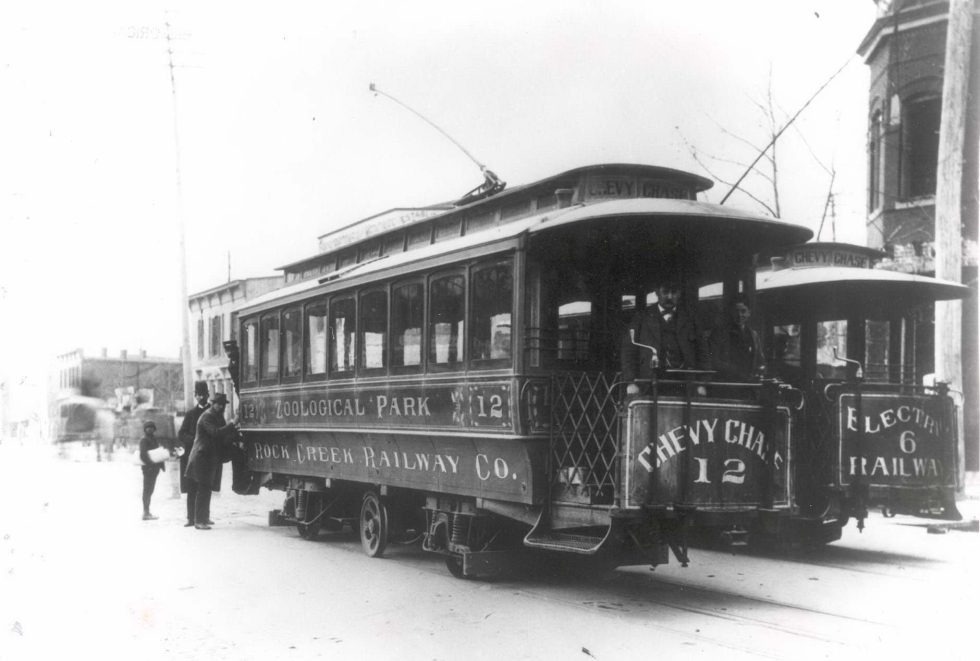
Pictured is Rock Creek Railway trolley car #12, Zoological Park to Chevy Chase, c.1890s
1891
- Third courthouse built
Third courthouse built
1891
The “Red Brick Courthouse,” as it is known today, was built to replace the former courthouse on what was then the southeast end of Rockville and to house all County offices.
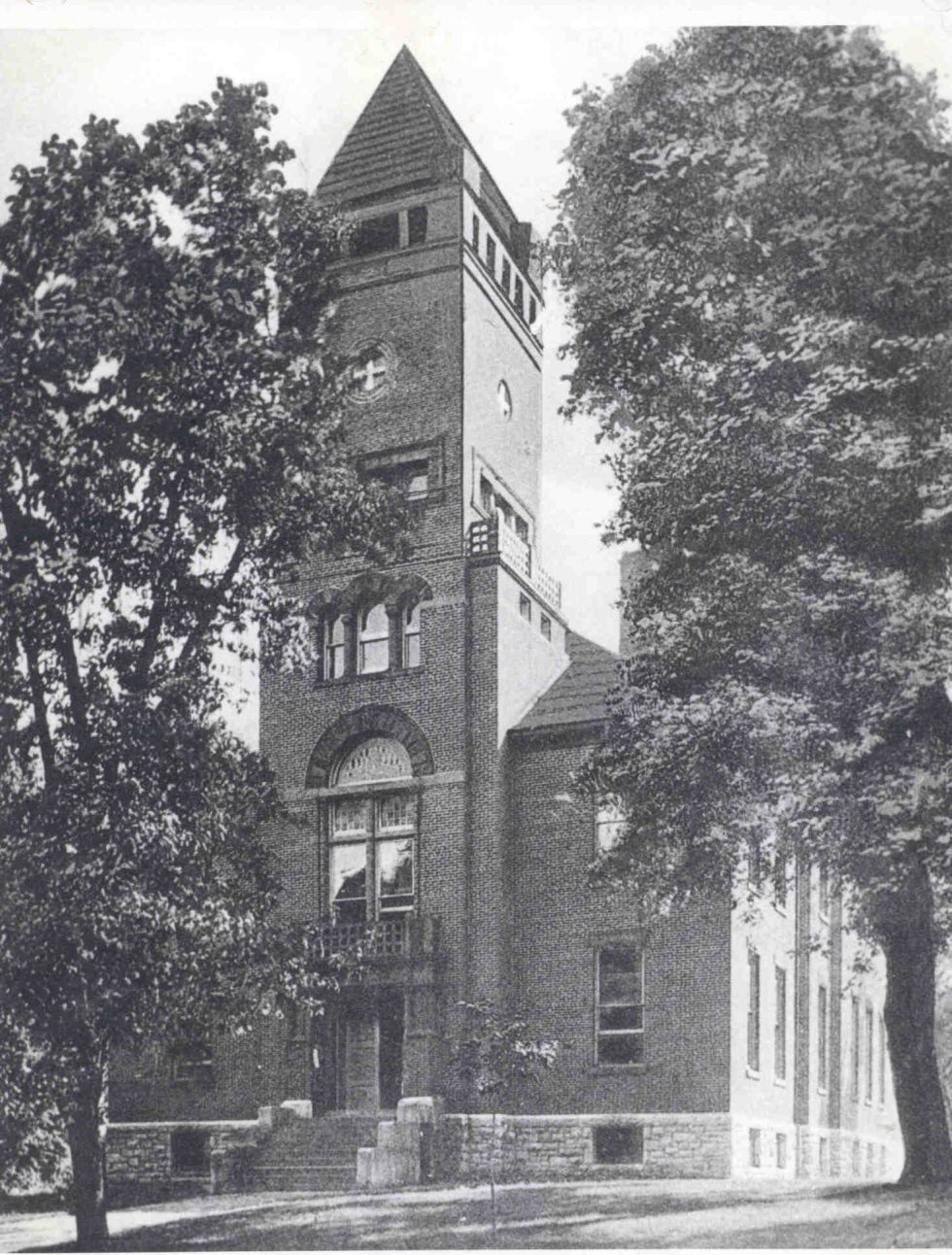
Image from a postcard captioned “Court House, Rockville, Md.” and postmarked in September, 1909
- National Chautauqua at Glen Echo founded
National Chautauqua at Glen Echo founded
1891
The National Chautauqua of Glen Echo and the Glen Echo Railroad opened in June 1891 on 80 acres purchased originally for a “Glen Echo-on-the-Potomac” residential and resort development. Clara Barton lived in a house on the property which later served as the headquarters of the American Red Cross, between 1897 and 1904. Barton also served as president of the Women’s Executive Committee of the Chautauqua assembly, an effort that soon folded due to economic problems and fear of malaria.
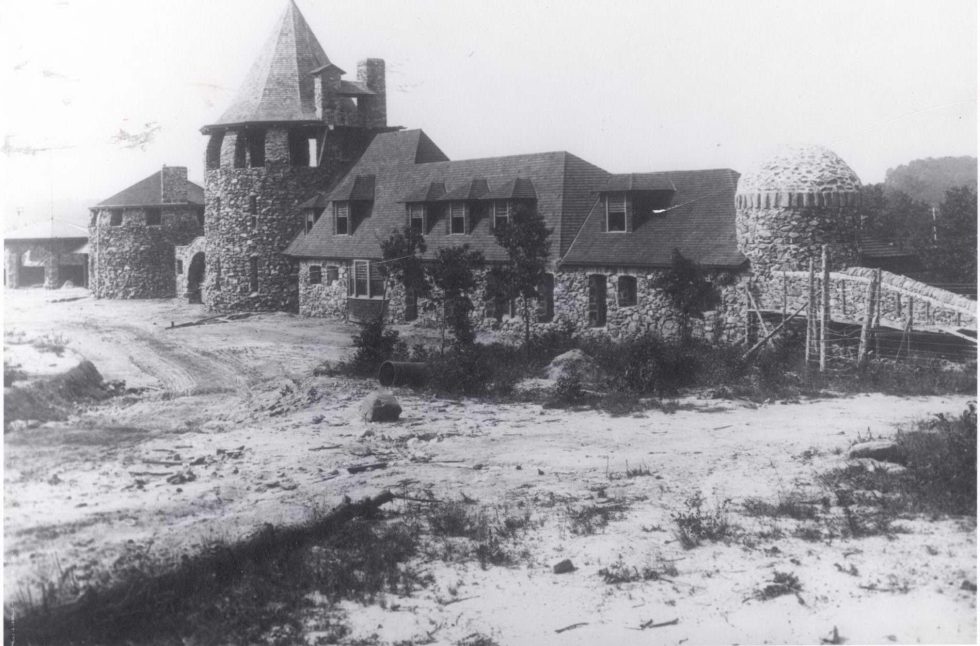
View of the Chautauqua’s grounds when it first opened in 1891 (Collection of LeRoy O. King)
1892
- Ellis Island opens
- Montgomery County High School opened
Montgomery County High School opened
1892
Montgomery County’s first high school for White children opened in Rockville for grades 8-11. It would later become Richard Montgomery High School.
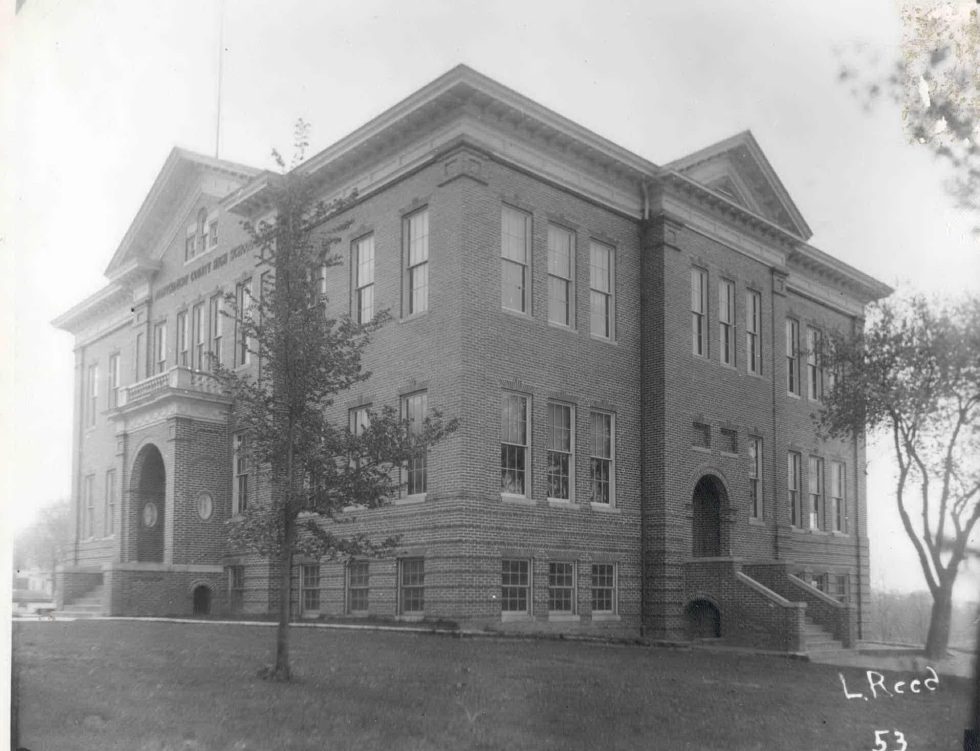
Located at corner of Monroe and E. Montgomery Avenue. It replaced the home of Dr. E. E. Stonestreet; now the location of Americana Apartments (Lewis Reed, photographer)
1894
- National Park Seminary in Forest Glen opened
National Park Seminary in Forest Glen opened
1894
Originally developed in 1887 as Ye Forest Inne, an ultimately unsuccessful resort hotel, the site opened as the National Park Seminary for women in 1894, with the belief that art and culture should be integral to the school’s curriculum. In addition to a wide variety of music, drama, elocution, and art classes, the students were surrounded with fanciful architecture, landscaping, sculpture, and decorative arts to create a uniquely beautiful educational environment. After the school had operated for nearly 50 years, the U.S. Army claimed the property at the outbreak of WWII for use as a convalescent center for soldiers. The property served as an annex to the Walter Reed Army Hospital and was used through the Vietnam War, then largely abandoned by the 1970s. To prevent demolition and redevelopment of the land by the Army, the site was added to the National Register of Historic Places in 1972, but the neglect of the buildings and grounds continued. A grass-roots organization called Save Our Seminary (SOS) formed in 1989 to garner support for preservation and to insist the historic buildings be turned over to a new owner. In 2001 the Army finally agreed to divest itself of the historic district, and SOS partnered with a developer to save all of the historic buildings and to transform the Seminary into a unique residential community of apartments, condominiums, and single-family homes.
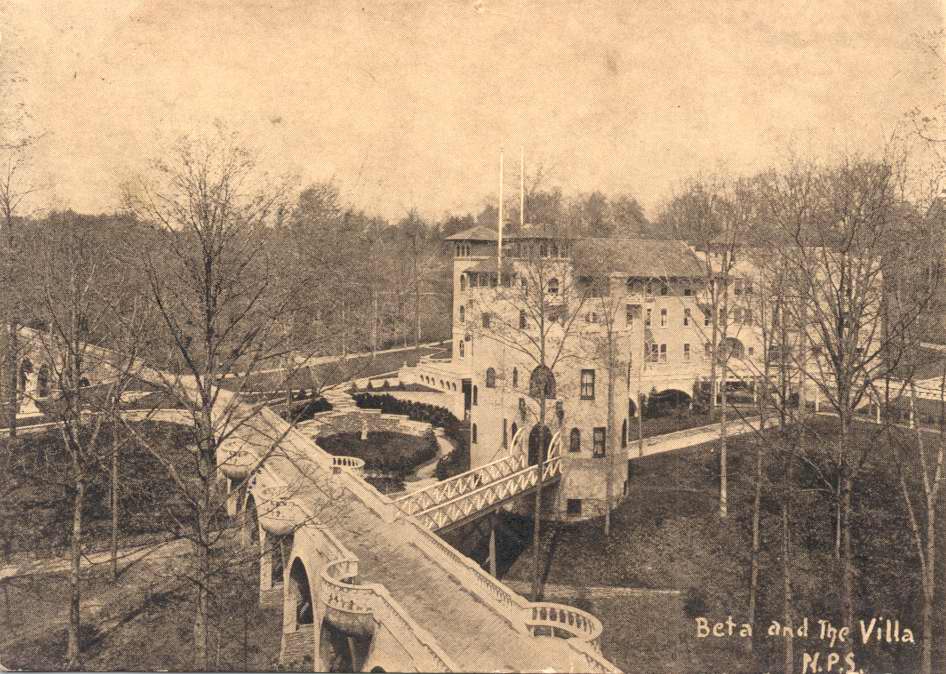
View of “The Castle”–one of the dormitories used for students–and the bridge used to access it, c.1911
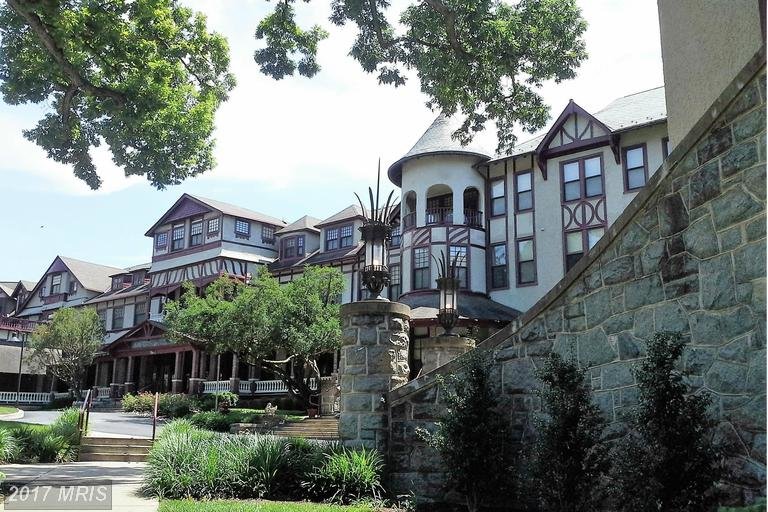
National Park Seminary buildings in 2020, redeveloped as condominiums (Wikimedia Commons)
- Formation of Montgomery County’s earliest telephone companies
Formation of Montgomery County’s earliest telephone companies
1894
The very first telephone lines installed in the county were attributed to James P. Stabler of Sandy Spring, who used them as early as 1878 for house-to-house communication with his family members. Expiration of Bell Telephone’s patent in 1894 allowed formation of local, independent telephone operations, including the earliest ones organized in Sandy Spring and Gaithersburg. Stabler’s lines expanded to become the Enterprise Telephone Company. Gaithersburg’s telephone network, initiated by B & O Stationmaster A.F. Meem, was called the Montgomery County Telephone Company, which began with five lines and cost residential customers $10 a year for service. In 1896, a twenty-line switchboard was installed in the home of Lillian Hogan to run it. By the turn of the century, telephone service had been extended to Rockville, Silver Spring, and Kensington. In 1906, C & P Telephone purchased all of Montgomery County’s networks, connecting the county with 24 hour service. The switchboard continued to operate out of the Hogan home in Gaithersburg until 1937.
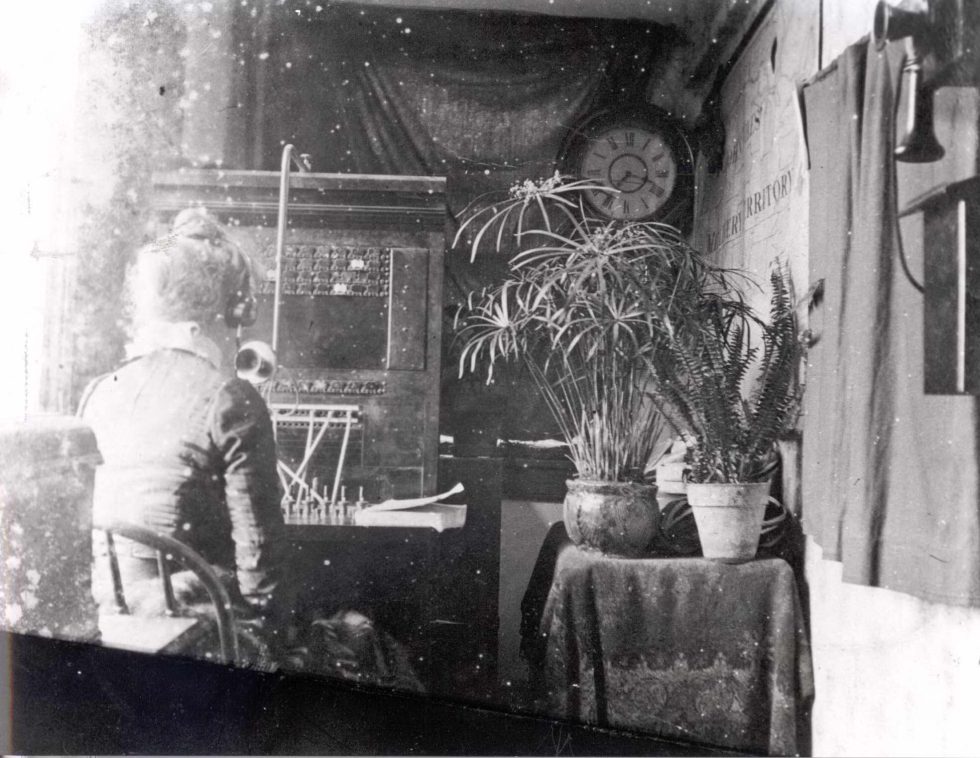
Enterprise Telephone Company switchboard in a home in Sandy Spring, c. 1895.
1896
- Supreme Court decision on Plessy v. Ferguson declares constitutional “separate but equal” facilities
- Lynching of Sidney Randolph
Lynching of Sidney Randolph
1896
Sidney Randolph, a native of Georgia in his mid-twenties, was lynched in Rockville, Maryland on July 4, 1896, by an officially unidentified group of White men from Montgomery County. He was initially arrested as a suspect in the case of an attack on the Buxton family of Gaithersburg in May of that same year, and the subsequent death of the youngest child, Sadie Buxton. Though professional detectives were brought in from both Washington and Baltimore to investigate the case, local residents of Gaithersburg took it upon themselves to find and/or create circumstantial evidence implicating Sidney Randolph, a stranger to the area who had no motive and consistently maintained his innocence. Removed to the jail in Baltimore to avoid an immediate lynching, Randolph survived repeated interrogations while imprisoned from May 25 until July 4, when a masked mob of White men dragged him from his cell in the Rockville jail, brutally beat him, and hanged him from a tree just outside of town along Route 355. His murderers were never identified or brought to justice for this crime.
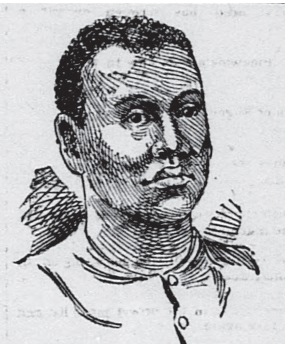
Sidney Randolph, as pictured in Washington’s Evening Times in an article reporting on his lynching, July 4, 1896. In 2024, a historic marker was erected on the site of the former jail, where the Montgomery County Council building now stands.
1898
- Garrett Park established
Garrett Park established
1898
By the time of its incorporation in 1898, Garrett Park was a busy small town with a population of over a hundred and containing more than 30 buildings in the Victorian style. Life centered around the train station, opened in 1893 and connecting residents with an easy commute to work in Washington, D.C. Today, Garrett Park is designated as an official arboretum and is the only town in Montgomery County registered as a historic district.
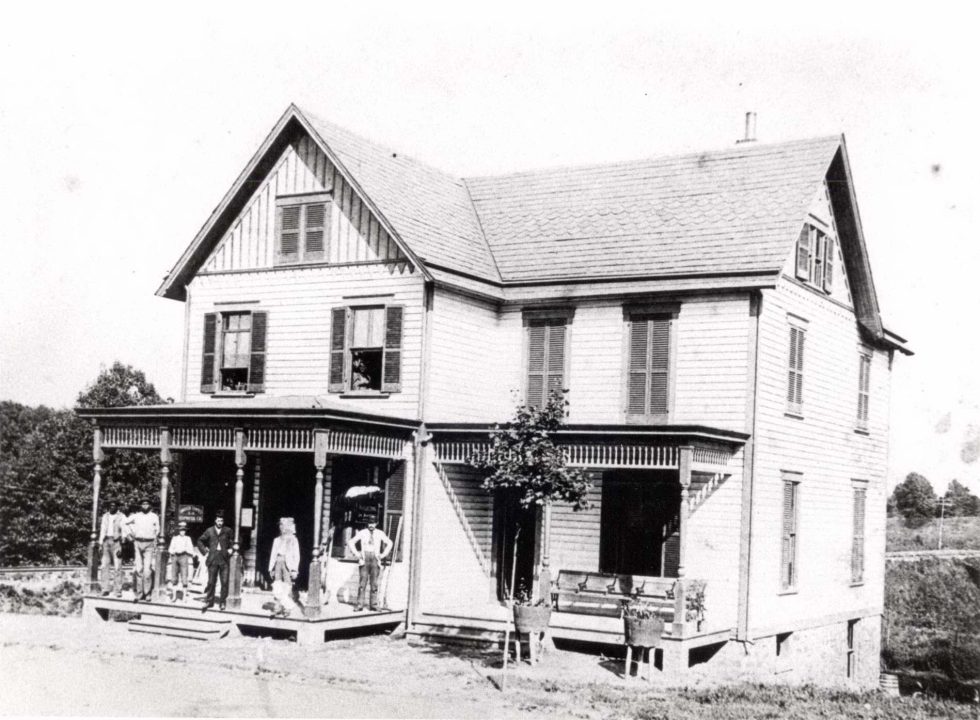
Garrett Park Post Office, c.1900
1899
- Gaithersburg Latitude Observatory built
Gaithersburg Latitude Observatory built
1899
This was one of six global observatories established as part of the International Polar Motion Service in order to measure variations in latitude caused by the Earth’s wobble. The Gaithersburg observatory was in use until 1982, and became a National Historic Landmark in 1989. One of the survey monuments on the grounds of the observatory is operated by the U.S. Coast and Geodetic Survey and is still used to test the Global Positioning Systems (GPS).
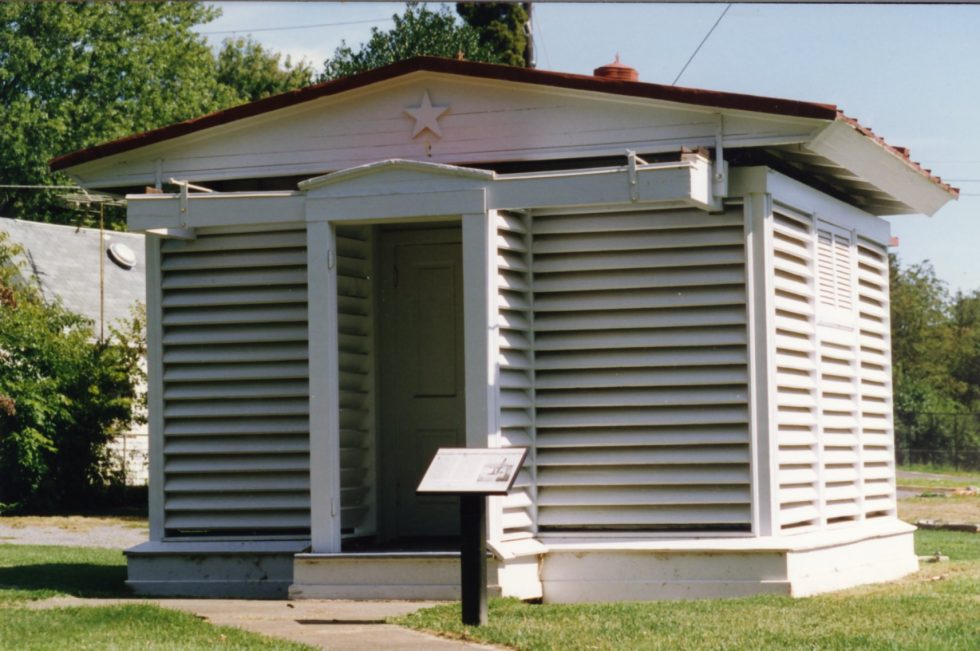
Gaithersburg Observatory, 1998
1903
- Wright Brothers make the first powered aircraft flight
1904
- President Theodore Roosevelt at Burnt Mills
President Theodore Roosevelt at Burnt Mills
1904
The mill was located on the Northwest Branch of the Anacostia River. In a letter to his son Ted following a visit with his wife, Edith, Roosevelt wrote “Dear Ted, Mother and I had a most lovely ride the other day, way up beyond Sligo Creek to what is called North-west Branch, at Burnt Mills, where is a beautiful gorge, deep and narrow, with great boulders and even cliffs. Excepting Great Falls, it is the most beautiful place around here. Mother scrambled among the cliffs in her riding habit, very pretty and most interesting. The roads were good and some of the scenery really beautiful. We were gone four hours, half an hour being occupied with the scrambling in the gorge.” –White House, June 21, 1904.
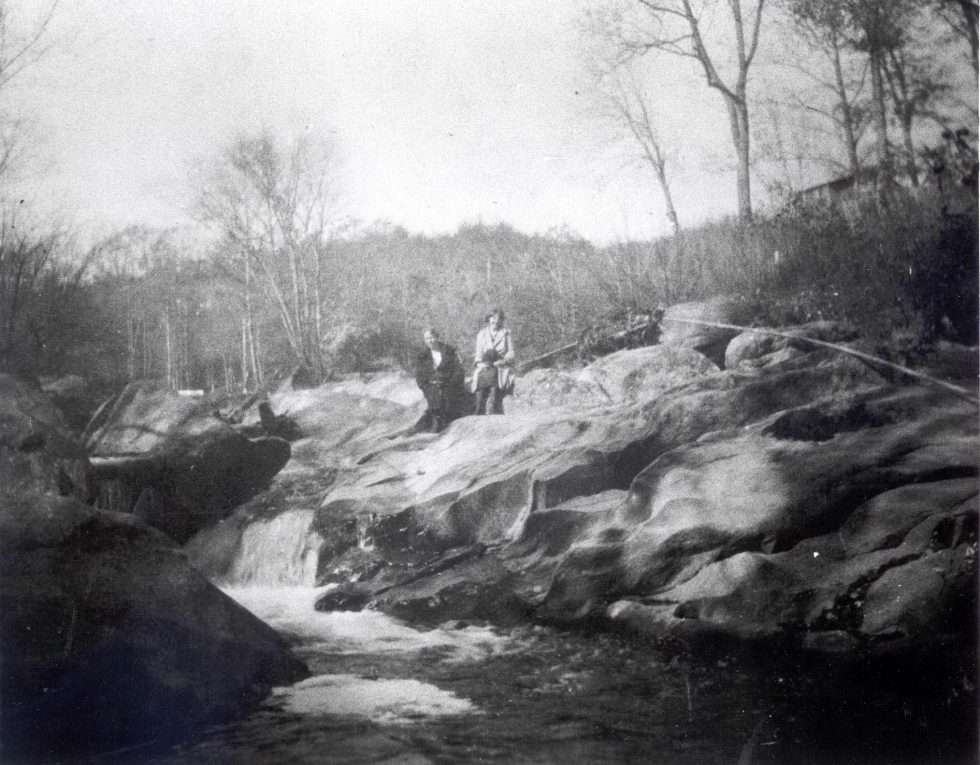
Visitors to the Burnt Mill region, 1928
- Seventh-Day Adventist world headquarters established in Takoma Park
Seventh-Day Adventist world headquarters established in Takoma Park
1904
Leaders of the Adventist movement opened the Washington Sanitarium in 1907, which later became Washington Adventist Hospital.

Washington Sanitarium, c.1908
1909
- Founding of the NAACP (National Association for the Advancement of Colored People)
1911
- Glen Echo Park founded
Glen Echo Park founded
1911
Following the closure of the National Chautauqua at Glen Echo in 1897, vaudeville shows and other entertainment events took place on the site. Then Glen Echo Park opened in 1911 under the ownership of the Washington Railway and Electric Company. The amusement park was restricted to White patrons only until 1961 when protests by Howard University students and members of the local Bannockburn community led to the park’s desegregation. It closed in 1968 and later came under the direction of the National Park Service after a grassroots effort to save the iconic carousel.
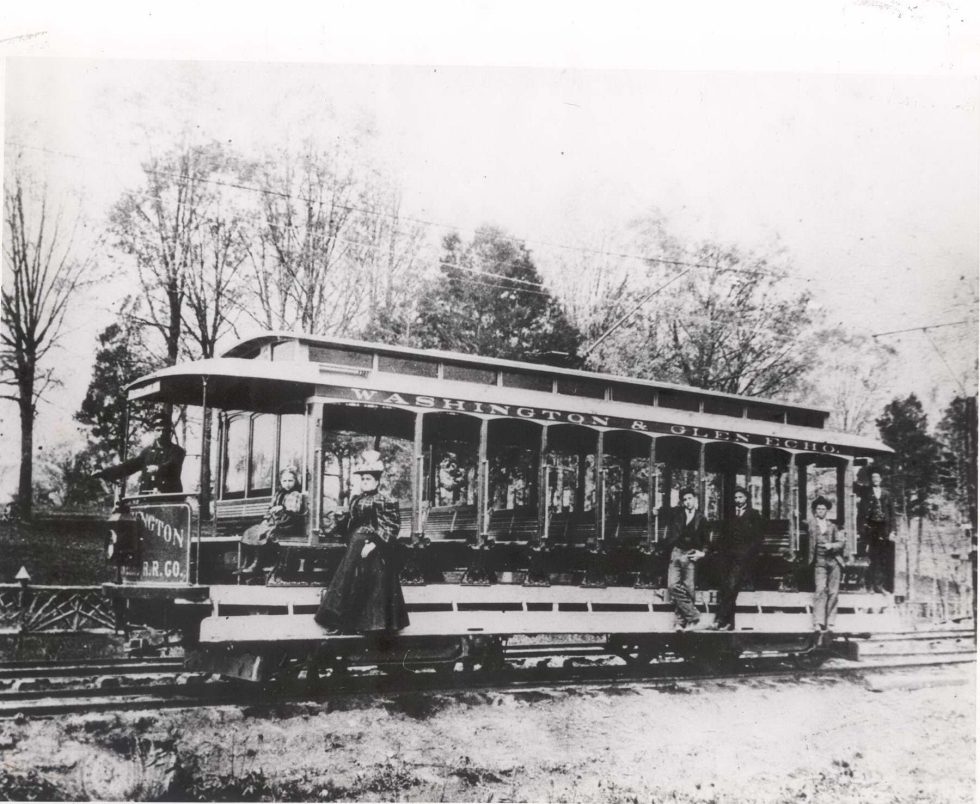
A Washington and Glen Echo open trolley street car of the late 1890’s, it traveled as far as Cabin John loop terminus, east of the Union Arch
1913
- Typhoid epidemic in Rockville
Typhoid epidemic in Rockville
1913
Twenty-eight cases of typhoid led to improvements in Rockville’s water distribution system.
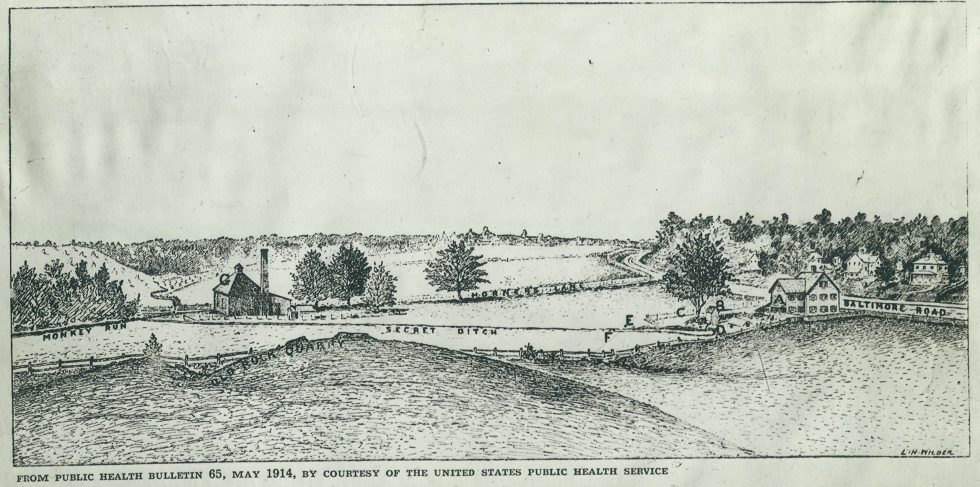
A diagram from the U.S. Public Health Services illustrates how the typhoid epidemic entered Rockville’s water supply
1917
- U.S. enters World War I (ends in 1918)
- World War I Draft in Montgomery County
World War I Draft in Montgomery County
1917
The first 40 men from Montgomery County reported for duty in September.
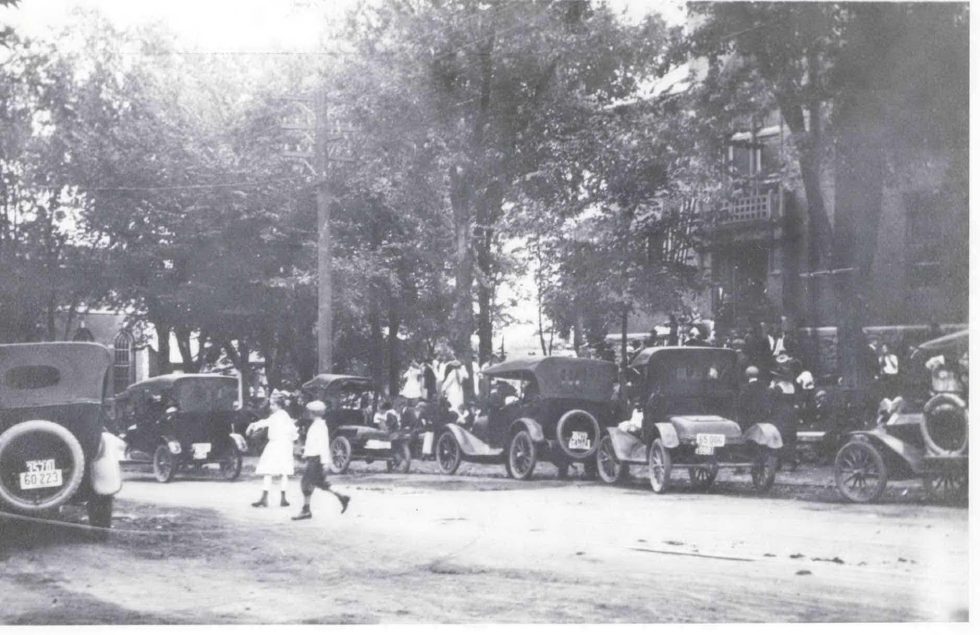
Cars parked outside the courthouse for speeches and ceremony as men leave for the first draft call for World War I. (Lewis Reed, photographer)
1918
- Creation of the Washington Suburban Sanitary Commission
Creation of the Washington Suburban Sanitary Commission
1918
The Washington Suburban Sanitary Commission, a bi-county organization, was established to provide water and sewer service to Montgomery and Prince George’s Counties.
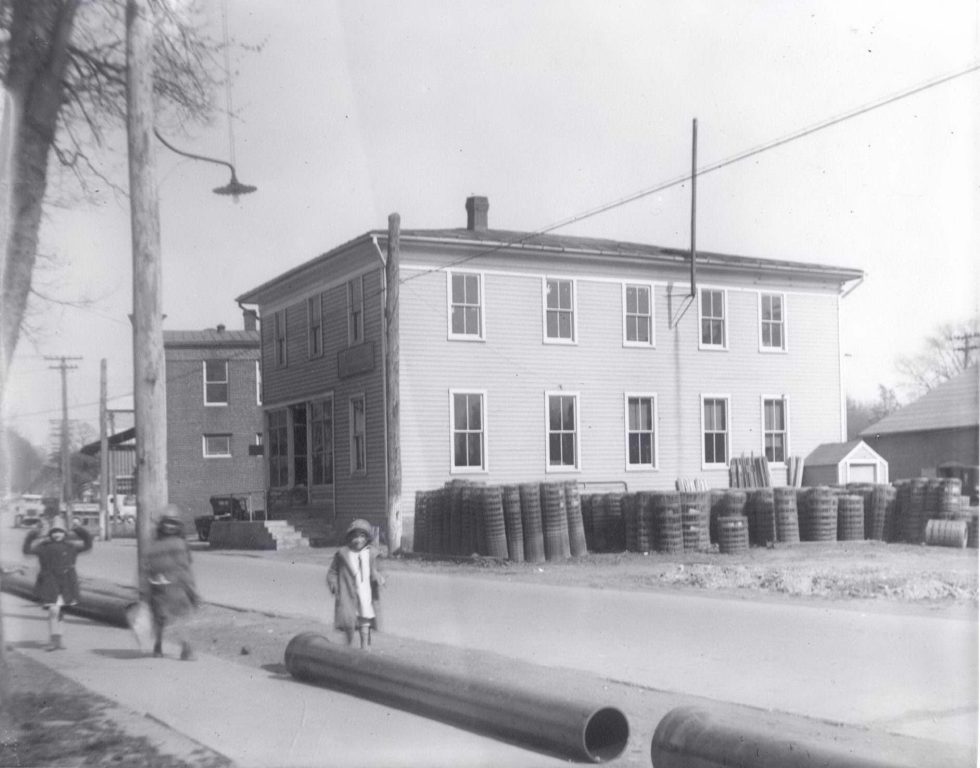
Photo by Lewis Reed, showing sewer pipes ready for installation in Gaithersburg, 1927, in front of the store originally built and operated by Thomas I. Fulks.
- Incorporation of the Silver Spring Volunteer Fire Company
Incorporation of the Silver Spring Volunteer Fire Company
1918
Though many iterations of organized fire-fighting sporadically came and went in communities throughout the county in the late-19th and early-20th century, Silver Spring was the first to incorporate their department in 1918 and purchase a motor-driven fire engine. Through local community fundraising, the Silver Spring company was not only able to purchase a chemical engine (used until the development of water main systems in the early 1920s provided easy access to water), but also secured the first National Guard Armory building in Silver Spring (built in 1914) as their headquarters.
Other early-formed volunteer fire departments included Takoma Park in 1919, Rockville in 1921, Sandy Spring in 1924, and Kensington in 1925.
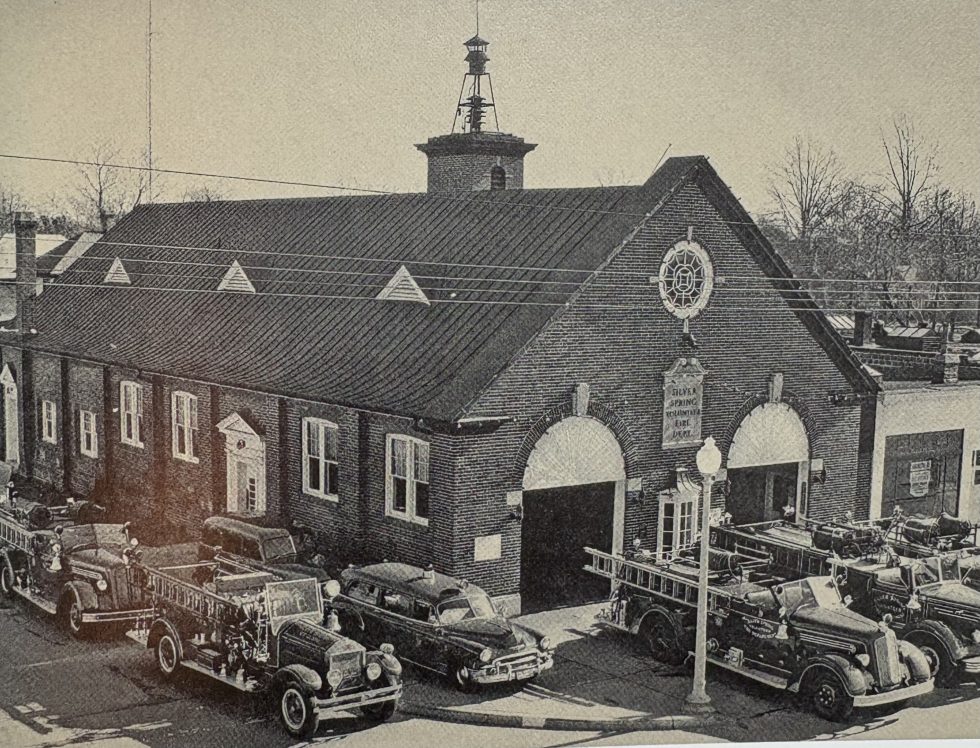
The Silver Spring Volunteer Fire Department, seen here in 1954, was housed for many decades in the “old armory building” at 8131 Georgia Ave. In 2010, the fire department moved to a new station at 8110 Georgia Ave., and this building was remodeled as a restaurant and bar with offices on the upper floor. (Silver Spring Historical Society)
1919
- 18th Amendment is ratified, prohibiting manufacture and sale of alcoholic beverages
1920
- 19th Amendment ratified by Congress gives women the right to vote
- Montgomery County General Hospital opened in Olney
Montgomery County General Hospital opened in Olney
1920
Established by Dr. Jacob Wheeler Bird, Montgomery General was the first acute care hospital in Montgomery County, admitting its first five patients ahead of completion in 1920 during a blizzard and a flu outbreak. Black patients were admitted, but segregated to treatment in the facility’s basement.
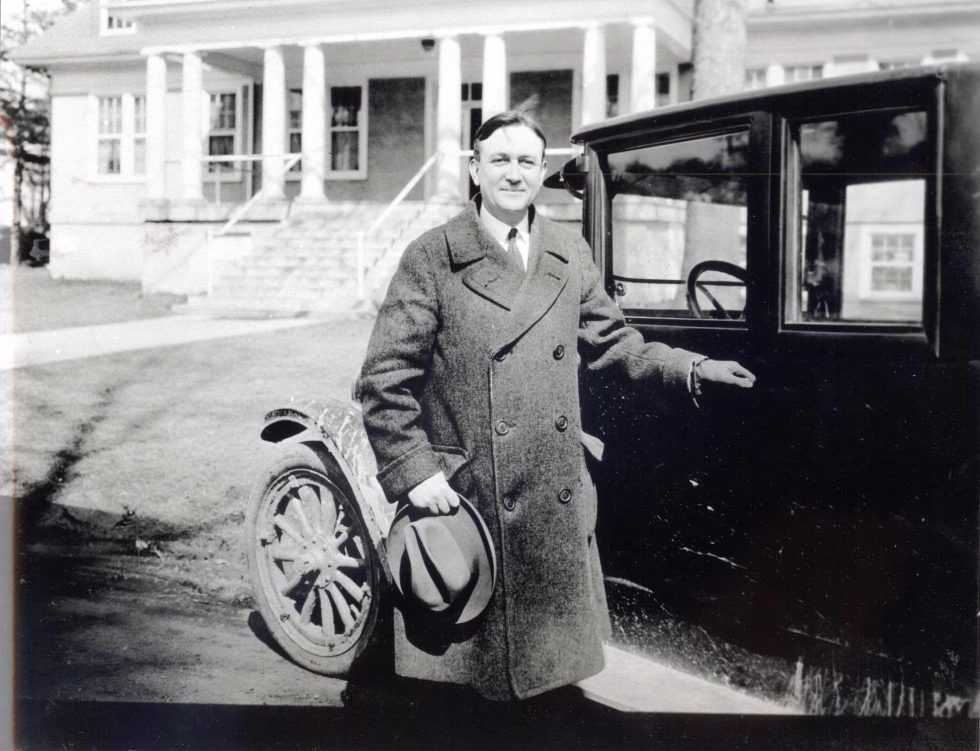
Dr Jacob Bird outside Montgomery General in the 1920s. Part of 182 off of Olney-Sandy Spring Road is named “Dr. Bird Road” in his honor
- E. Brooke Lee elected Comptroller of Maryland
E. Brooke Lee elected Comptroller of Maryland
1920
Lee began a rapid ascent in Maryland politics, and by extension became the leading figure in county governance over the next several decades. First as Comptroller, then Secretary of State and finally Speaker of the House of Delegates (as well as the long-time county Democratic party leader), Lee dominated county political affairs until home rule transferred power wielded in Annapolis to local elected officials.
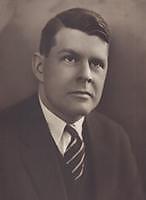
E. Brooke Lee c.1940 (Library of Congress)
1921
- First Rosenwald school built for Black students
First Rosenwald school built for Black students
1921
Rockville Elementary School was the first of 17 Rosenwald schools for Black children that were built throughout Montgomery County the 1920s. The initiative began as a cooperative venture in 1912 between Booker T. Washington and philanthropist Julius Rosenwald, president of Sears, Roebuck and Co. Most of the county’s Rosenwald schools were built on designs produced by the Tuskegee Institute.
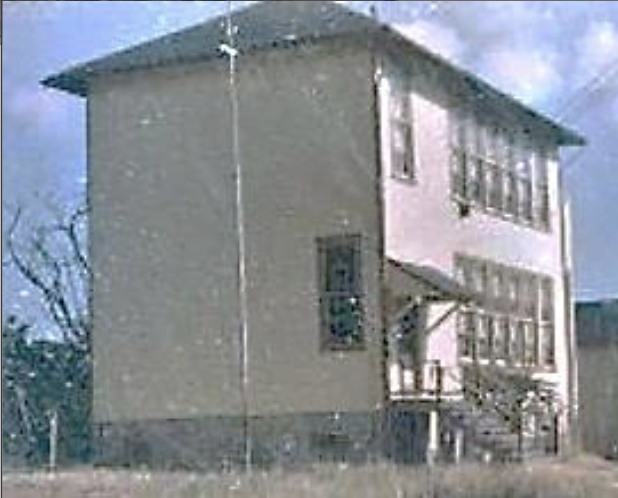
The two-story 1921 Rosenwald school built to replace the original Rockville elementary school building that burned in 1912. It stood on what is the northeast corner of N. Washington Street and Beall Avenue today. (Peerless Rockville)
- Montgomery County chapter of the League of Women Voters formed
Montgomery County chapter of the League of Women Voters formed
1921
Following the 1920 ratification of the Nineteenth Amendment which granted women the right to vote, the American Woman Suffrage Association was reorganized as the League of Women Voters. The Montgomery County chapter was established the following year as a non-partisan organization that would educate and encourage women to participate effectively in politics, and would endorse legislation to improve the quality of life for all citizens within their communities.
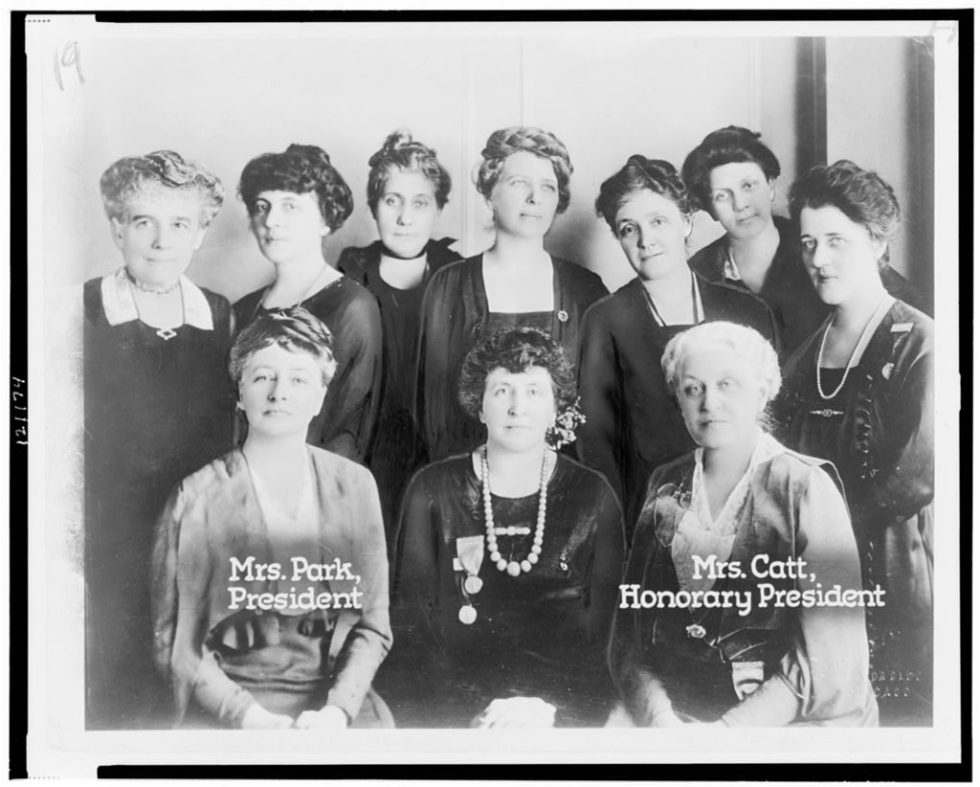
The Board of Directors National League of Women Voters, photographed at the Chicago Convention, February 1920. The ten women include Mrs. Maud Wood Park, Mrs. Grace Wilbur Trout, and Mrs. Carrie Chapman Catt
- Rockville Volunteer Fire Department founded
Rockville Volunteer Fire Department founded
1921
In 1921 following a fire that destroyed much of the town’s main street, 50 white men gathered at the office of the Potomac Electric Power Company to form the Rockville Volunteer Fire Department. Previous to this newly formed department in Rockville, there had been an all-Black fire department in operation since 1895, led by chief George W. Meads until his death in 1919.
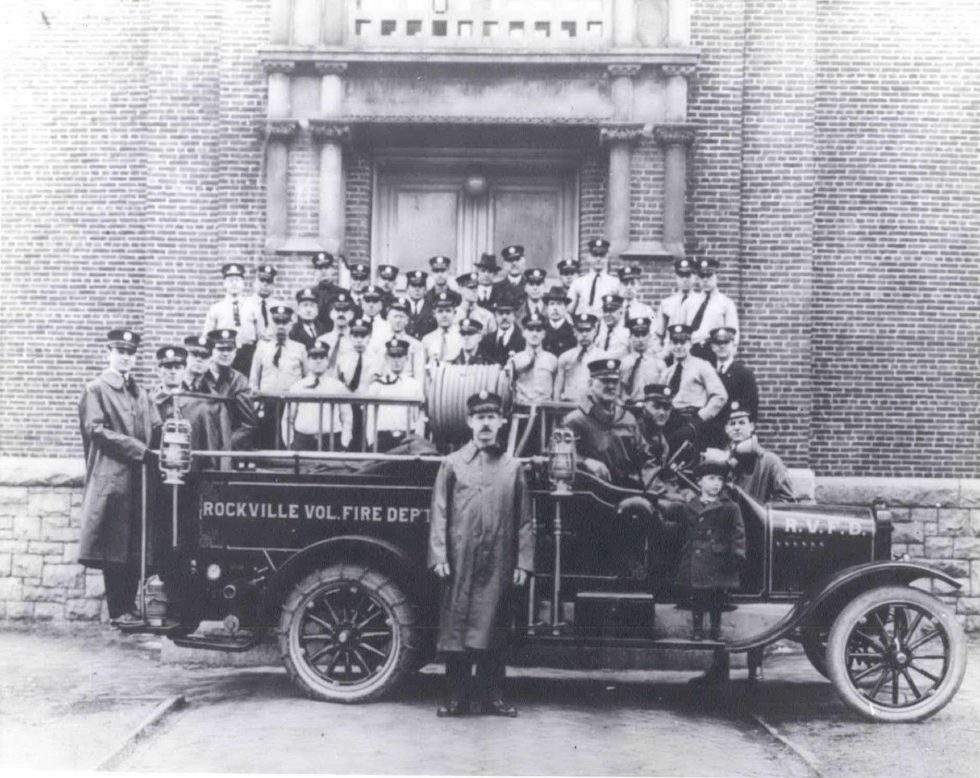
The new Rockville Volunteer Fire Department pictured with its state-of-the-art Model T Ford “Waterous” fire truck, purchased in January, 1922
1922
- Montgomery County Police Department established
Montgomery County Police Department established
1922
The first police department consisted of a chief and five motorcycle patrolmen, pictured below: Earl Burdine, Lawrence Clagett, Guy Jones, Chief Charles Cooley (standing), Leroy Rodgers, and Oscar T. Gaither.
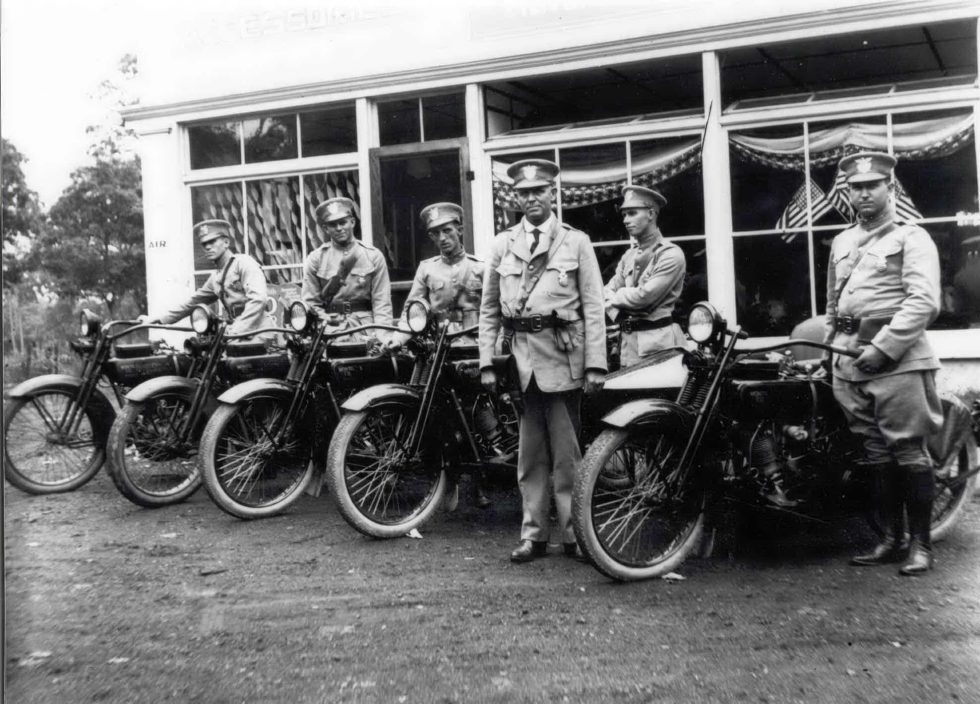
Photo by Lewis Reed– the officers are posing outside Reed Brothers automobile dealership in Rockville
- Woodmont Country Club moved to Montgomery County
Woodmont Country Club moved to Montgomery County
1922
Established in 1913 as the Washington Suburban Club by members of the District of Columbia’s Jewish community in a time when Jews were barred from membership in area social clubs, the members moved to a new location at Woodmont Circle, off the Rockville Pike in Bethesda. In 1930, the club was officially renamed Woodmont Country Club after its new location. It would move again to its present location in Rockville 1950, due to expansion of the neighboring National Institutes of Health.
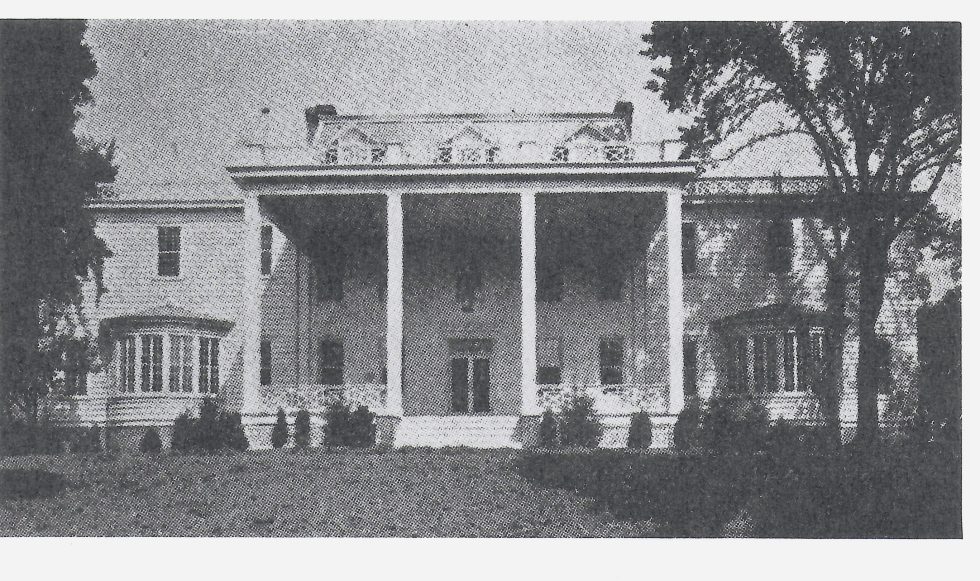
Newly renovated clubhouse at Woodmont Circle, opened to the club members in 1922
1926
- Asbury Methodist Home Opened
Asbury Methodist Home Opened
1926
The “Asbury Methodist Home for the Aged” was built in 1926 on the grounds of the Rolling Acres dairy farm owned by William Magruder (1877-1940), and continued to operate its own dairy until the 1950s. Founded by the United Methodist Church in an era when churches often took on responsibility for elder care, for many years the Methodist Home required residents to be members of the church to live there (that requirement has since been lifted). Today, 100 years later, Asbury Methodist Village continues to provide a safe, community-based environment for more than 1,500 senior citizens.
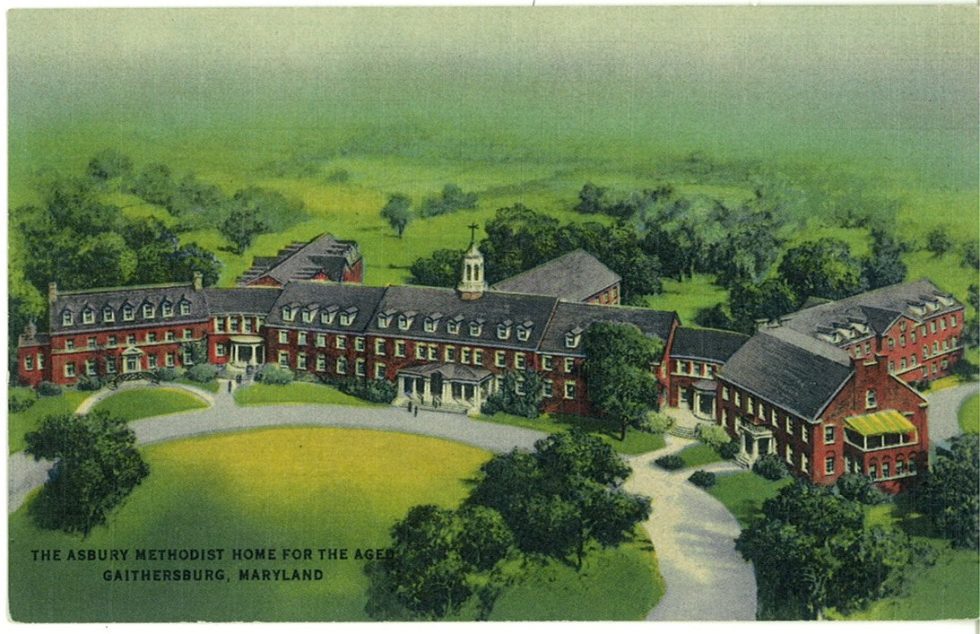
Postcard featuring the original buildings at Asbury, then known as the “Home for the Aged.” These buildings are no longer residential but serve as the administrative offices.
1927
- Maryland-National Capital Park and Planning Commission established
Maryland-National Capital Park and Planning Commission established
1927
The bi-county agency known as “M-NCPPC” was authorized by the Maryland General Assembly to plan and guide orderly growth and development in Montgomery and Prince George’s counties, modeled after the National Capital Planning Commission established by Congress in Washington, D.C. in 1924.
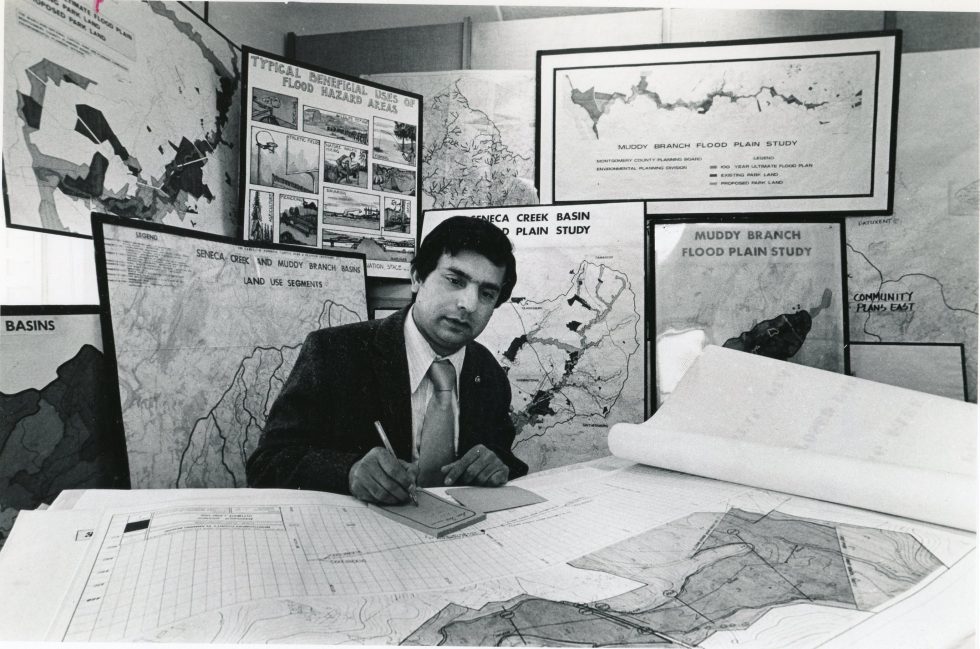
Park and Planning office, c.1950s
- Montgomery County’s first high school for Black students opened
Montgomery County’s first high school for Black students opened
1927
Located on N. Washington St. in Rockville, this Rosenwald school was known as “Rockville Colored High School.” The school was moved to a reconstructed building in the Lincoln Park neighborhood in 1935 and renamed Lincoln High School.
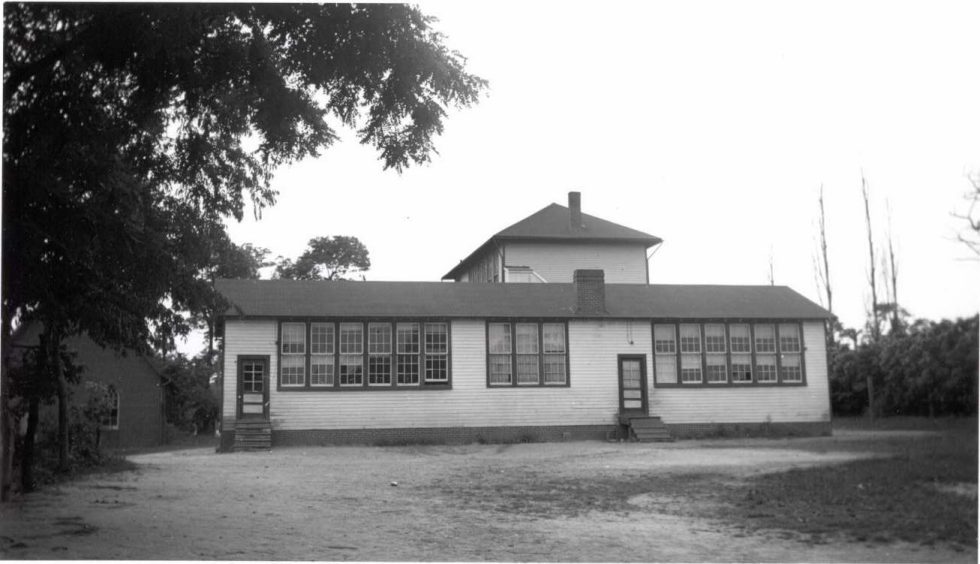
1942 view of the high school building, with the older two-story elementary school showing behind it
1928
- First television broadcast
- Lavinia Engle elected a delegate to Maryland General Assembly
Lavinia Engle elected a delegate to Maryland General Assembly
1928
Engle was the first woman from Montgomery County to be elected to the Maryland General Assembly, serving as a Delegate in the lower house.
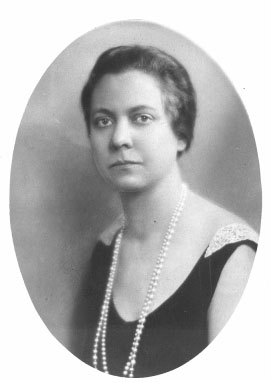
Lavinia Engle, a women’s suffrage advocate born and raised in Montgomery County, was also one of the founders of the League of Women Voters. (Photo from the Social Security Administration History Archives)
- Congressional Airport established
Congressional Airport established
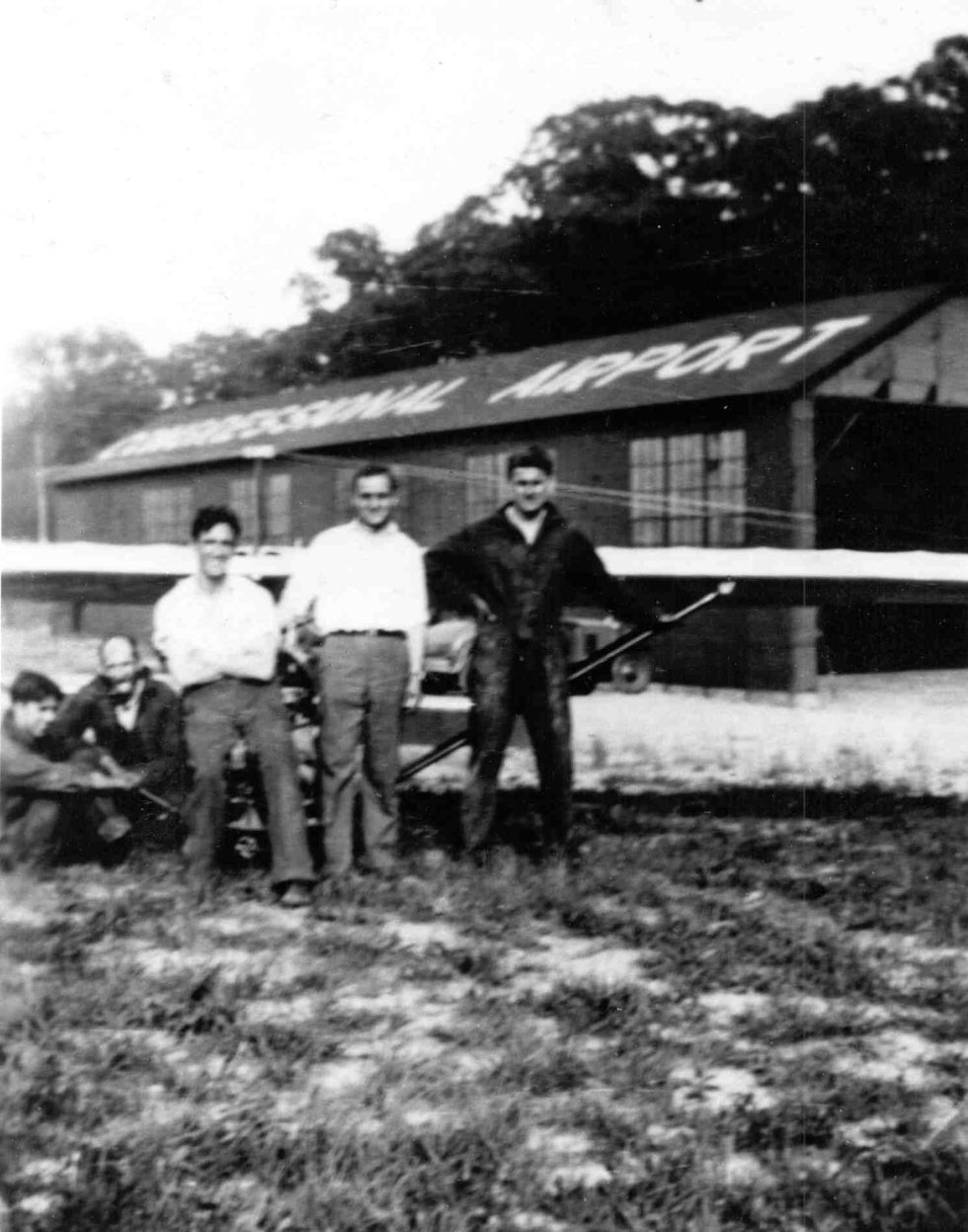
1928
Land previously leased to the Congressional School of Aeronautics was sold and became Congressional Airport. The airport closed in 1958 to make way for Congressional Plaza Shopping Center.
1929
- Great Depression begins
1931
- Fourth Montgomery County Courthouse opened
Fourth Montgomery County Courthouse opened
1931
The “Grey Courthouse,” as it is known today, was built adjacent to the 1891 court building, featuring a new courtroom, offices, and a jail on the fourth floor. The courtroom was host to nationally significant trials, the most noteworthy of which was Gibbs v. Broome, et al. in 1937, which featured lead attorney Thurgood Marshall of the NAACP (who later served as a Supreme Court justice) and led to equal pay for Black schoolteachers. Today, the building is designated as part of the Montgomery County Courthouse Historic District and is listed on the National Register of Historic Places by the Maryland Historical Trust.
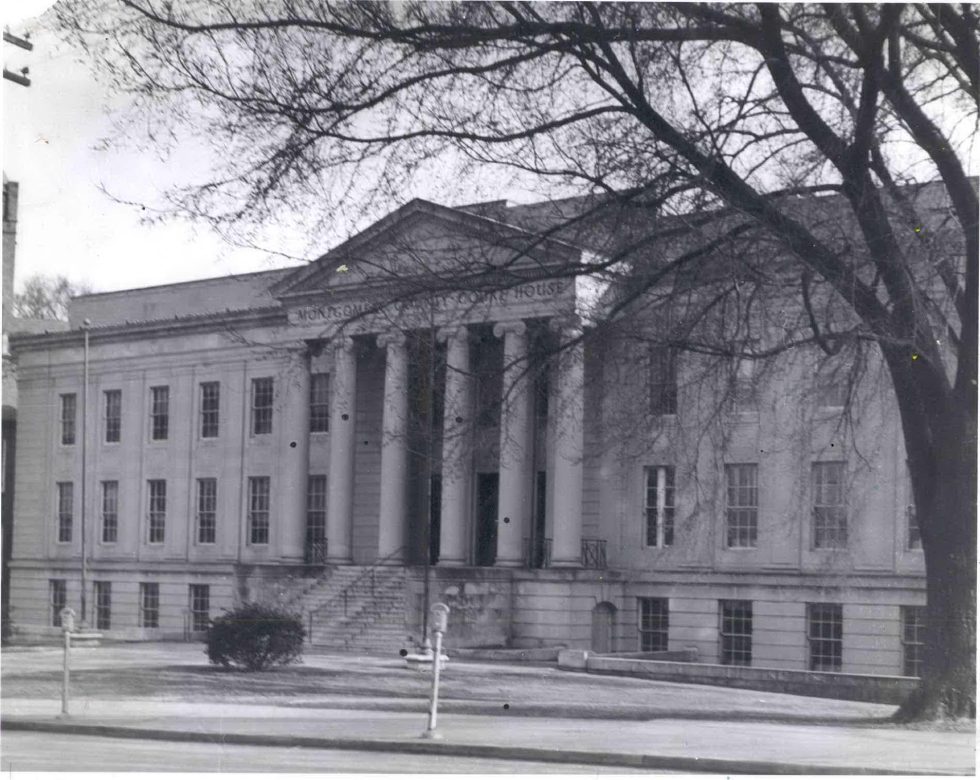
Montgomery County Courthouse in 1954. The fourth floor, used for holding cells, is disguised from the ground view by walls set back behind the pediment, and low-level windows that allowed light but no view.
1932
- Election of Franklin D. Roosevelt, launches New Deal programs in 1933
- Montgomery County Farm Women’s Cooperative Market organized
Montgomery County Farm Women’s Cooperative Market organized
1932
This co-op was formed at the height of the Great Depression to enable farm women to sell their produce. It is still in operation today in the same location on Wisconsin Avenue in Bethesda.
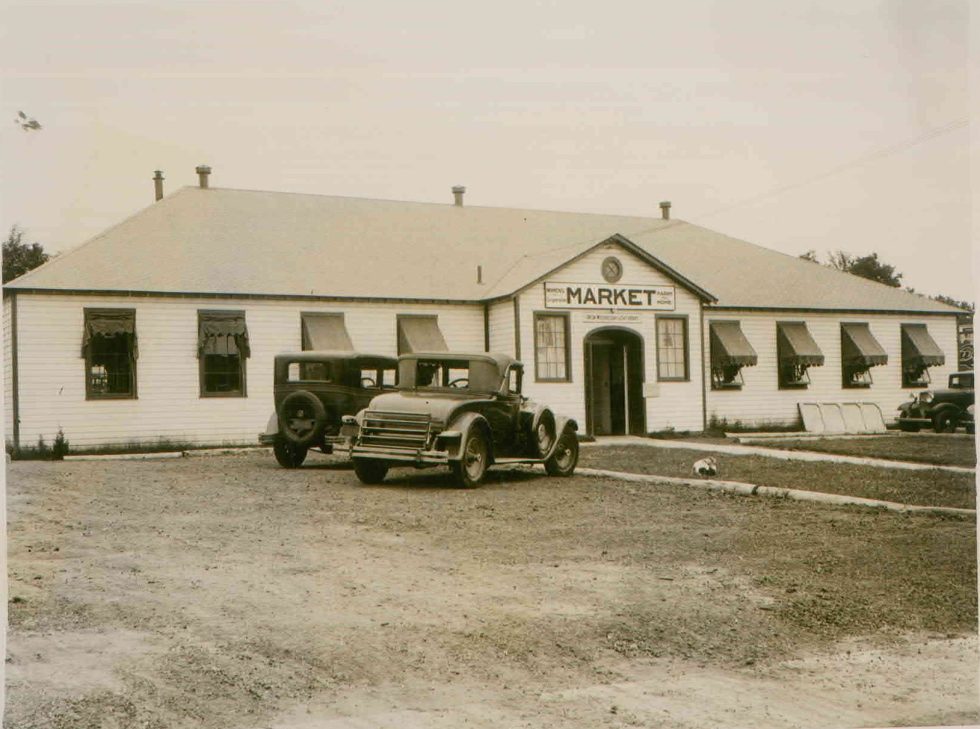
Farm Women’s Market building, shortly after opening c.1933
1936
- Gibbs v. Broome case for equal teacher salaries
Gibbs v. Broome case for equal teacher salaries
1936
A landmark case leading up to Brown v. Board of Education (1954), this case for equal salaries for teachers of both races was brought by William B. Gibbs, Jr., teacher and acting principal of Rockville Colored Elementary School, against Superintendent of Schools Edwin Broome and the School Board. Gibbs was represented by Thurgood Marshall and the NAACP. The case was settled out of court in Gibbs’s favor, but he was fired from his position with the schools.
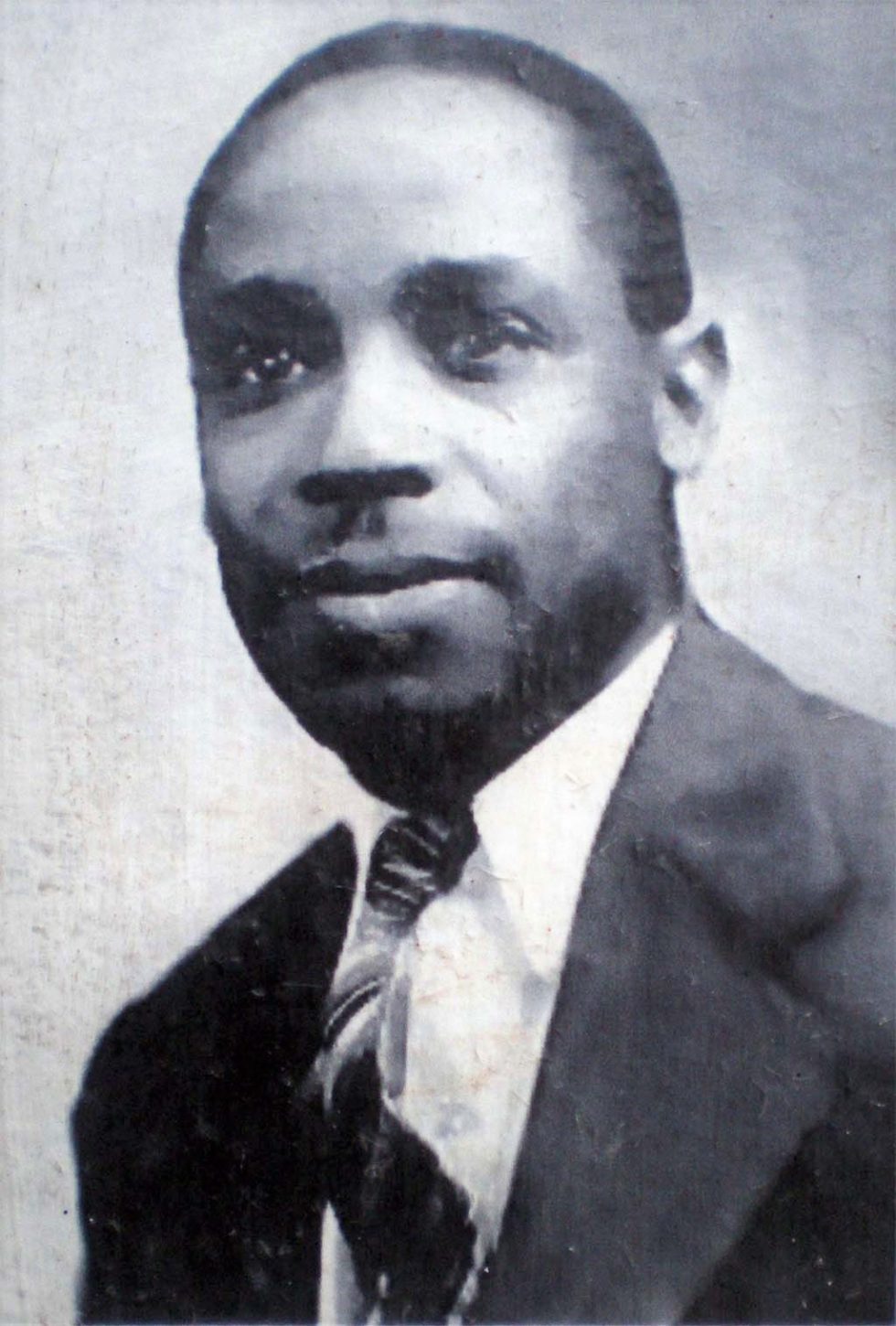
William B. Gibbs, Jr., c. 1935
1937
- Montgomery County branch of the NAACP established
Montgomery County branch of the NAACP established
1937
Montgomery County’s branch of the NAACP, originally formed in 1922 but defunct by 1924, was re-activated in the wake of the Gibbs v. Broome lawsuit. William B. Gibbs, Jr., the plaintiff in the lawsuit, was elected the first president. In 1957, Montgomery County’s chapter surveyed eating establishments to determine which refused service to Black patrons. At that time there was no law that prohibited racial discrimination by restaurants or other businesses. The NAACP initiated boycotts and picketing of some restaurants that led in part to the creation in 1960 of the Human Relations Commission (now known as the Office of Human Rights).
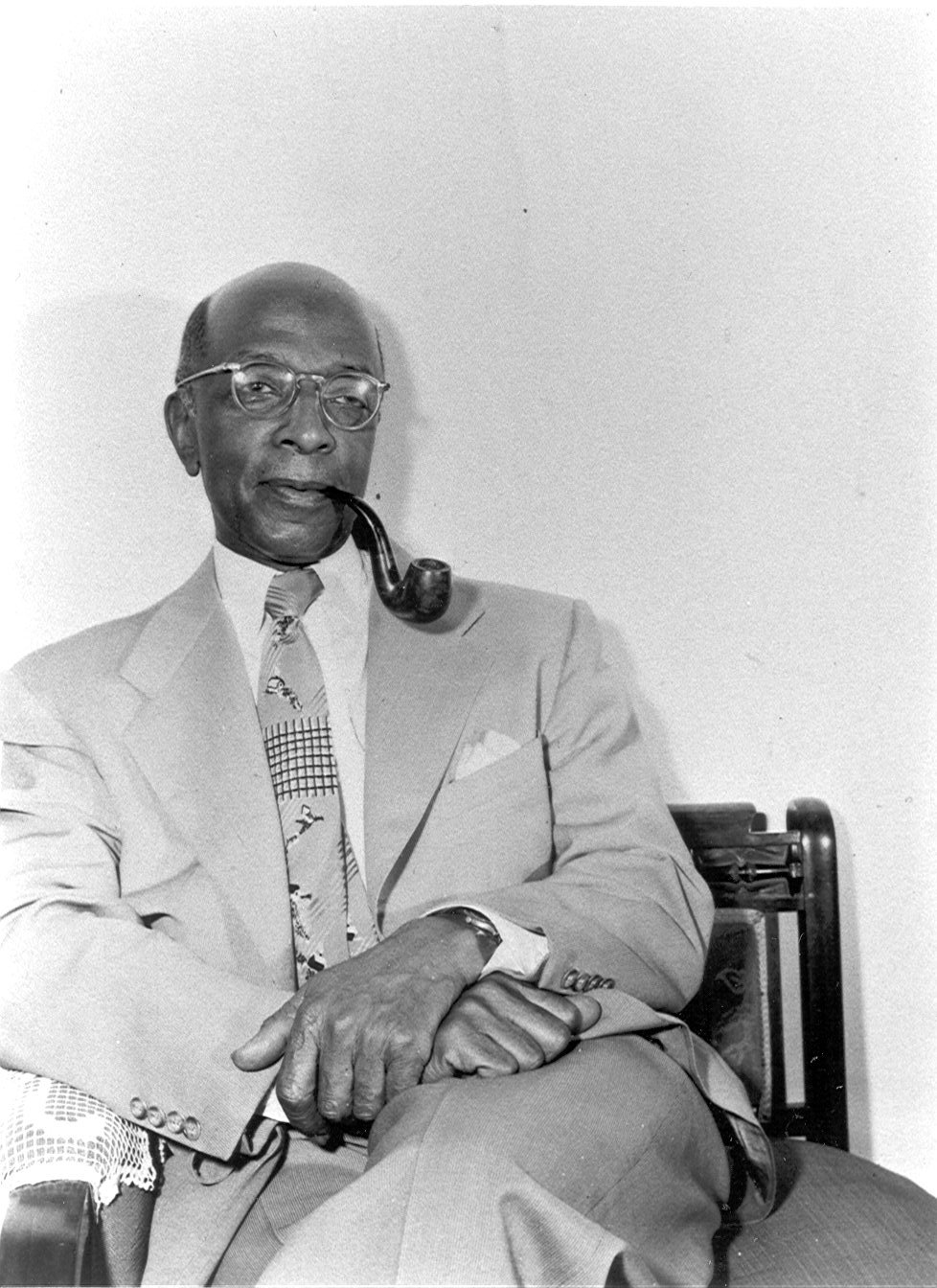
Pictured: Alphonzo Lee, a founding member of the NAACP in Montgomery County, served as its president in the 1950s
1938
- National Institute of Health moved to Bethesda
National Institute of Health moved to Bethesda
1938
When Luke and Helen Wilson offered their 45-acre estate in Bethesda to the U.S. government, the National Institute of Health was moved there, one of the first of many federal facilities that would be located in the county and significantly impact its development. NIH would be expanded many times with numerous additional research endeavors, gaining the name it is known by today, National Institutes of Health.
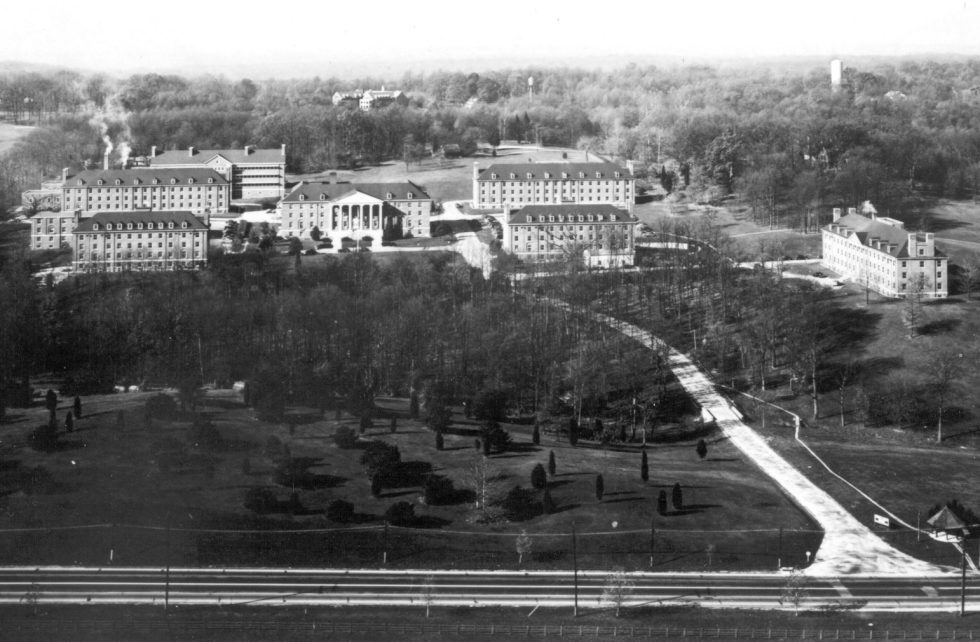
The first seven NIH buildings, pictured in 1949
- Silver Spring Shopping Center opened
Silver Spring Shopping Center opened
1938
This was the first suburban shopping center opened in Montgomery County. In 1947, the department store chain Hecht’s opened its first suburban location near this shopping center, centering Silver Spring as a retail hub for both urban and suburban shoppers in the post-war era. Wheaton Plaza, the county’s first mall, opened in 1960.
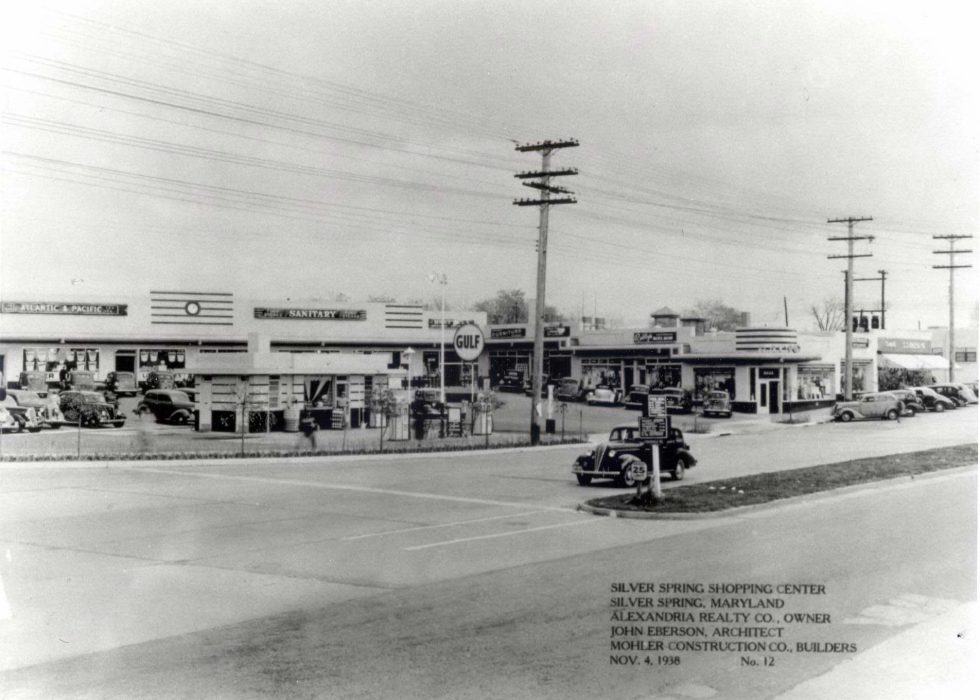
Photo taken near time of opening, November 4, 1938
1940
- Drop in population of African Americans
Drop in population of African Americans
1940
During the Great Depression agricultural prices dropped and farmers were among the hardest hit by the Depression. A significant number of African Americans, many of whom were farm workers, left the county—an exodus prompted both by the loss of farmland to encroaching suburbanization and the lack of available housing due to increasing racial restrictions in suburban neighborhoods. Black residents, who made up about one-third of the county’s population before the Civil War, comprised only four percent of the population by 1960.
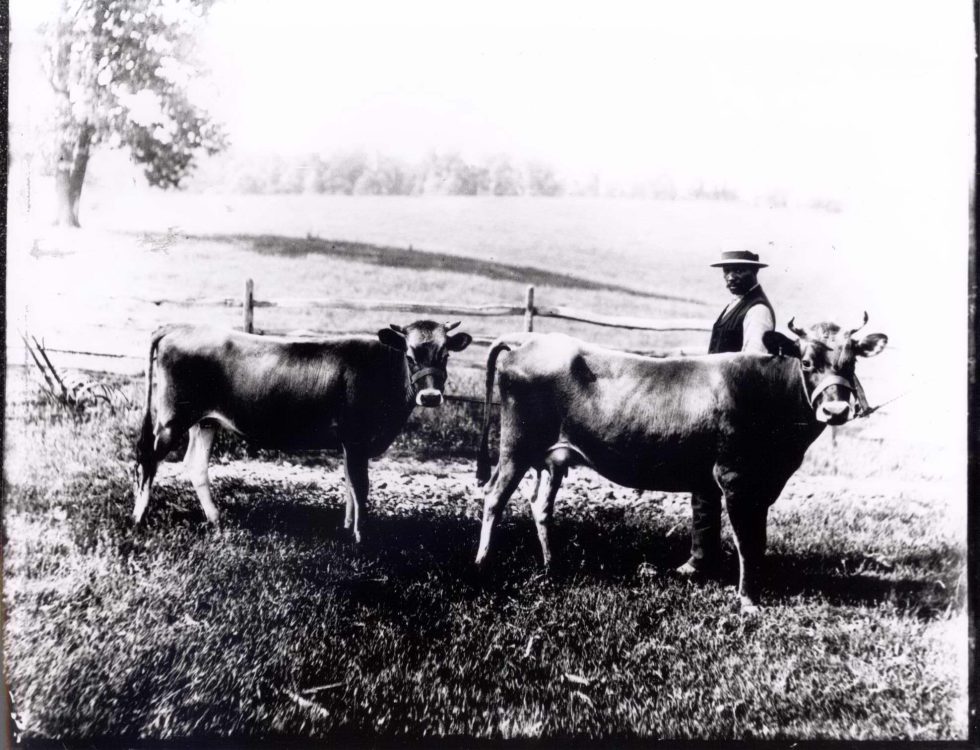
Dairy farmer near Sandy Spring, c. 1911
1941
- The United States enters World War II (the war ends in 1945)
1944
- GI Bill signed into law
- Montgomery County Historical Society founded
Montgomery County Historical Society founded
1944
The county’s historical society was organized by Montgomery County native Lilly Stone as a branch of the Maryland Historical Society.
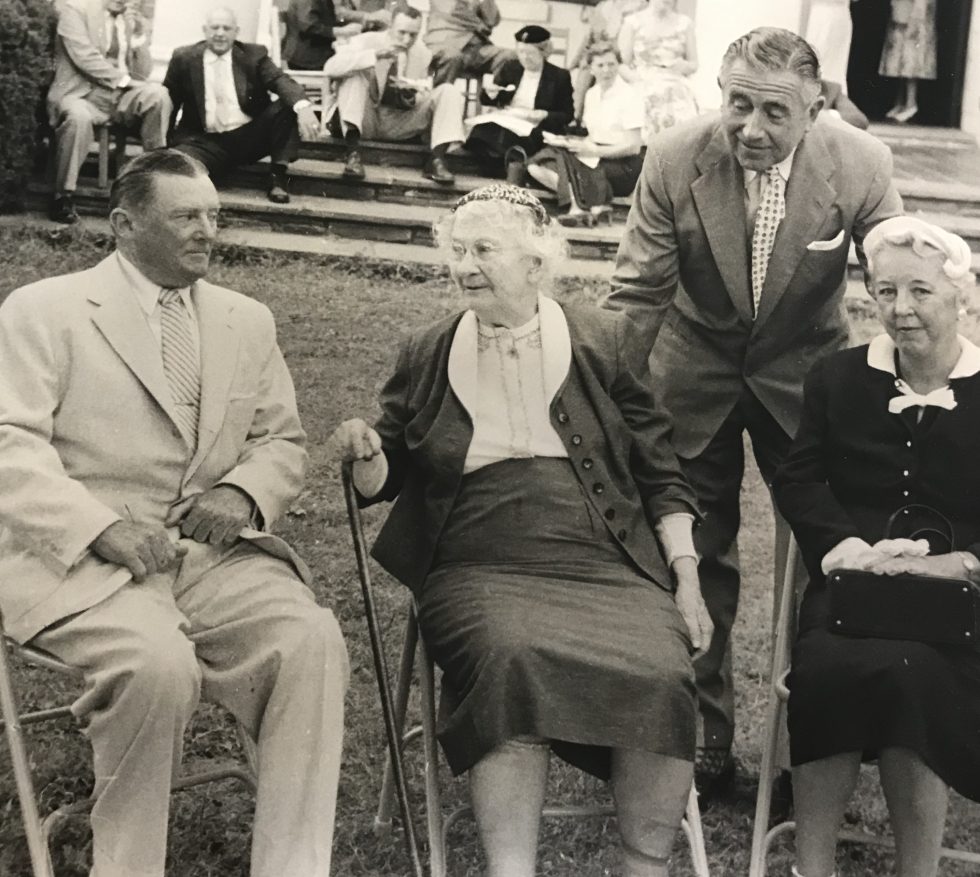
Lilly Stone (center) at Glenview Mansion, the first home of the historical society, in 1955. Judge Stedman Prescott is on the left and Mr. and Mrs. Spencer Jones are on the right
1946
- Montgomery Junior College established
Montgomery Junior College established
1946
Montgomery County’s first school for post-high school education initially offered night classes at Bethesda-Chevy Chase High School. Its first dedicated building (pictured below) stood on the grounds of the high school and was pieced together from two existing military surplus units moved from Fort Washington. It housed offices, biology and chemistry laboratories, a student lounge, and a bookstore. Today, Montgomery College offers liberal arts education to a diverse student population, operating from three campuses in Takoma Park, Rockville, and Germantown.
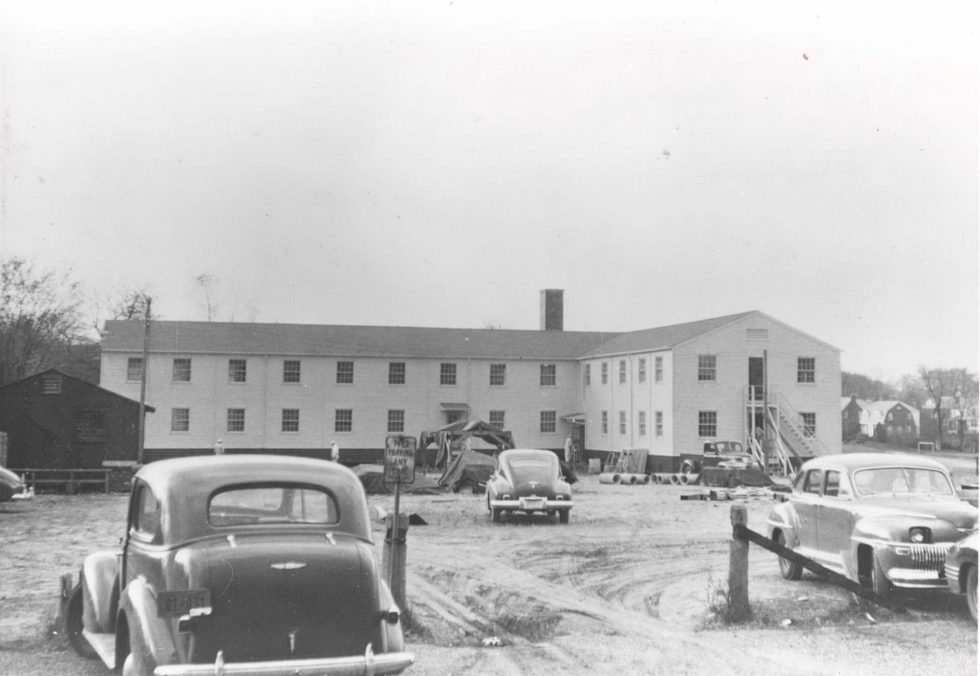
The first Montgomery Junior College building is still under construction in this photo, which likely dates it to late 1947 (it opened in January, 1948).
1948
- First synagogue established in Montgomery County
First synagogue established in Montgomery County
1948
Ohr Kodesh Congregation, formerly known as the Montgomery County Jewish Center, was established in Chevy Chase. In 1965, the only Jewish day school in Montgomery County began meeting in the basement of the Center, later called the Solomon Schechter School. The school moved to its current facility on E. Jefferson Avenue and Montrose Road in 1977 and in 1980 was renamed the Charles E. Smith Jewish Day School, for his “extraordinary contribution in supporting the Jewish Day School and making it a reality.”
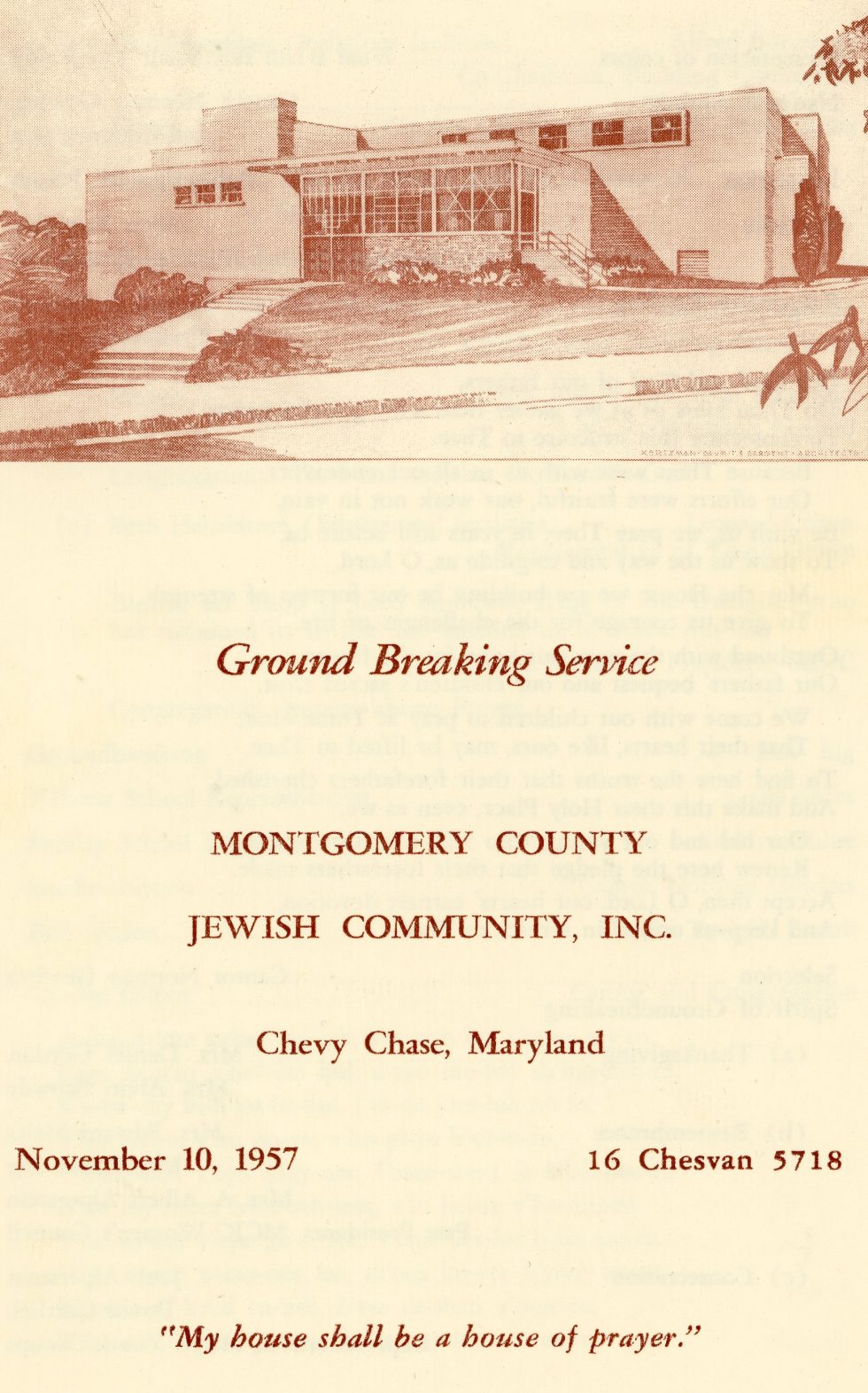
(From the Collection of the Lillian and Albert Small Capital Jewish Museum)
- Home Rule: first County Charter adopted
Home Rule: first County Charter adopted
1948
Montgomery County voters approved a home rule charter with a Council-Manager government, the first county in Maryland to do so. The charter significantly increased local officials’ decision-making powers that heretofore largely lay in Annapolis. A major impetus for the new charter had come in 1941 with the release of a detailed study by the Brookings Institution of Washington, D.C., which concluded the county had “outgrown its form of government,” consisting at the time of a board of commissioners with relatively few powers.
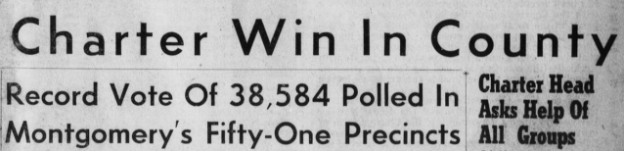
Headline from the Montgomery County Sentinel, Nov. 4, 1948, announcing the voters’ approval of a home rule charter
1949
- Home Rule: first County Council
Home Rule: first County Council
1949
Montgomery County voters elected six men and a woman to fill the first County Council. Dorothy S. Himstead, a leader in the charter campaign, would be followed on the Council the next year by two other women, Stella B. Werner, also a charter advocate, who would later become the Council’s first female president, and Kathryn J. Lawlor, who in 1955 would become the first woman Circuit Court judge.
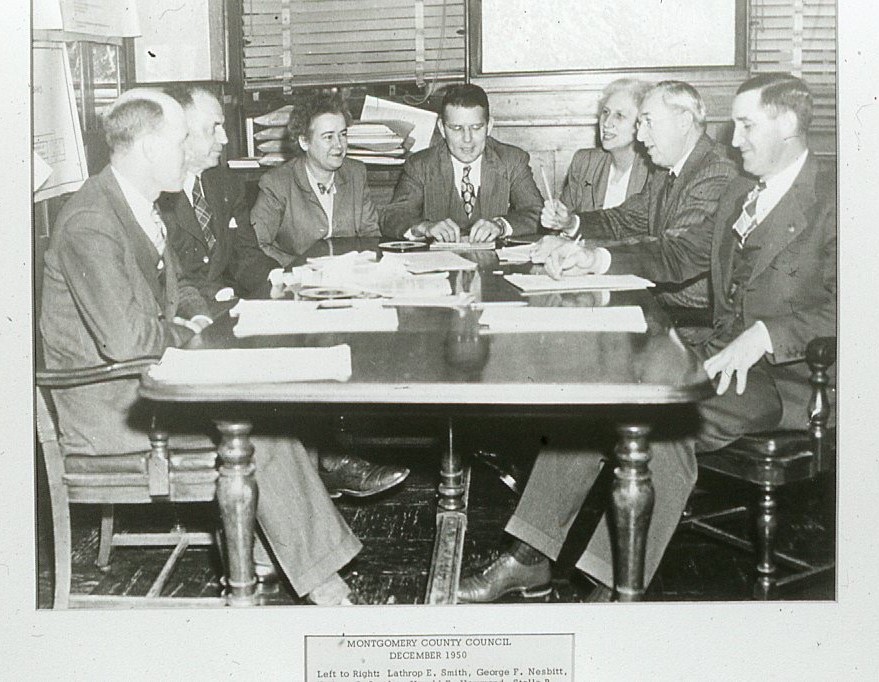
Council members elected to the second Montgomery County Council in 1950, including: Lathrop E. Smith, George Nesbitt, Kathryn J. Lawlor, Harold F. Hammond, Stella B. Werner, J. Lewis Monarch, Grover K. Walker
- Montgomery County Fair restarted in Gaithersburg
Montgomery County Fair restarted in Gaithersburg
1949
After the Agricultural Society folded in the 1930s, no annual county fair was held for many years. Then in 1945, 4-H agricultural leaders began gathering informally to hold livestock shows. A few years later, the group organized the Montgomery County Cooperative Agriculture Center, Inc., which still hosts a county fair every summer on grounds originally purchased from Herman Rabbitt in Gaithersburg.
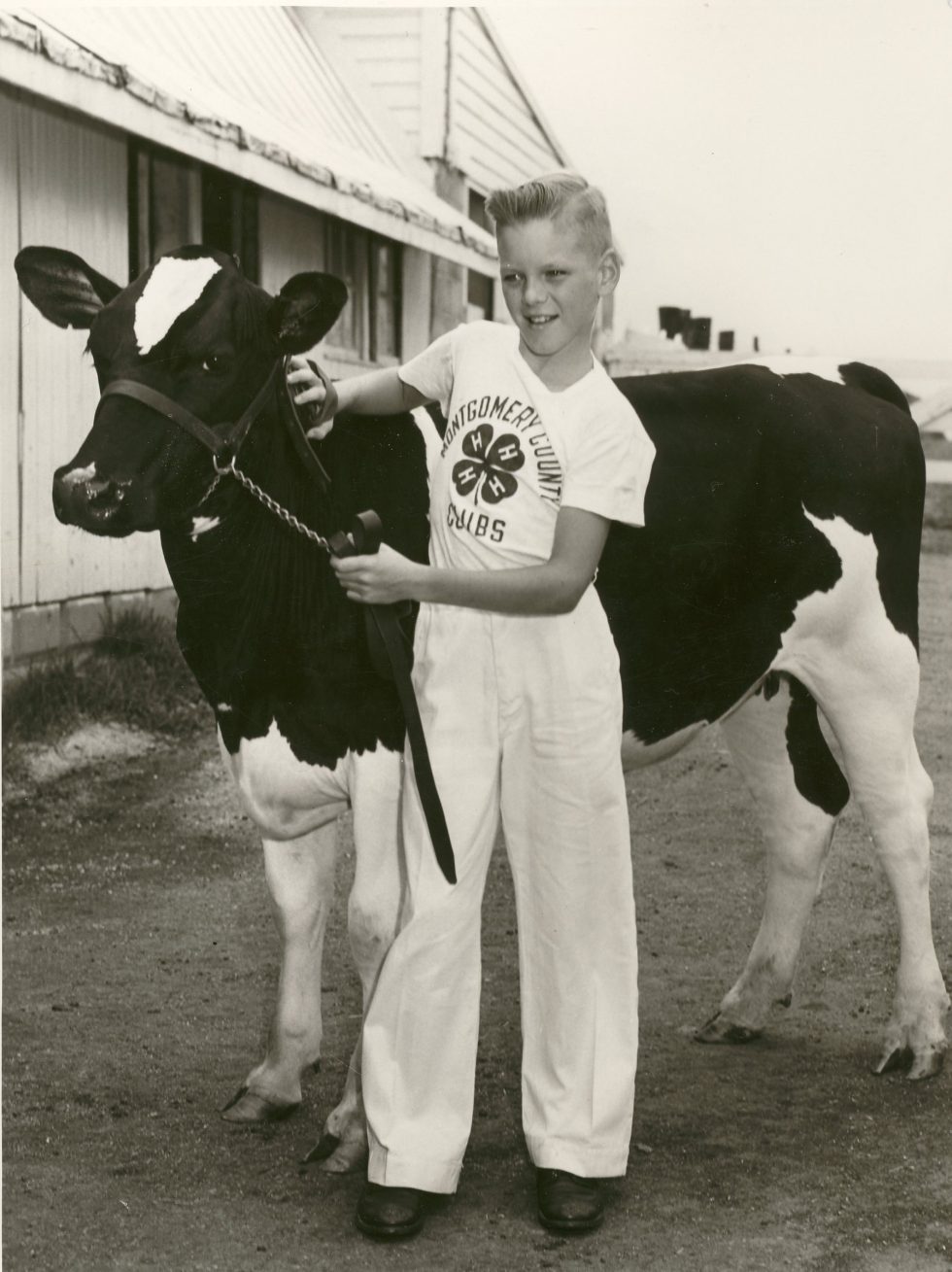
4H member Thomas King shows his calf, c.1950s
1950
- The Korean War begins (concludes in 1953)
- Montgomery County Public Library system established
Montgomery County Public Library system established
1950
On May 31, the County Council passed the County Library Law of 1950, which created a Department of Public Libraries administered by a professional librarian and advised by a Library Board, incorporating seven independent community libraries into a unified system. Previously-established independent libraries in Bethesda and Rockville joined several years later. Takoma Park’s library is still independent. The first library director, George B. Moreland, assumed office in 1951.
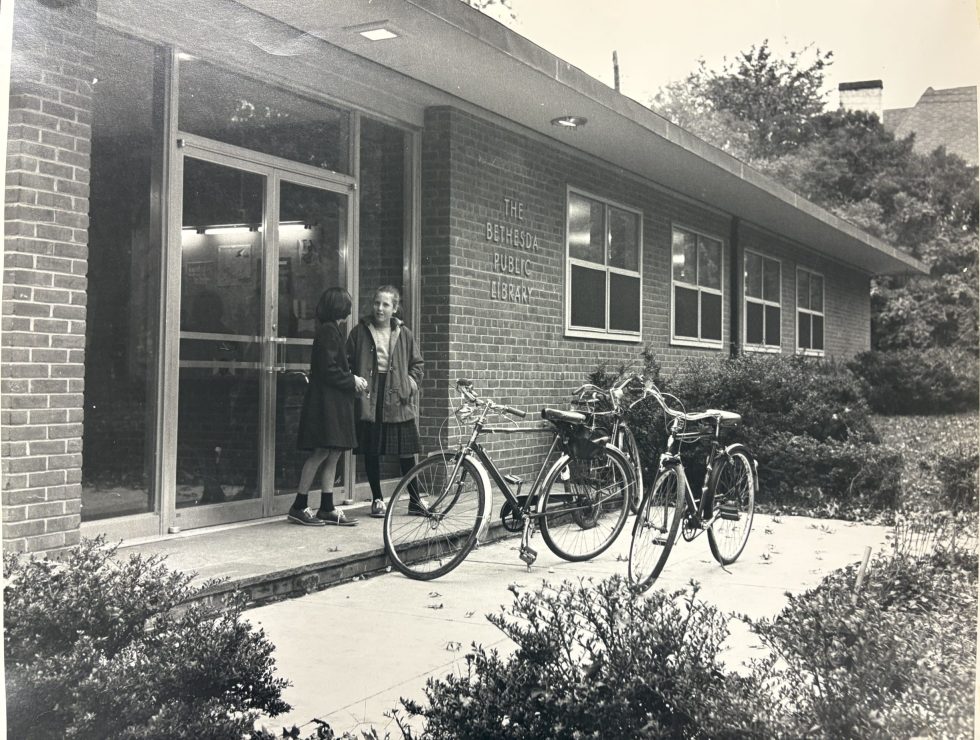
Young girls outside the Bethesda Public Library, c. 1956
- Total population of Montgomery County reached 164,401
Total population of Montgomery County reached 164,401
1950
With an influx of federal workers during the New Deal and World War II bolstering Montgomery County’s population—and especially the baby boom after soldiers returned home—the county’s population skyrocketed. The number of residents doubled between 1940 and 1950 and would double again by 1960. Large new developments of modest homes sprang up, most notably Twinbrook and Wheaton Village. An average of 4.5 schools would be built every year in the decade of 1950s; seven per year in the 1960s.
1954
- Brown v. Board of Education Supreme Court ruling
1955
- Desegregation of public schools started in Montgomery County
Desegregation of public schools started in Montgomery County
1955
Montgomery County was the first in Maryland to act on the Supreme Court’s order to desegregate “with all deliberate speed.” A limited number of elementary schools were integrated in the fall of 1955, with Black students residing downcounty, who were still attending substandard wood-frame schools built decades earlier, entering formerly all-white schools. The process, expanding gradually by area and grade level, was considered complete by 1961,when all the all-Black schools had been closed.
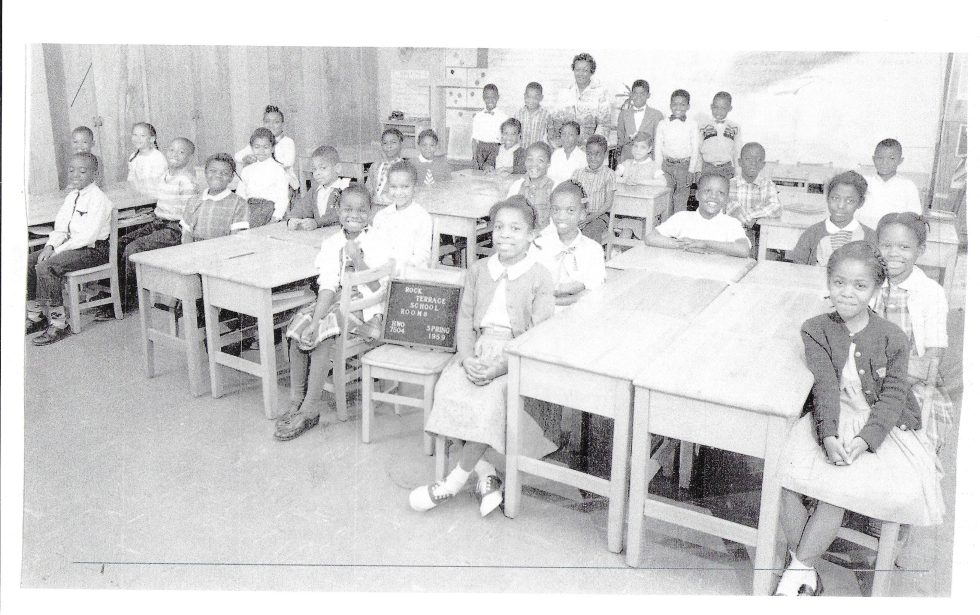
Pictured: the last segregated class at Rock Terrace Elementary School, 1959 (Montgomery History, photo provided by Gerry Green)
- The Vietnam War begins (concludes in 1975)
1956
- US Route 240 (now I-270) completed
US Route 240 (now I-270) completed
1956
The highway connected Washington, D.C. with Frederick County, passing through Montgomery County and becoming a major artery. It was widened numerous times over the following decades and later became designated as Interstate-270.
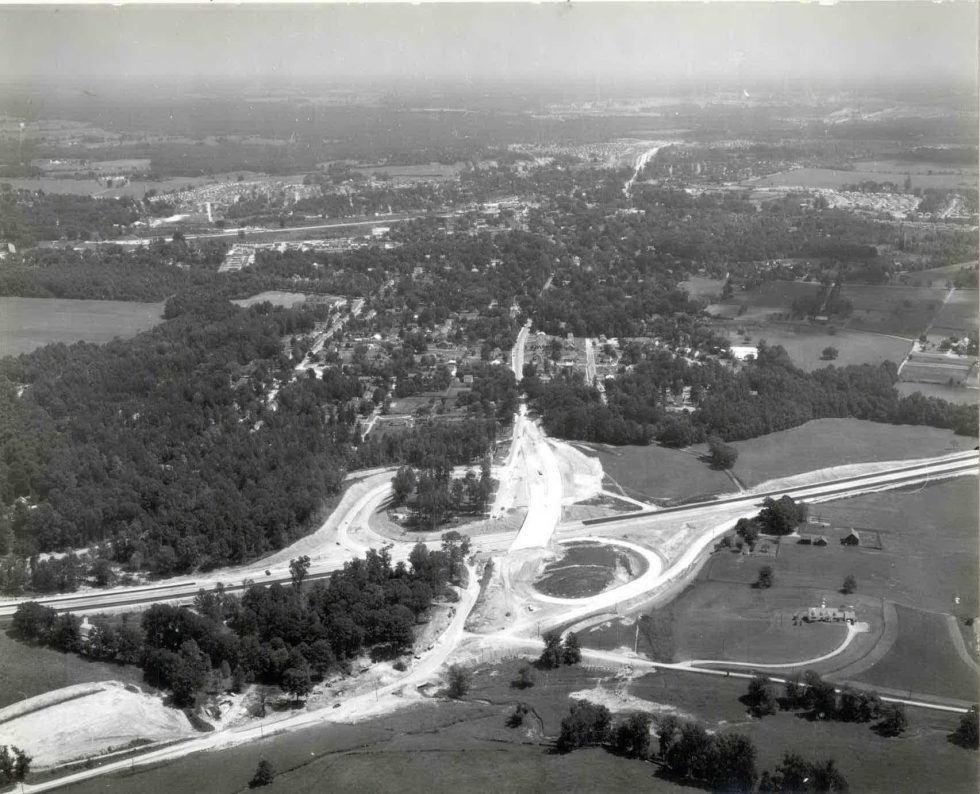
Aerial view of 240 interchange with Route 28, looking east
1960
- Rockville’s first Master Plan adopted
Rockville’s first Master Plan adopted
1960
Rockville was one of the first communities in Maryland to use federal funds as part of the Federal Urban Renewal Program. The plan resulted in the demolition of most of the county seat’s business district, replaced with a shopping mall that was ultimately unsuccessful.
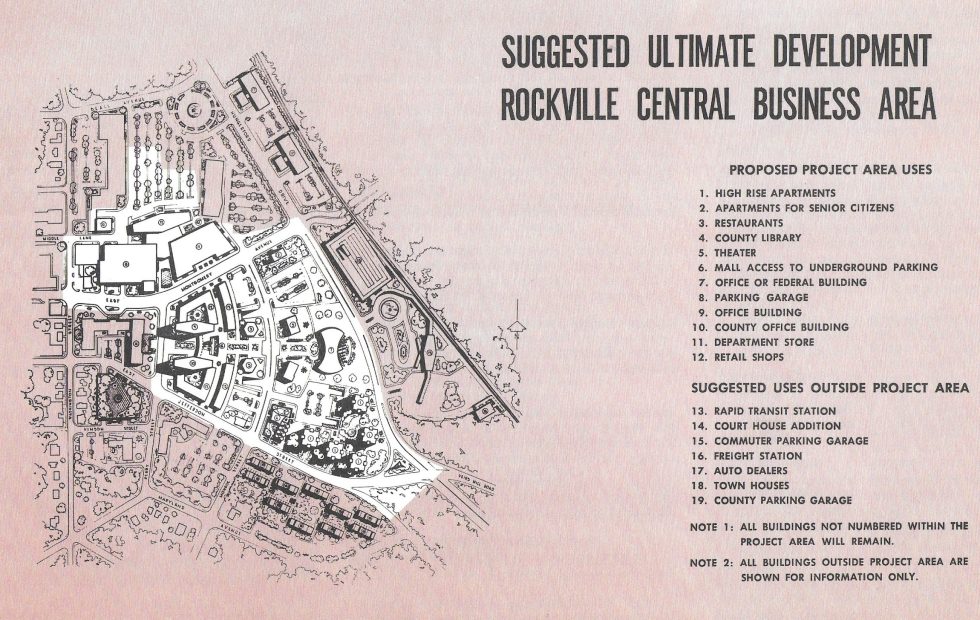
Area identified for redevelopment as part of the “Mid-City” project, c. 1960
- Glen Echo Park boycotted
Glen Echo Park boycotted
1960
Howard University students and members of the local Bannockburn community, sometimes joined by national civil rights figures, staged summer-long picketing of Glen Echo Park for its refusal to admit Black patrons. The protest generated counter-demonstrations by members of the Ku Klux Klan. Glen Echo owners opened the park to all the following year, but decline in overall business led to its closure several years later.
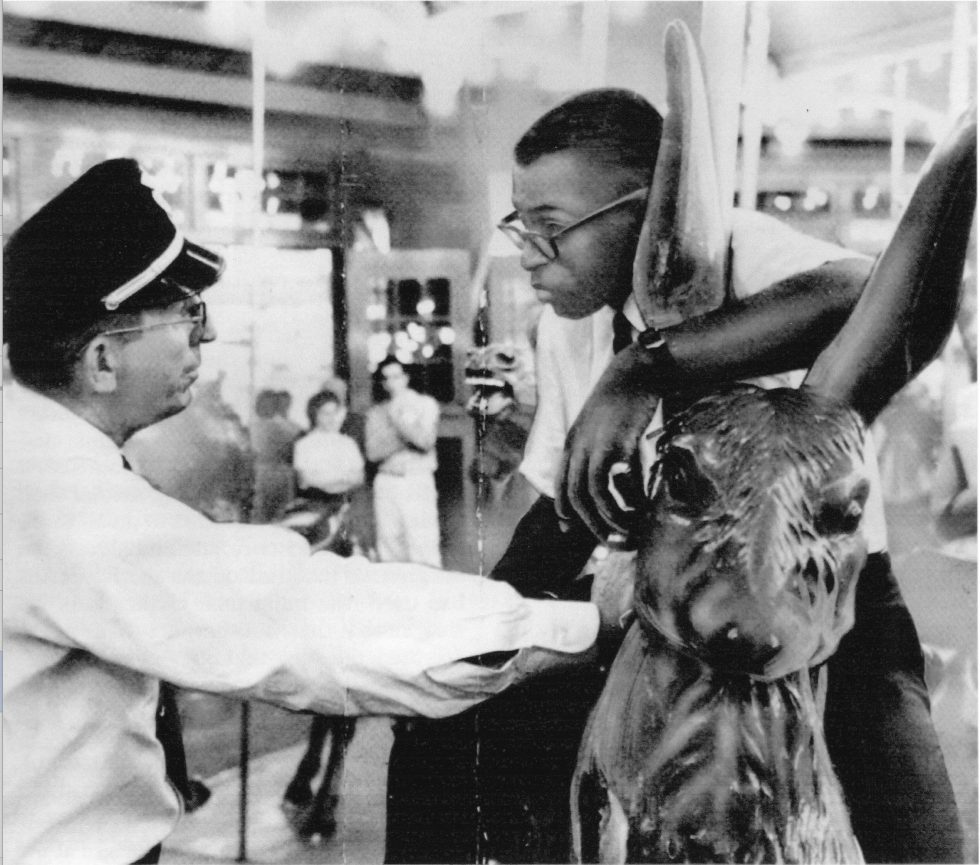
Marvous Saunders confronted by security guard Francis J. Collins, in a demonstration on the Glen Echo Park Carousel in 1960
- Opening of the Washington-Montgomery County Airpark
Opening of the Washington-Montgomery County Airpark
1960
The airpark opened in Gaithersburg after Congressional Airport closed in 1957.
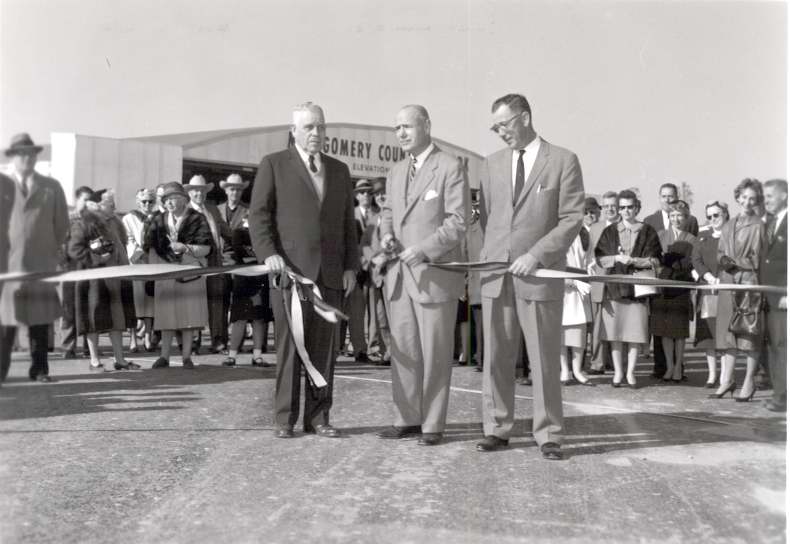
Dedication of the Montgomery Airpark, c. 1960
1961
- Montgomery County Detention Center opened
Montgomery County Detention Center opened
1961
Built on the former site of the Montgomery County Poor Farm near Rockville, this replaced the fourth-floor jail cells in the Grey Courthouse.
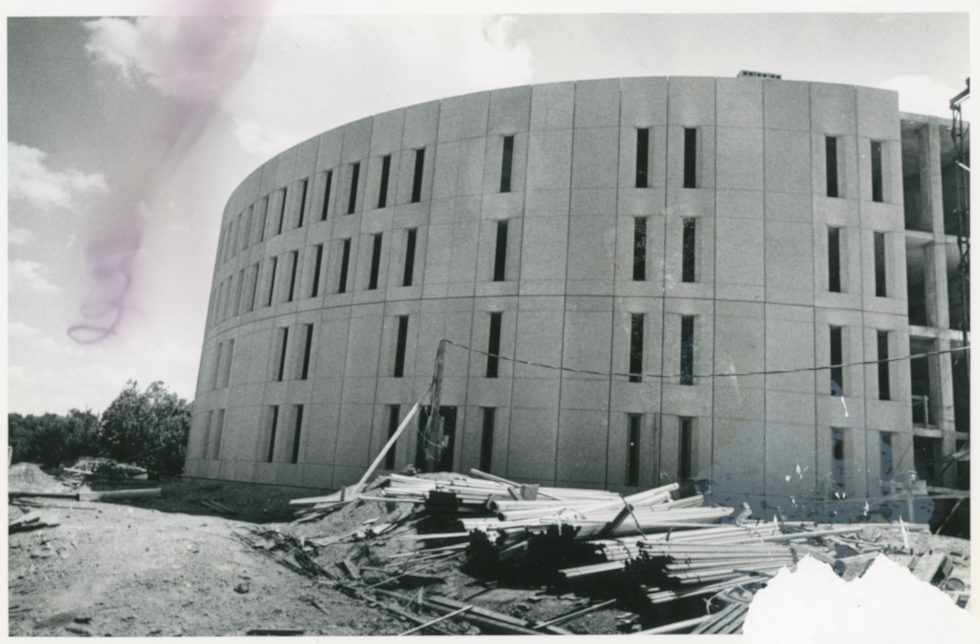
Montgomery County Detention Center under construction, c.1960
- Young Israel Shomrai Emunah Synagogue establishes Kemp Mill as center of Montgomery County’s Orthodox Jewish community
Young Israel Shomrai Emunah Synagogue establishes Kemp Mill as center of Montgomery County’s Orthodox Jewish community
1961
The opening of Young Israel Shomrai Emunah Synagogue attracted many Jewish families to Kemp Mill. By 2005, 50% of its residents were Orthodox Jews, and it continues to be a center of the region’s Orthodox community
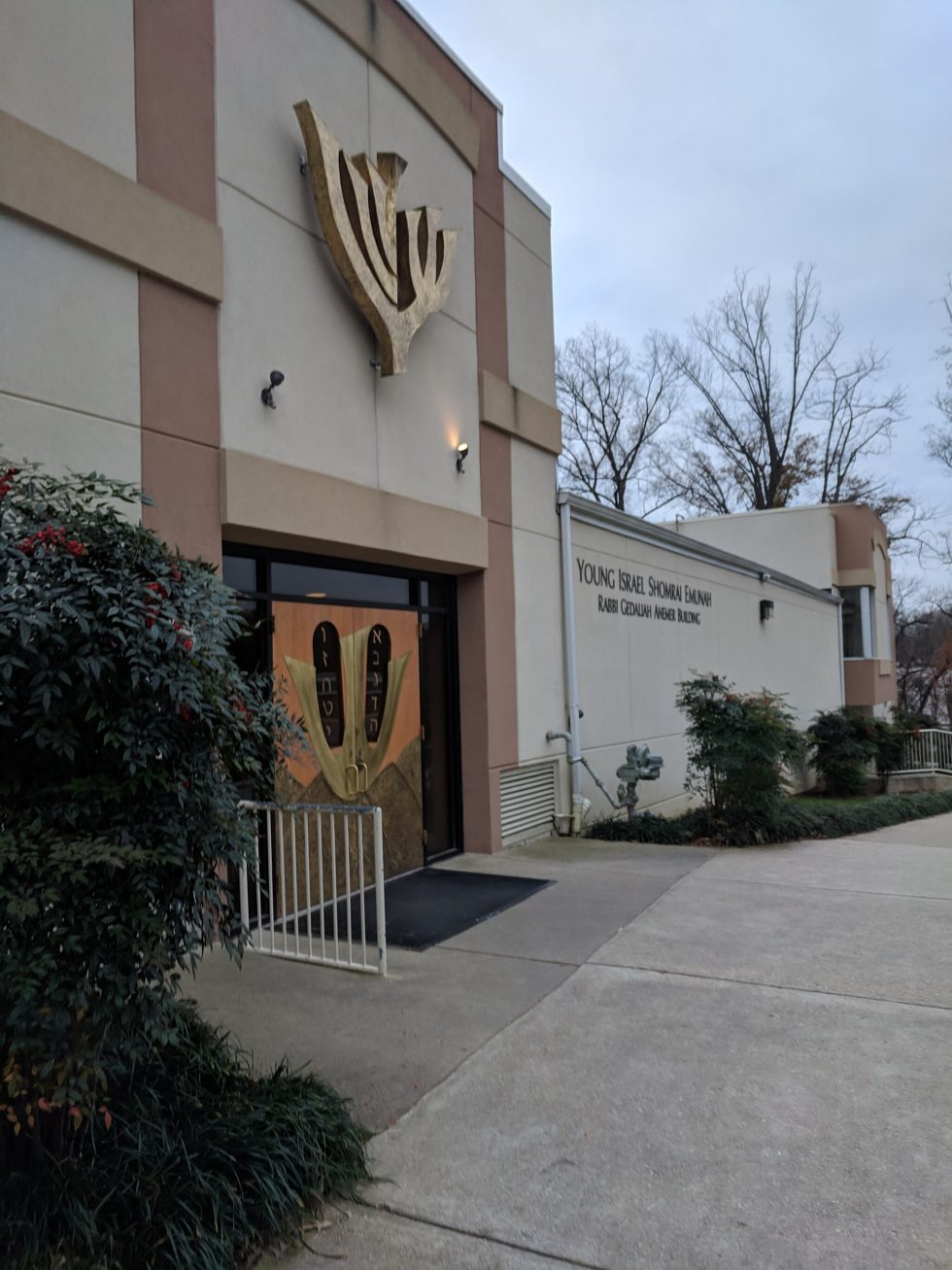
Young Israel Shomrai Emunah, a Modern Orthodox synagogue in Kemp Mill, 2018 (photo by Bohemian Baltimore)
1962
- Forerunner of the Special Olympics started at Shriver home
Forerunner of the Special Olympics started at Shriver home
1962
In the summer of 1962, Eunice Kennedy Shriver hosted a camp for children with intellectual disabilities at her home, Timberlawn, in Rockville. She and her husband Sargent Shriver had moved to the large estate when he was appointed by her brother, President John F. Kennedy, as director of the Peace Corps. Shriver continued to host annual summer camps, and her home later served as offices for the organization that eventually created the Special Olympics. Timberlawn was officially designated in Montgomery County’s Master Plan for Historic Preservation in 2025.
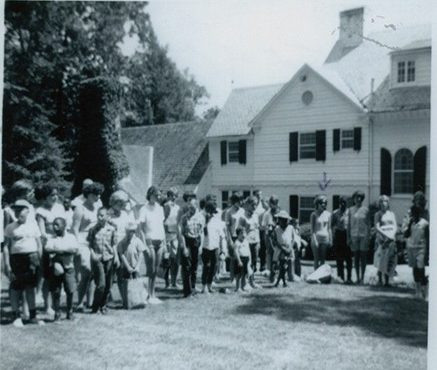
Camp Shriver campers arriving at Timberlawn in June 1963 (from the Mary Hammerbacher Collection at the Smithsonian)
- Public Accommodations ordinance adopted
Public Accommodations ordinance adopted
1962
On January 16, Montgomery County passed a law prohibiting racial and religious discrimination in places of public accommodation. It was the first county in Maryland to prohibit discrimination in public places, and two years ahead of the federal government’s Civil Rights Act, which made such discrimination illegal nationwide. An attempt to repeal the law in 1963, led primarily by newly elected county councilman John Hiser, was unsuccessful.
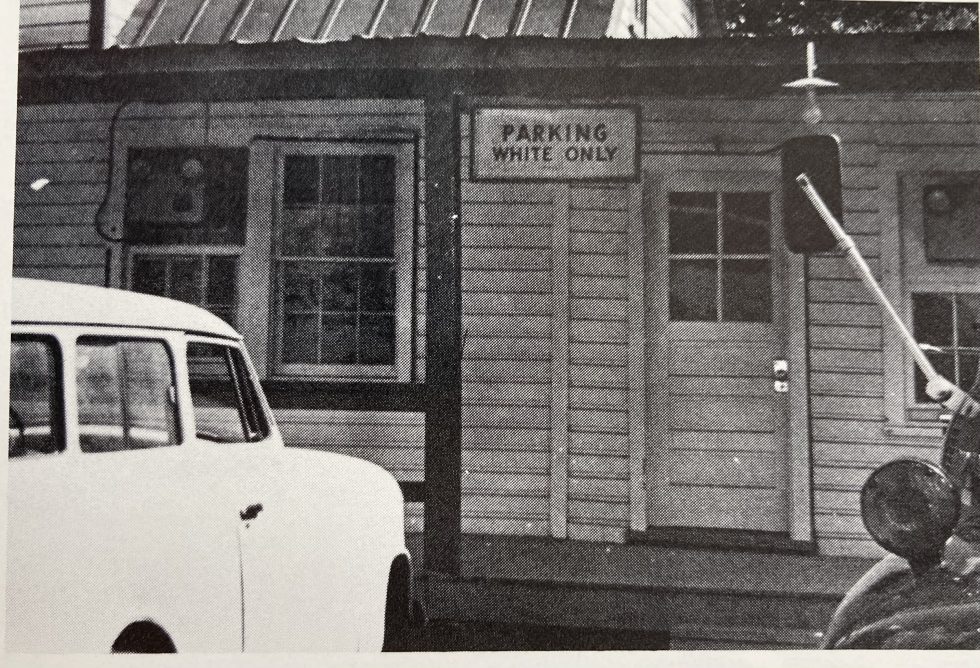
Snuffy’s Tavern, on Route 108 at Brookeville Rd. near Olney, taken in September, 1963 by a Sentinel reporter. Montgomery County’s public accommodations ordinance initially provided an exemption for establishments that sold alcohol as a “prominent part” of their business, a loophole that was not removed for five years
1963
- March on Washington for Jobs and Freedom
- Assassination of President John F. Kennedy
1964
- Civil Rights Act passed
- Capital Beltway completed
Capital Beltway completed
1964
First known as the circumferential highway and expected to be used mainly by long-distance motorists bypassing the nation’s capital, the Beltway became a major—and often congested—element of the county’s network of roadways.
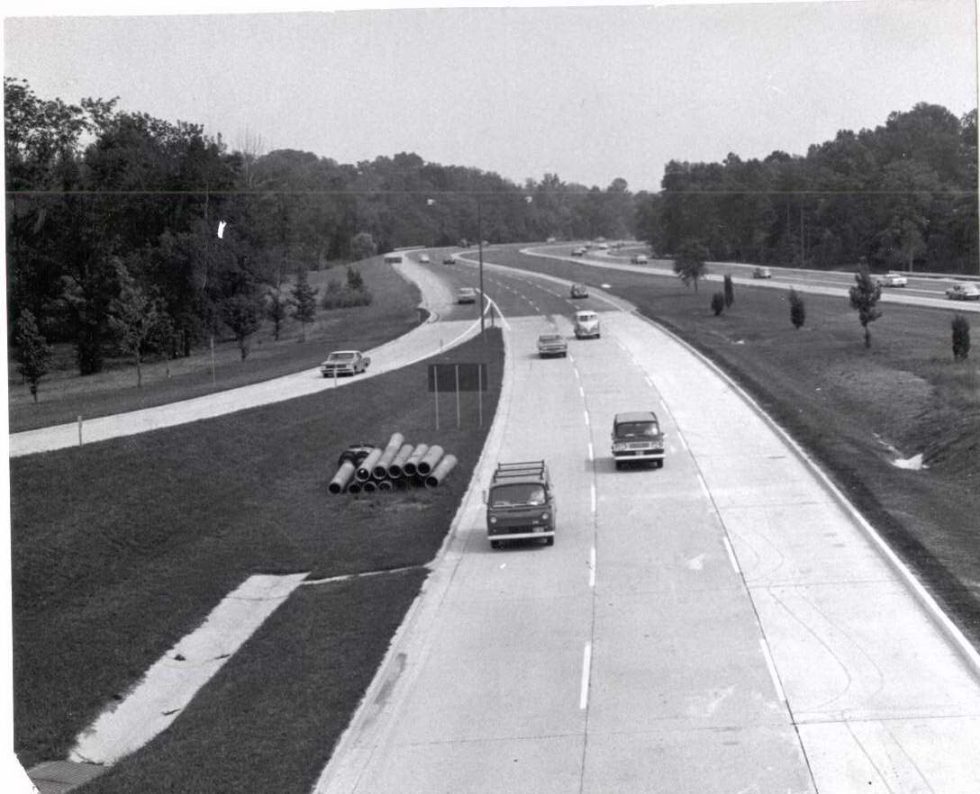
The newly-constructed Beltway (495) near the Rockville Pike, 1964
- “…on Wedges and Corridors” plan adopted
“…on Wedges and Corridors” plan adopted
1964
The first comprehensive plan to deal with Montgomery County’s rapid development was referred to as the “wedges and corridors” general plan because it channeled growth into development “corridors” along roadways while seeking to preserve “wedges” of open space, farmland, and lower density residential uses.
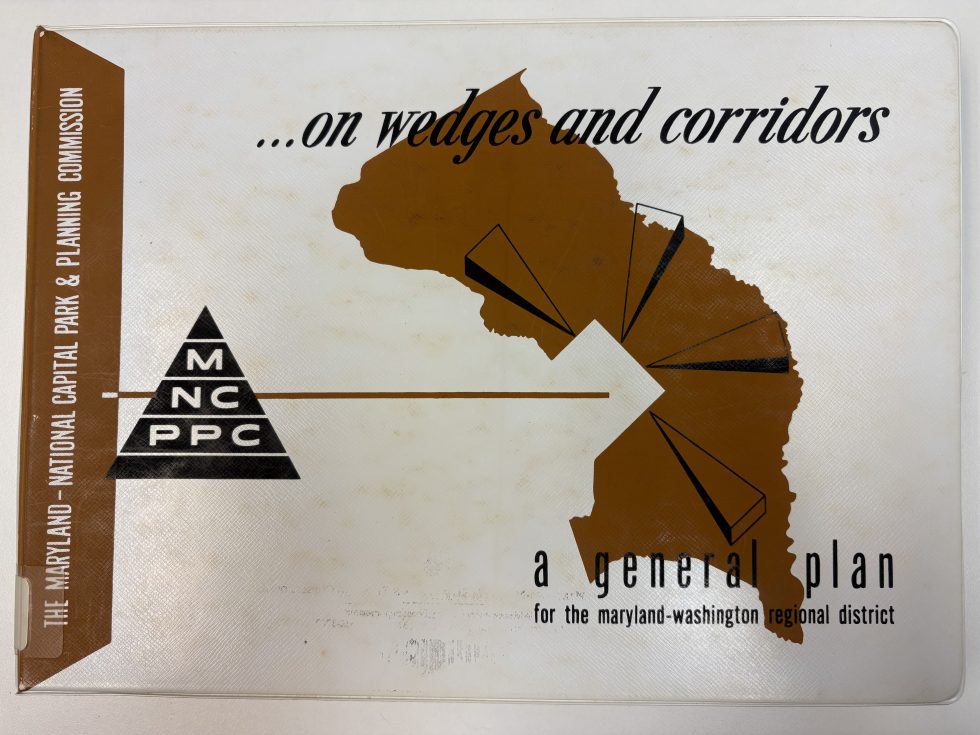
Cover of the published report
1965
- Voting Rights Act passed
- Save Our Scotland formed
Save Our Scotland formed
1965
The formation of Scotland dates to 1880, with a land purchase by William Dove and subsequent settlement by African American farm workers. By the 1960s, taxpaying Scotland residents still lacked paved roads or public water and sewage systems. In 1965, Geneva Mason and other residents formed Save Our Scotland (SOS), a grass-roots organization dedicated to improving living conditions. Working closely with Joyce Siegel and other White partners, government grants were acquired to redevelop the community with townhomes and public utilities. The first units were ready by spring of 1969.
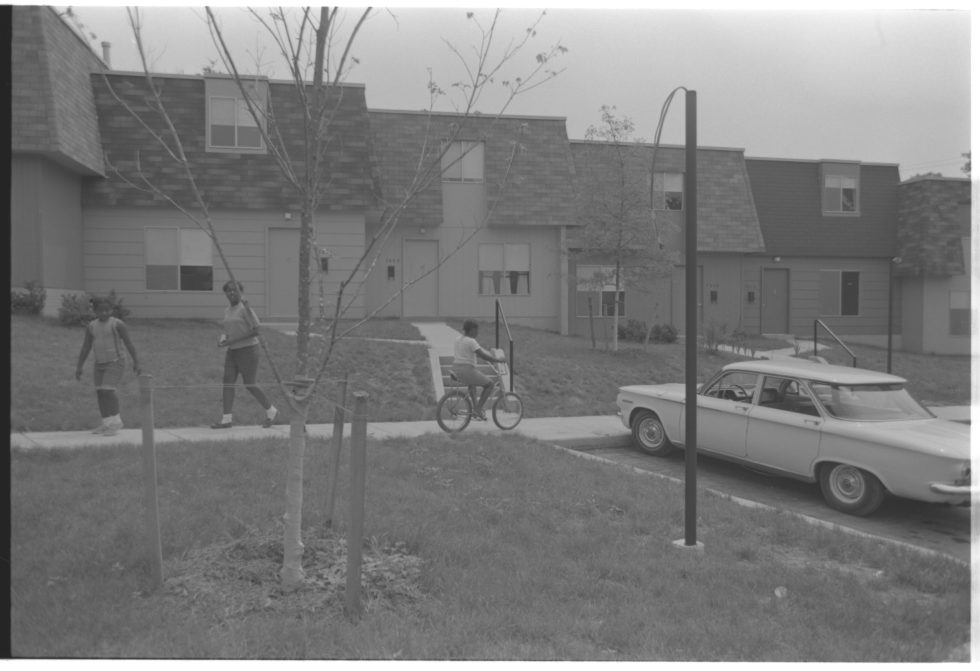
Townhouses in Scotland, 1969 (photo by Alan Siegel)
1966
- National Bureau of Standards moved to Gaithersburg
National Bureau of Standards moved to Gaithersburg
1966
The entity known today as the National Institute of Standards and Technology (NIST) was founded in 1901 as the National Bureau of Standards, based in Washington, D.C. Though the agency has numerous functions, its primary mission is to provide standard weights and measures, and to serve as the national physical laboratory for the United States. After WWII, having outgrown their laboratory space, the government purchased a site of former farmland in Gaithersburg and ground was broken in 1961 for the new NBS campus. The first buildings were dedicated in 1966 and major construction on the entire facility was mostly completed by 1970. The name of the agency changed to NIST in 1988.
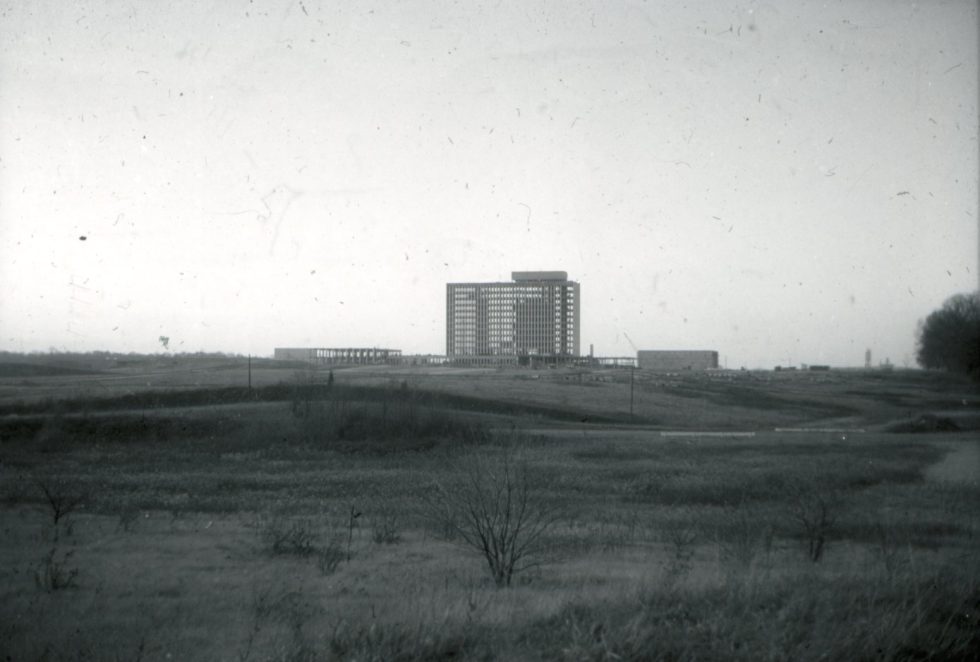
First buildings on the Gaithersburg NBS campus rising over the surrounding pastures, c. 1960s
1967
- Fair Housing Ordinance passed
Fair Housing Ordinance passed
1967
After decades of discrimination prevented Black and other non-white residents from purchasing homes in many suburban neighborhoods, the County Council passed an open housing law prohibiting developers and real estate agents from excluding buyers based on race or nationality. Over the next thirty years, the demographic changes set in motion by the fair housing movement reshaped Montgomery County, which is one of the most racially and culturally diverse places in the country.
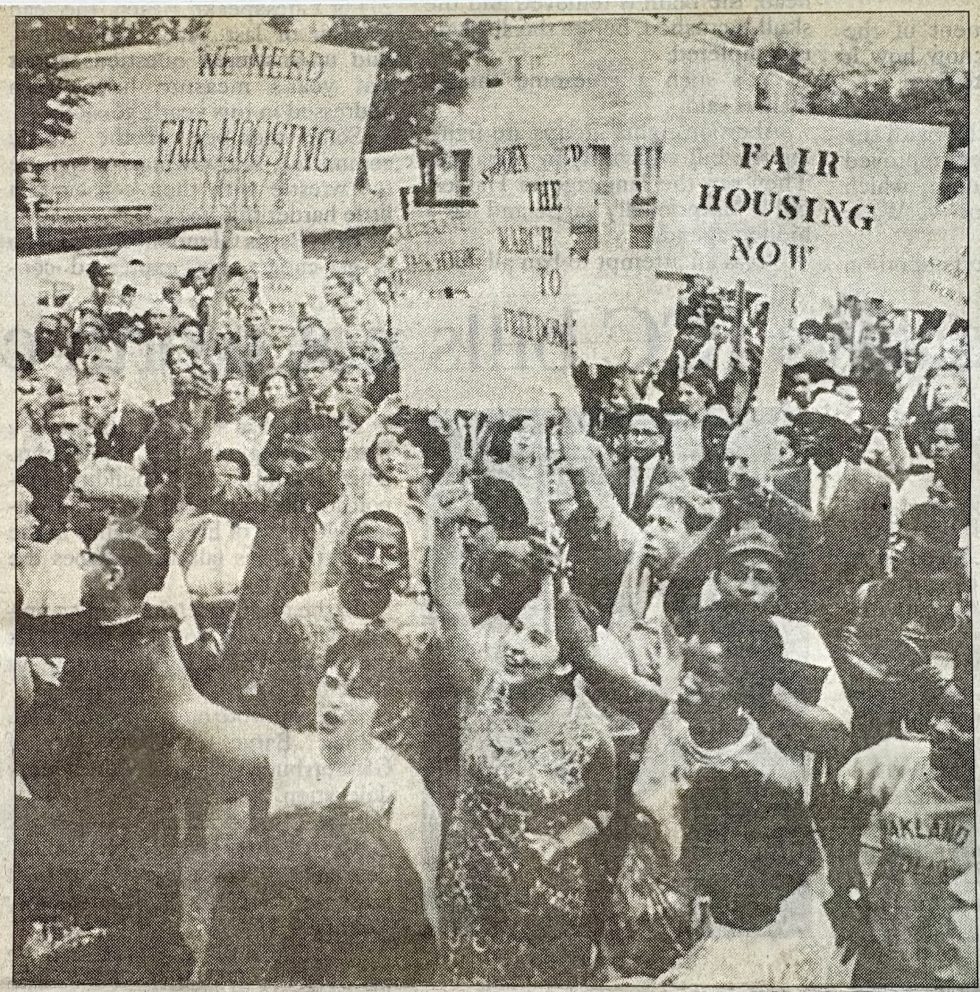
Supporters of fair housing, outside the county council building during public hearings on the legislation in 1966 (Gazette reprint, 1998)
1968
- Assassination of Martin Luther King, Jr.
- New County Charter adopted
New County Charter adopted
1968
The new charter adopted by voters changed the Council-Manager government to a County Executive-Council system with two branches: an executive branch led by a County Executive, and a legislative branch with a seven-member Council.
1970
- First County Executive elected under the new charter
First County Executive elected under the new charter
1970
James P. Gleason is elected the first County Executive.
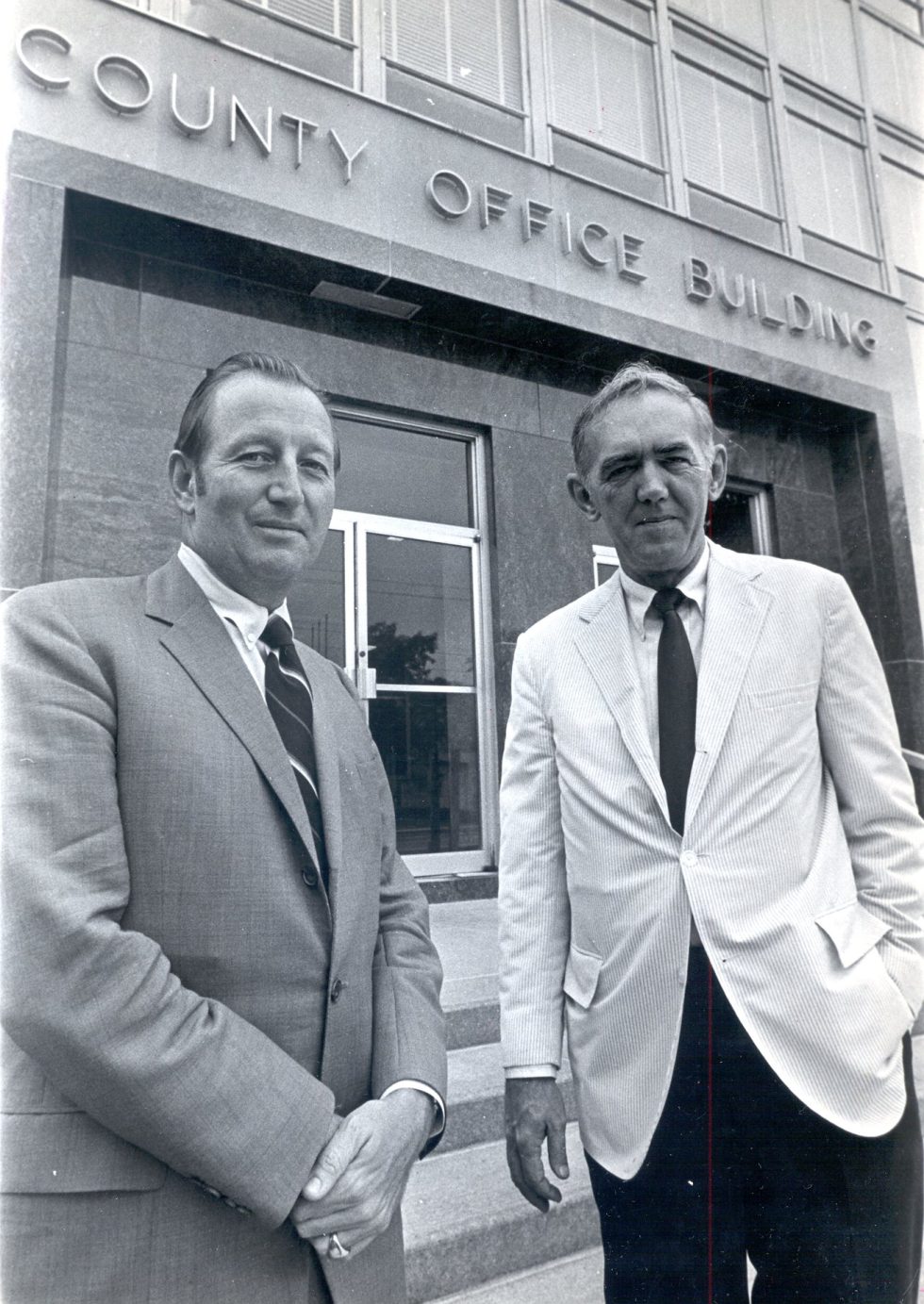
The first elected county executive, James Gleason (right), in front of the County Council office building, 1970
1973
- Supreme Court decision on Roe v. Wade protecting a woman’s right to abortion
- The Islamic Society of the Washington Area (ISWA) established
The Islamic Society of the Washington Area (ISWA) established
1973
Located on Briggs Chaney Road in Silver Spring, the society was originally founded primarily by Muslims from Guyana and Trinidad, but today includes Muslims from geographic areas throughout the world. It was followed by the establishment of the Muslim Community Center in 1976.
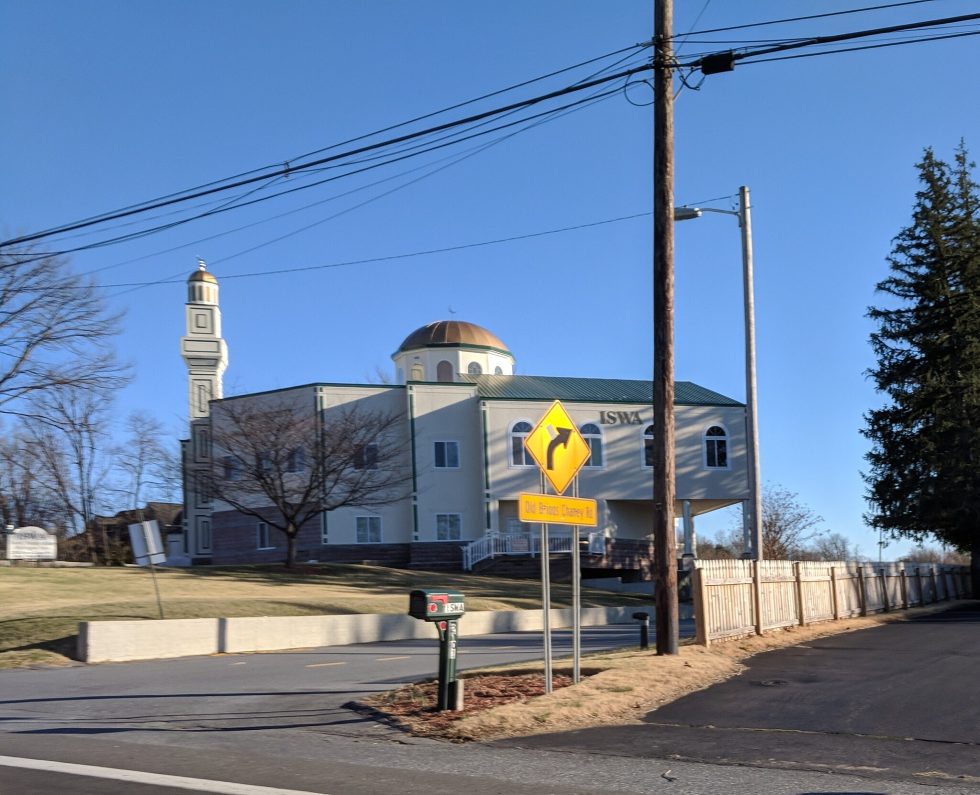
ISWA mosque in Silver Spring, 2018 (Photo by Bohemian Baltimore)
- Conclusion of boundary dispute between Montgomery and Prince George’s Counties
Conclusion of boundary dispute between Montgomery and Prince George’s Counties
1973
The county executives laid a boundary marker to resolve a dispute from a 1748 ruling when Frederick County (then containing the future Montgomery County) was carved out of a larger Prince George’s County.
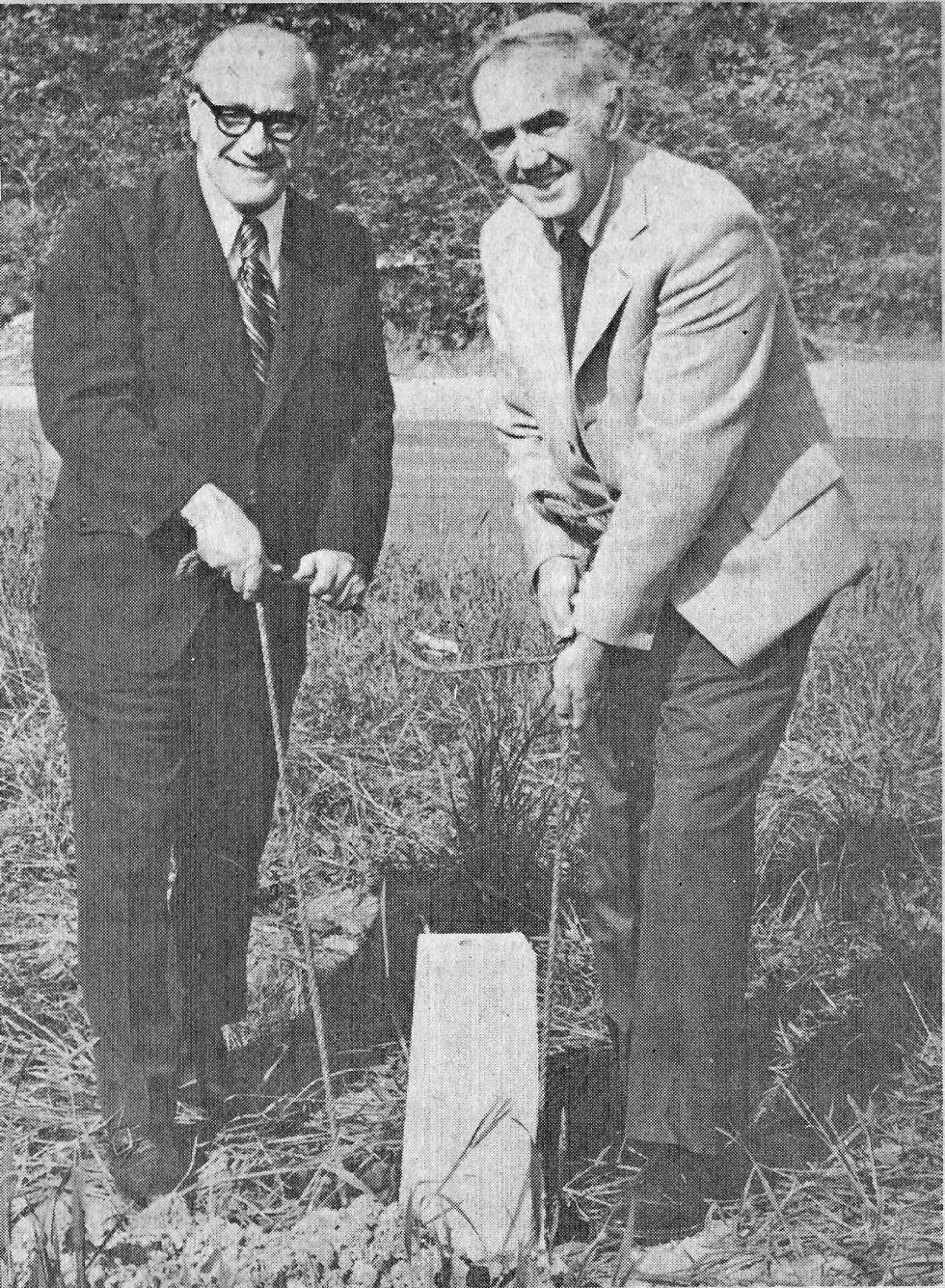
Caption from a photograph that appeared in The Record on May 18, 1973: “Prince George’s County Executive William Gullett, left, and Montgomery County Executive James P. Gleason lowering bench mark in Calverton signaling the end of a boundary dispute which has existed between the two counties for more than two centuries”
1974
- Peerless Rockville and the Historic Medley District established
Peerless Rockville and the Historic Medley District established
1974
Peerless Rockville Historic Preservation was established to preserve the architectural heritage of Rockville, which was under increasing threat during the period of Urban Renewal begun in the 1960s and continuing into the 1970s.
Peerless Rockville celebrated its 50th Anniversary in 2024
1975
- Ride-On Bus service begun
Ride-On Bus service begun
1975
Ride-On was the first county-run bus service in the Washington area, originally providing service in Takoma Park and Silver Spring.
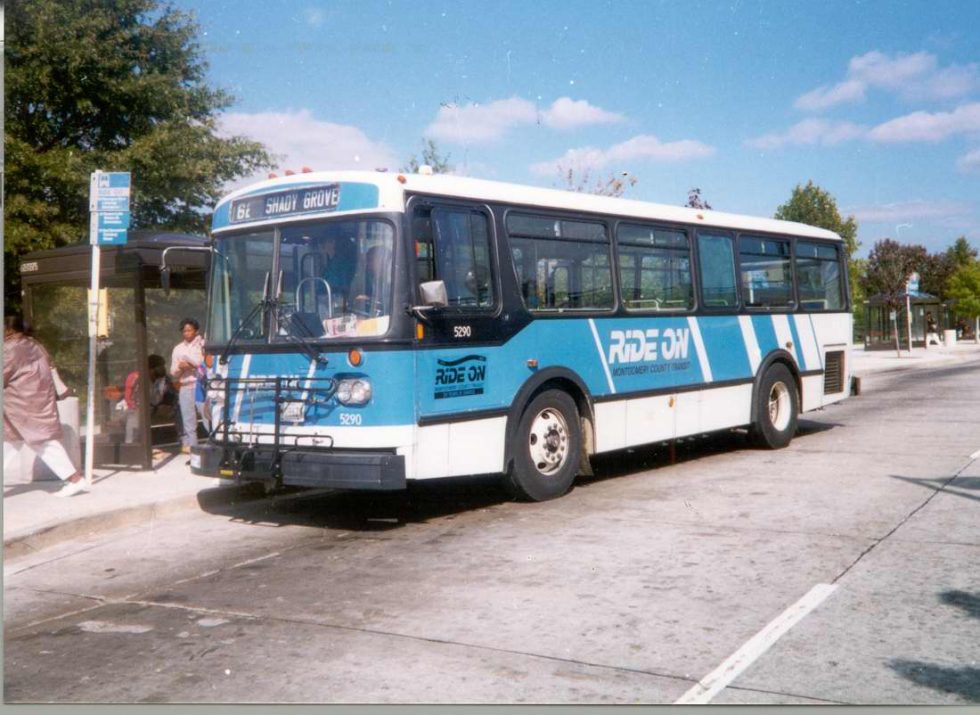
Ride-On Bus arriving at Shady Grove station in October, 1996
1976
- Bicentennial of American Declaration of Independence
- Montgomery County’s Bicentennial celebrated
Montgomery County’s Bicentennial celebrated
1976
The 200th anniversary of the Declaration of Independence and also the founding of Montgomery County the same year sparked numerous patriotic celebrations, commemorations, activities, and a general public interest in history and genealogy. Bicentennial activities were planned and promoted around the county for years leading up to the anniversary year.
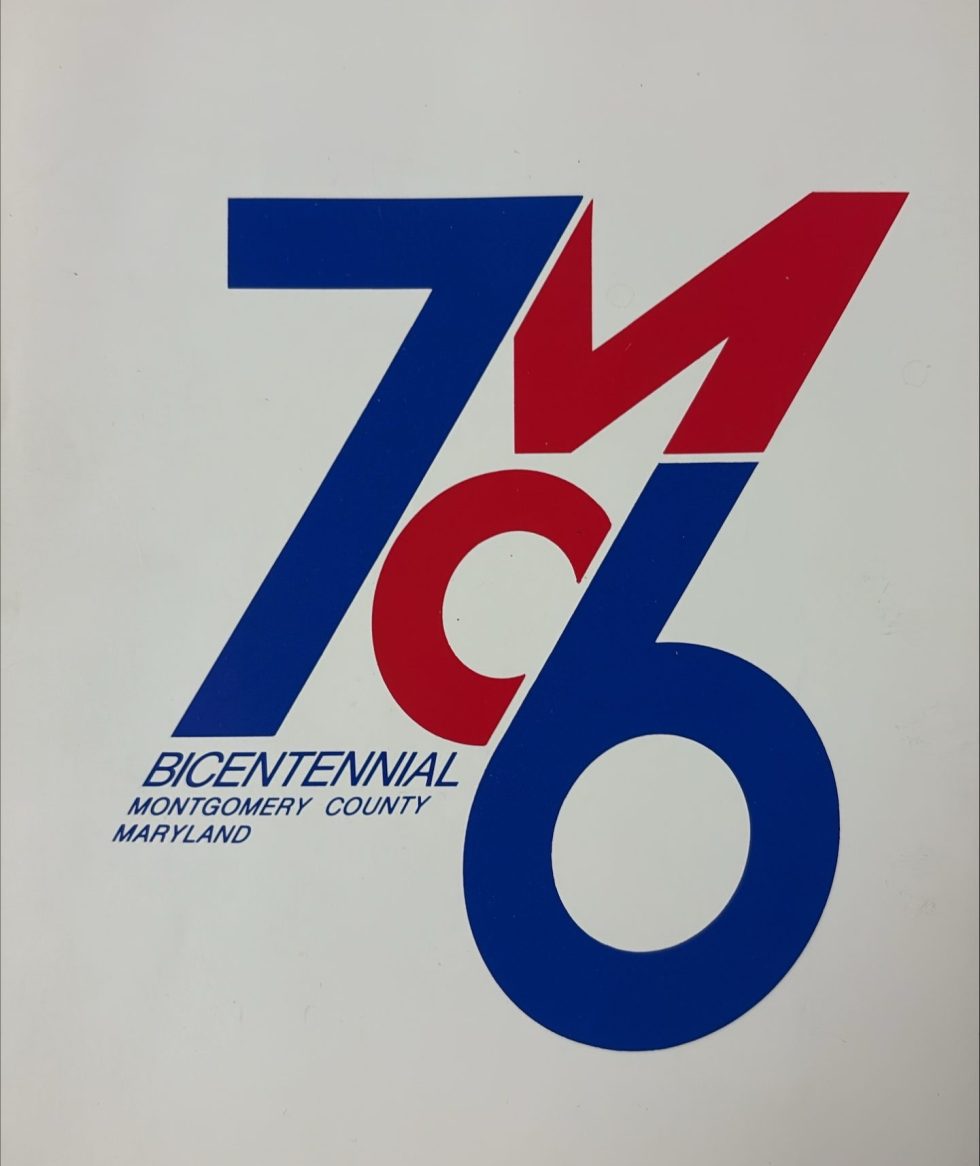
1976 Bicentennial logo for Montgomery County
- Official county flag adopted
Official county flag adopted
1976
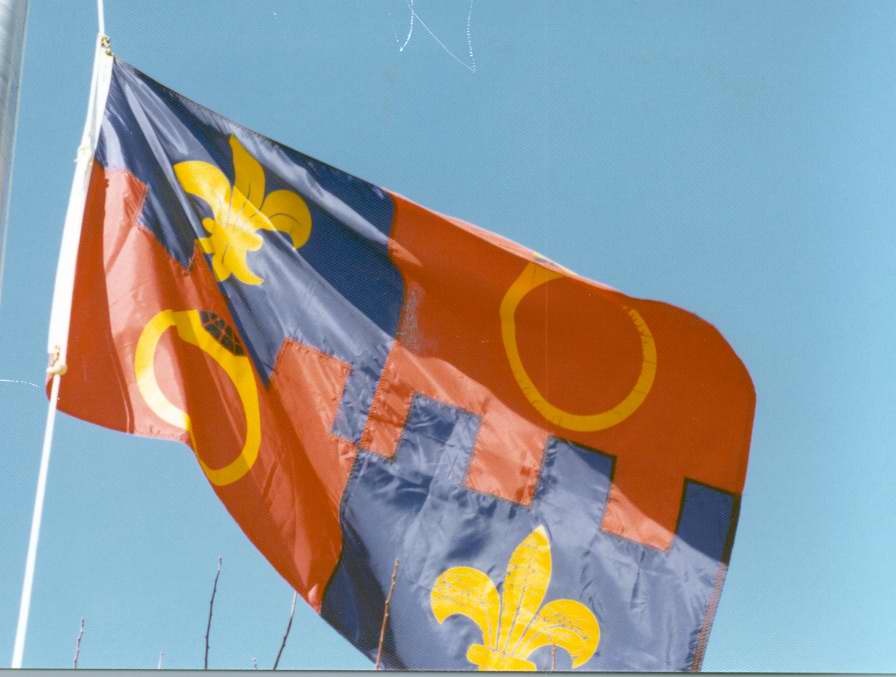
New county flag, flying in February 1977
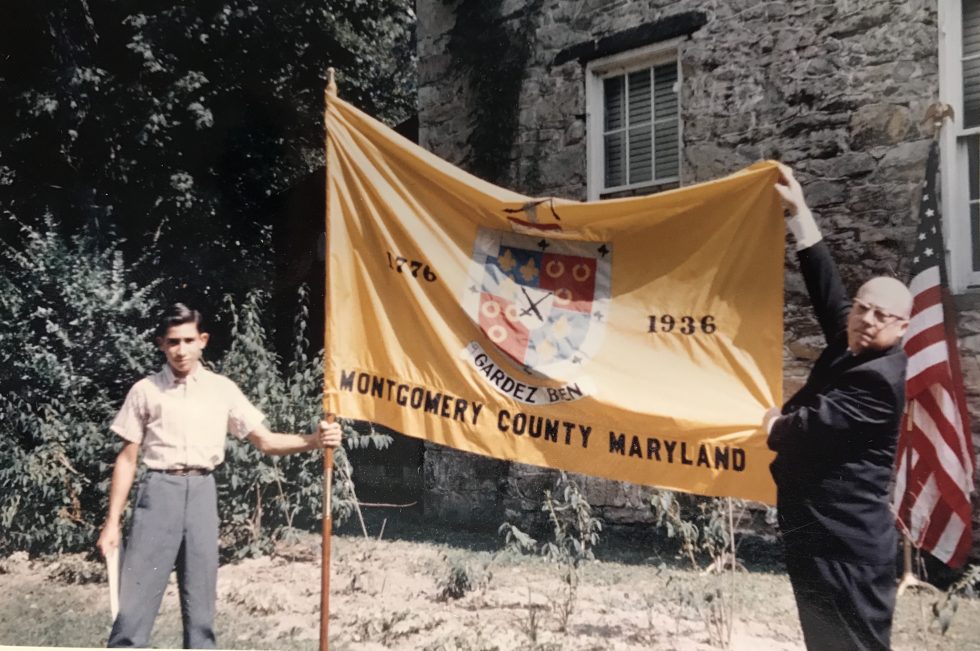
The original 1937 county flag, designed by historical society founder Lilly Stone, displayed in Brookeville in 1964
1978
- Metrorail comes to Montgomery County
Metrorail comes to Montgomery County
1978
In February 1978, the first Metrorail station in Montgomery County opened in Silver Spring. The final station, Glenmont, opened in 1998.
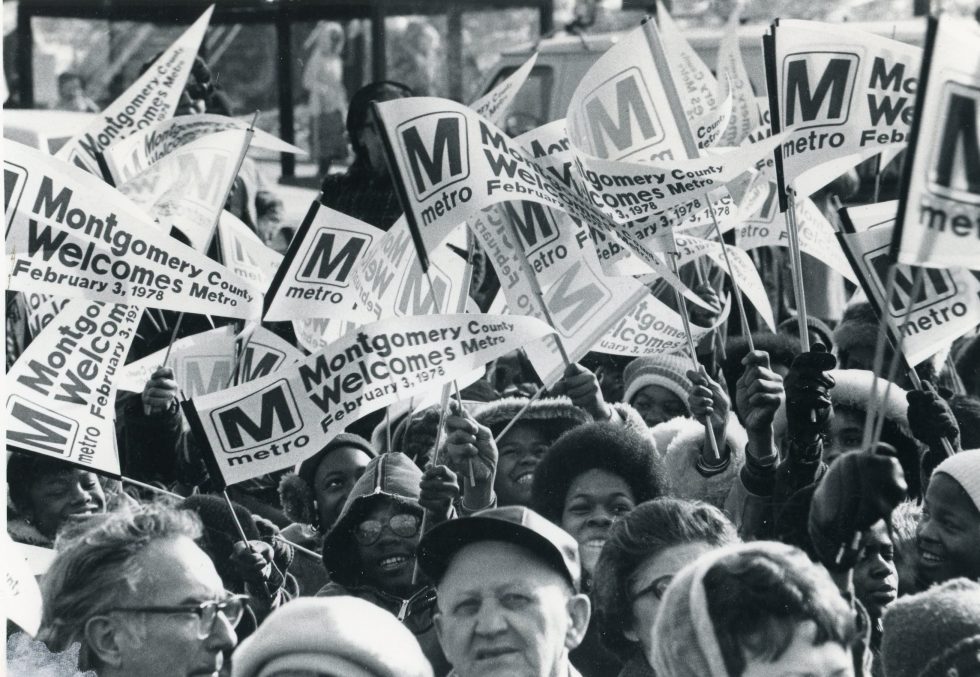
Pennants wave at the opening of the Silver Spring Metro Station in 1978
1980
- Creation of the Agricultural Reserve
Creation of the Agricultural Reserve
1980
The Agricultural Reserve is a nationally acclaimed land-use plan, established in response to the rapid disappearance of Montgomery County’s farmland throughout the 20th century. Initiated by former Planning Director Richard Tustian and former Planning Board Chair Royce Hanson, and supported by the County Council, the program was designed to prevent sprawl, protect farmland, and manage growth. One-third of the county, or 93,000 acres, falls under this specially-designated area. Using legislative tools including the Rural Density Transfer Zone and the Building Lot Termination Program, rural landowners can retain larger holdings of property and farming can remain economically viable in an ever-increasing competitive market. Counties around the country, in states from California to Connecticut, have followed the Agricultural Reserve model and adopted its development policies to preserve farmland and limit development.
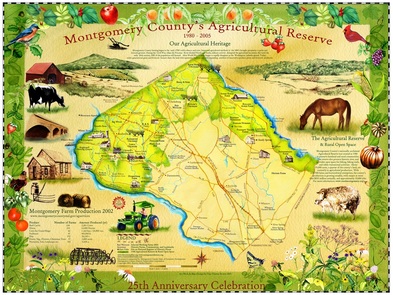
Poster from the 25th anniversary of the Ag Reserve, celebrated in 2005.
1981
- First cases of AIDS reported
- Rockville B&O railroad station moved
Rockville B&O railroad station moved
1981
In a landmark victory for local historic preservation, the 1873 train station building and a car garage were both moved 30 feet south for track expansion allowing Metro service to Rockville. The buildings still stand near the railroad tracks just south of the Metro station and serve as law offices today.
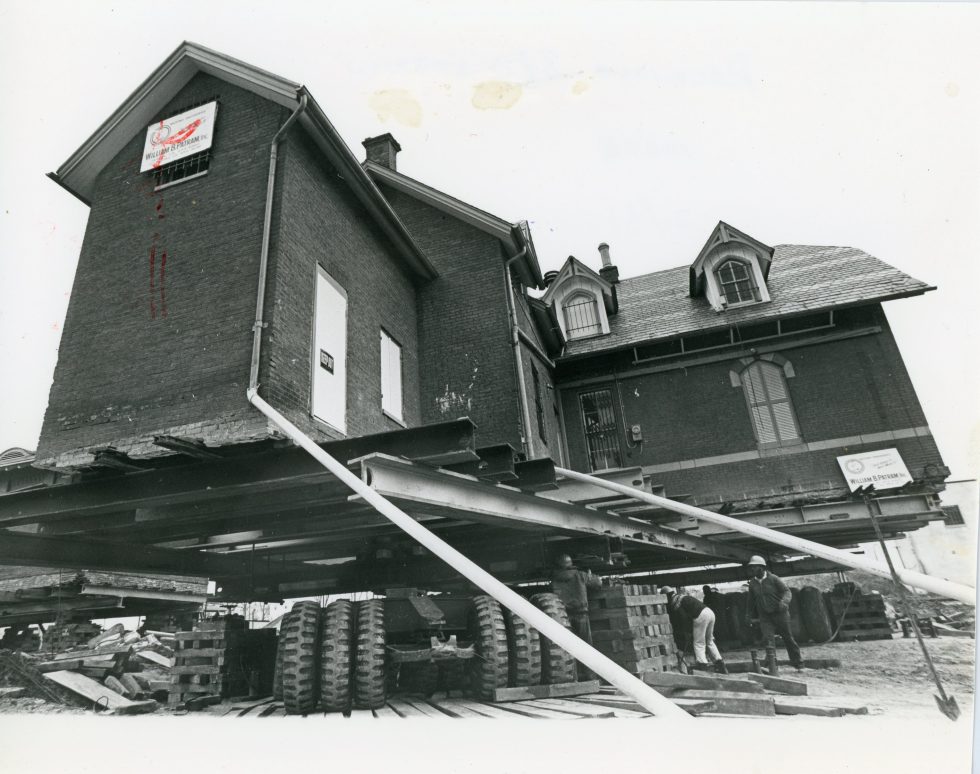
Rockville’s train station lifted off its foundation and ready for relocation, 1981
- Executive Office Building and Judicial Center built
Executive Office Building and Judicial Center built
1981
This building became the fifth courthouse for Montgomery County.
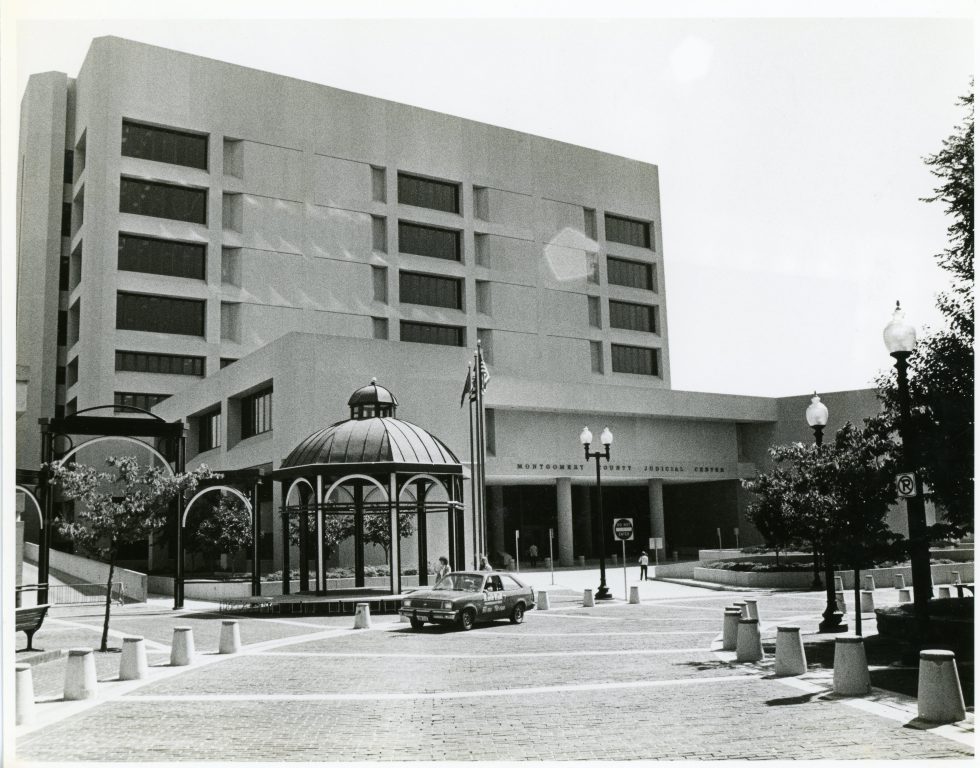
Photo from 1984
1982
- Odessa Shannon becomes the first Black woman county offical elected
Odessa Shannon becomes the first Black woman county offical elected
1982
Odessa M. Shannon was elected to the Montgomery County Board of Education in 1982. Her campaign marked the first election of an African American woman to a policy-making political position in Montgomery County. She had previously attained one of the highest non-political positions in the Senior Executive Service as National Program Director for the Equal Employment Opportunity Commission. After retiring from the federal government, Shannon was selected as Special Assistant to the County Executive of Montgomery County, Maryland, Charles Gilchrist, the first woman to hold this position. Later, she was Deputy Director of the Department of Family Resources. From 1995 -2008, she was the Executive Director of the Montgomery County Human Rights Commission (previously the Human Relations Commission).
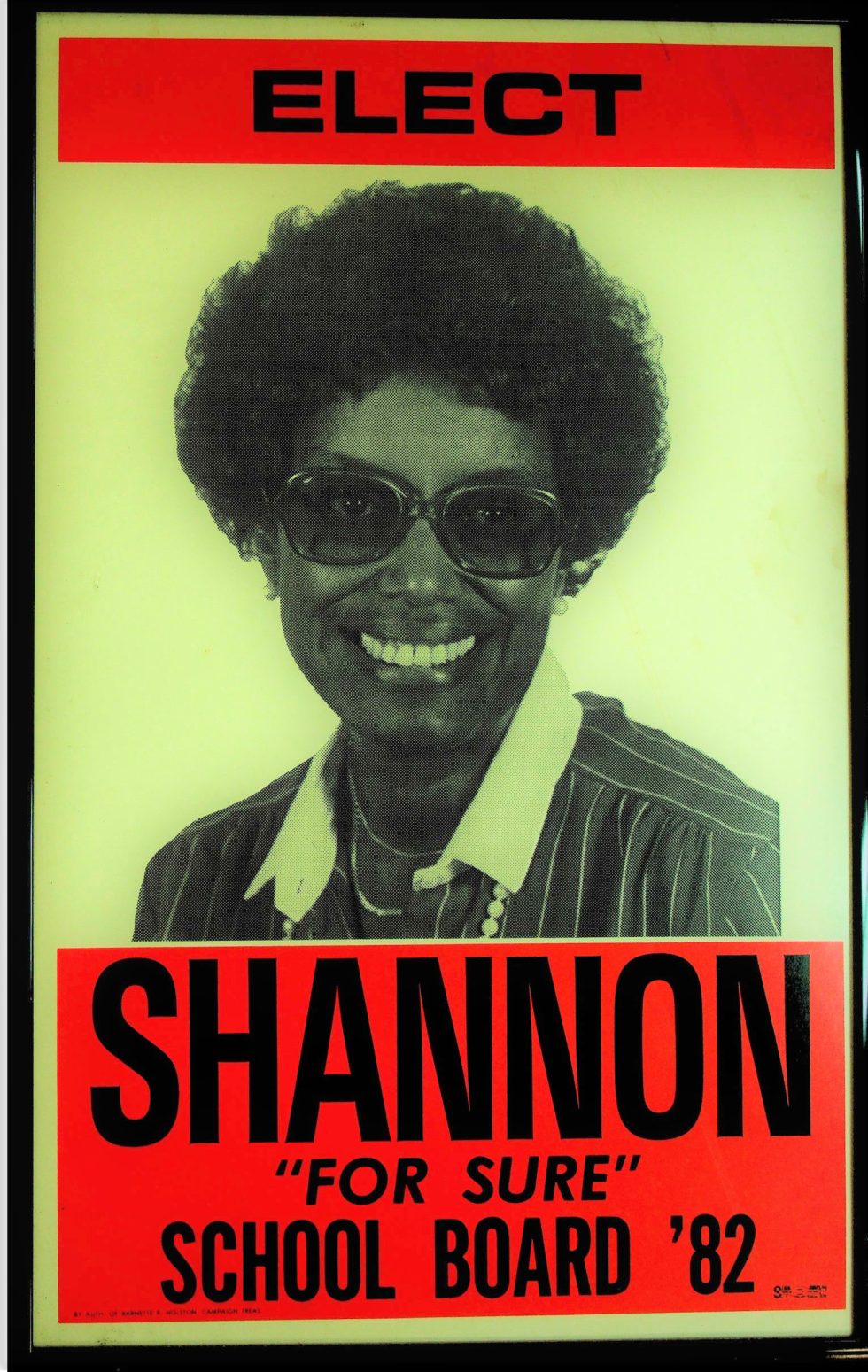
Odessa Shannon’s election poster in 1982, with the slogan “Shannon for Sure”
1984
- Metro’s Red line extended to Rockville and Shady Grove
Metro’s Red line extended to Rockville and Shady Grove
1984
The last two stations on the west side of the Red Line were added in 1984.
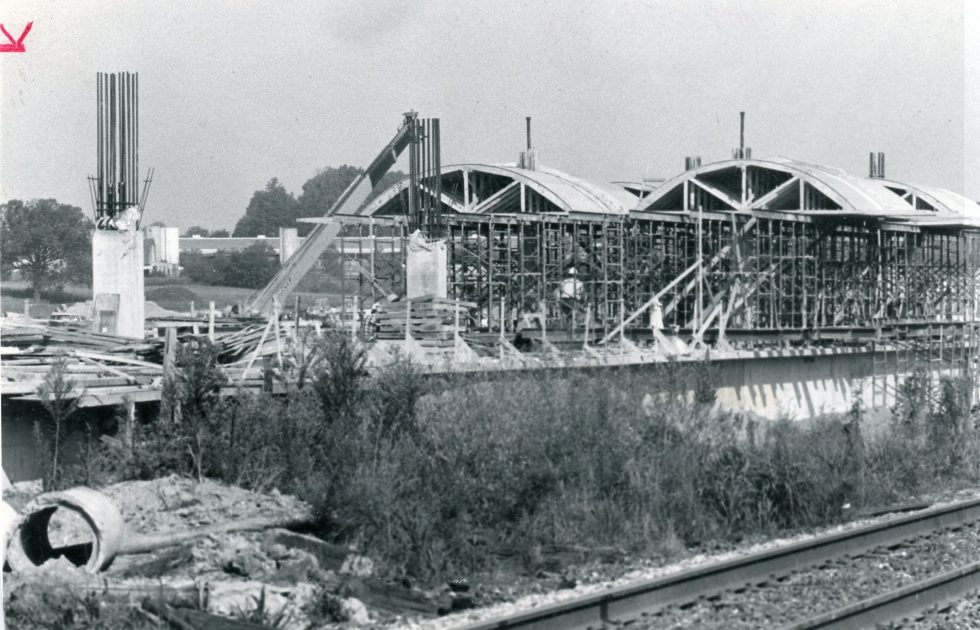
Shady Grove Metro station under construction, 1980
- LGBTQ+ Anti-Discrimination law passed
LGBTQ+ Anti-Discrimination law passed
1984
Bill #65-83 was introduced in 1983 to add sexual orientation to Montgomery County’s human relations code. Despite opposition, Montgomery County Executive Charles Gilchrist signed Bill #65-83 in February 1984. Opponents mobilized to schedule a referendum vote on the law in the fall to prevent the bill from going into effect, which failed.
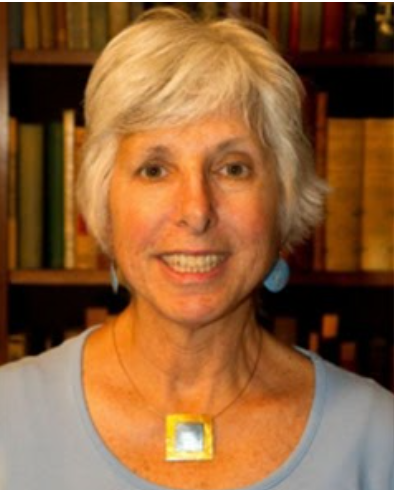
Takoma Park attorney Susan Silber led the legal challenge to the referendum and successfully persuaded the Maryland Court of Appeals to hear the case which ruled that the referendum could not be added to the November ballot, allowing the protections to go into effect immediately
1986
- Cambodian Buddhist Society moves to Silver Spring
Cambodian Buddhist Society moves to Silver Spring
1986
The first Cambodian Buddhist Temple in the U.S. was established in Maryland in 1976 to conserve Cambodian Buddhist religion and culture. Originally headquartered in Oxon Hill and then New Carrolton, its main temple, Vatt Buddhikarama, was moved to Silver Spring in 1986. As of 2020, there were more than fifteen Buddhist temples in Montgomery County.
1987
- Bicentennial of the U.S. Constitution
1988
- “Seize Control of the FDA” Protest for AIDS research
“Seize Control of the FDA” Protest for AIDS research
1988
ACT NOW (AIDS Coalition to Network, Organize and Win), a coalition of ACT UP members, led “Seize Control of the FDA,” a protest at the Food and Drug Administration’s headquarters in Rockville. The approximately 1,500 activists demanded that the FDA speed up its research, development and approval of drugs for AIDS. A similar protest with similar goals was staged at the National Institutes of Health in Bethesda two years later, called “Storm the NIH.”
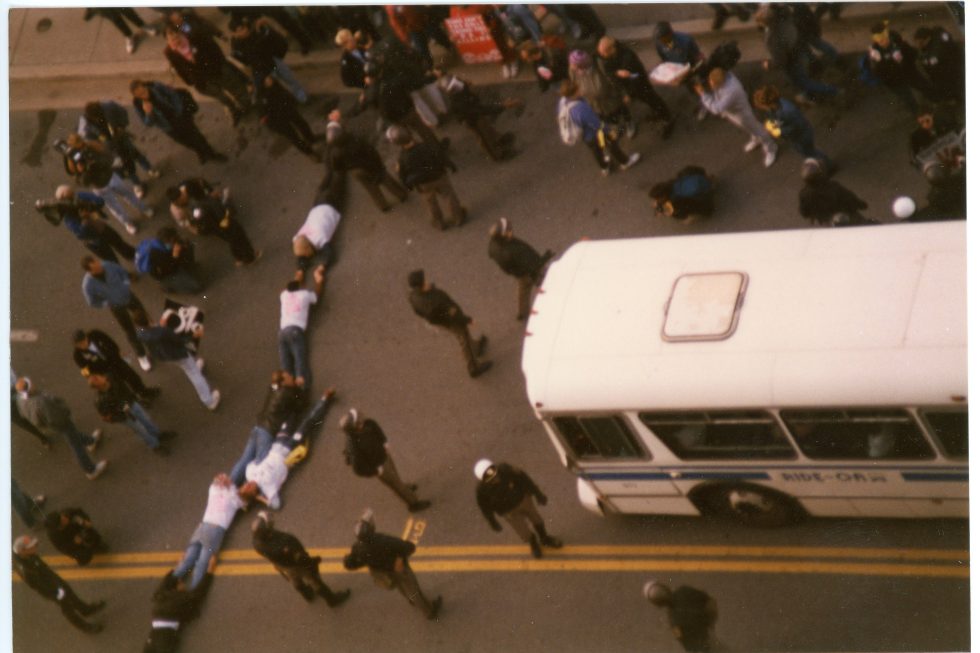
The non-violent protest on October 11, 1988 resulted in 176 arrests, with county Ride-On buses employed to transport handcuffed protesters away from the FDA building. In this photo, demonstrators lie sprawled in the path of a bus on Fishers Lane. (Montgomery History, photo by Judy Kopp)
1990
- County Council expanded
County Council expanded
1990
Two seats were added for a total of nine elected councilmembers. The Twelfth Council was comprised of Isiah Leggett, Bruce Adams, Marilyn J. Praisner, William E. Hanna, Jr., Derick Berlage, Nancy Dacek, Gail Ewing, Betty Ann Krahnke, and Michael L. Subin
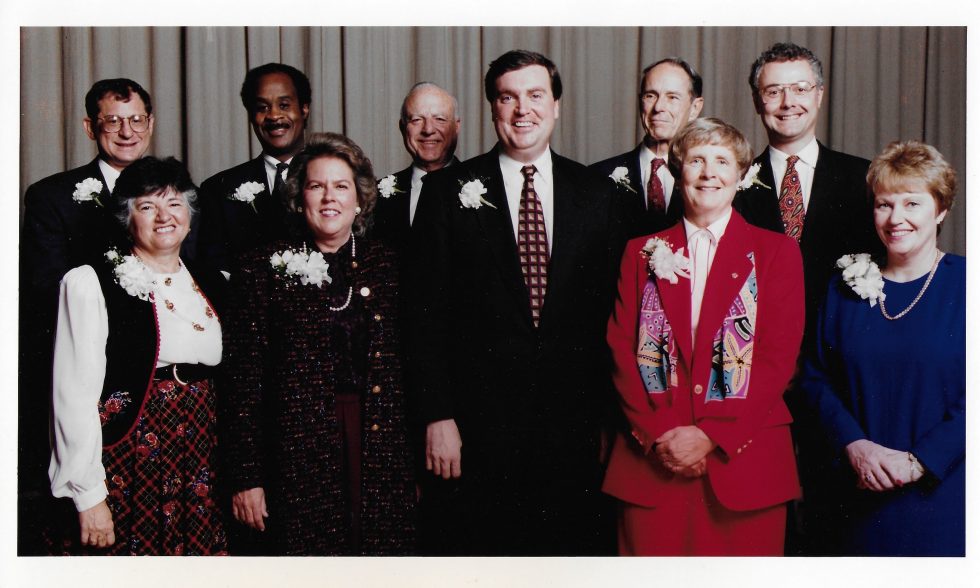
Montgomery County’s expanded 12th Council, 1990, along with County Executive Doug Duncan (center)
- The World Wide Web goes public
1993
- Montgomery County’s first Pride event held
Montgomery County’s first Pride event held
1993
Montgomery County’s first Pride celebration was held June 26 at Parklawn Park in Rockville and attended by more than 200 people. After taking place in several different venues for its first few years, Montgomery Pride was moved to Lake Needwood Park in 1996, and to the campus of Montgomery College in 1999.
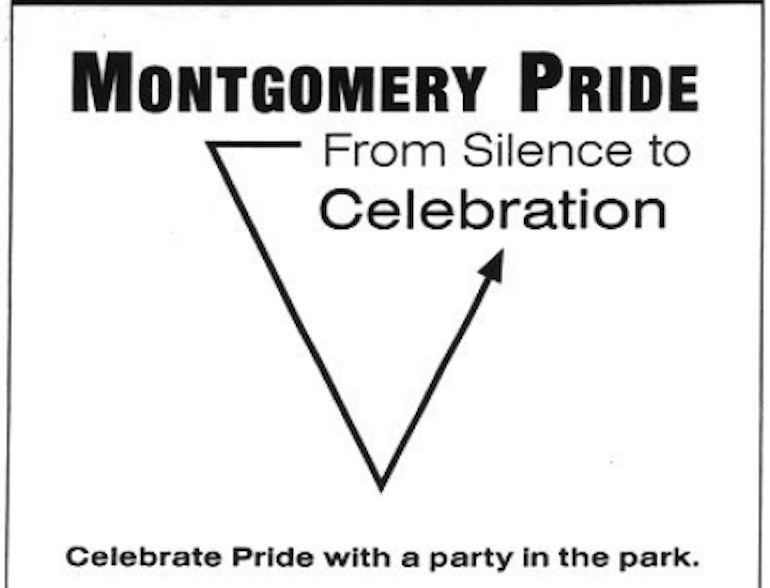
Advertisement for the third annual Montgomery Pride event in 1995
1996
- Congress passes the Defense of Marriage Act
1997
- Takoma Park Unification
Takoma Park Unification
1997
The City of Takoma Park, formerly split by the Montgomery/Prince George’s county line, is incorporated into Montgomery County. Takoma Park, Maryland was first developed in 1883. An early resident was Benjamin Y. Morrison, a horticulturalist and the first director of the National Arboretum.
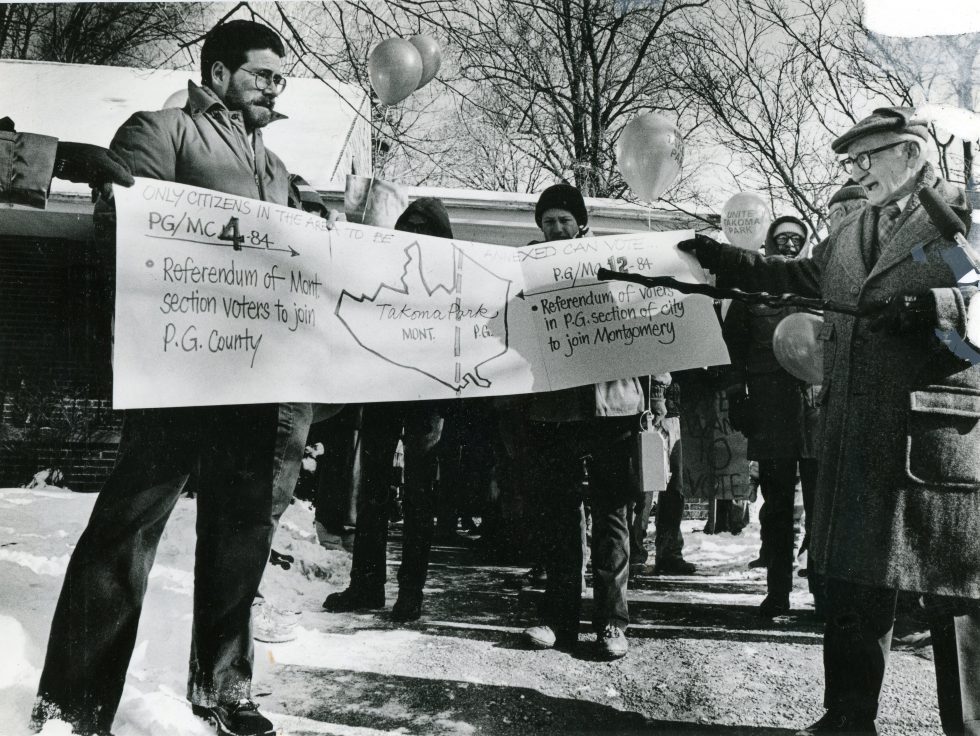
Civil action in Takoma Park during the debate on redrawing county lines
1998
- Silver Spring Urban Renewal Plan finalized
Silver Spring Urban Renewal Plan finalized
1998
In the 1990s the Montgomery County Council approved an urban renewal plan for downtown Silver Spring following years of decline. Development of the Silver Triangle Urban Renewal Area included the City Place indoor shopping center and an “American Dream” mall modeled after Minnesota’s Mall of America. The plan was opposed by civic groups and historic preservation organizations and was revised to include maintaining Silver Spring’s racially diverse neighborhoods with African American, Ethiopian, Caribbean and other cultural businesses. The new plan, signed in 1998 by County Executive Doug Duncan, included maintaining the Art Deco facade of the Silver Spring Shopping Center and restoring the historic Silver Theater, which opened as the AFI Silver Theatre and Cultural Center in 2003. Also in 2003, Discovery Corporation built its world headquarters in the downtown Silver Spring, bringing much-needed job opportunities to the area.
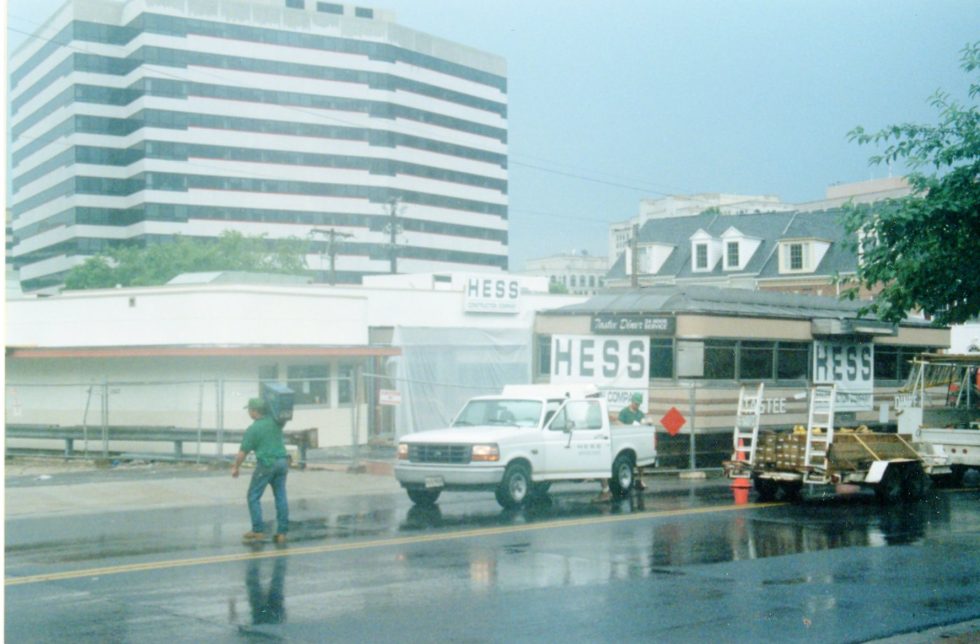
The iconic Tastee Diner opened in 1946 at the corner of Georgia and Wayne Avenues. It was constructed in Elizabeth, New Jersey and shipped to Silver Spring in two sections. As part of Silver Spring’s urban renewal project it was moved to Cameron Street in 2000 to make way for the Discovery Building. It was one of only a dozen pre-1960 diners known to have existed in Maryland when it closed in 2023.
- County emblem adopted
County emblem adopted
1998
The new emblem incorporated the coat of arms, which was approved in 1976.
2000
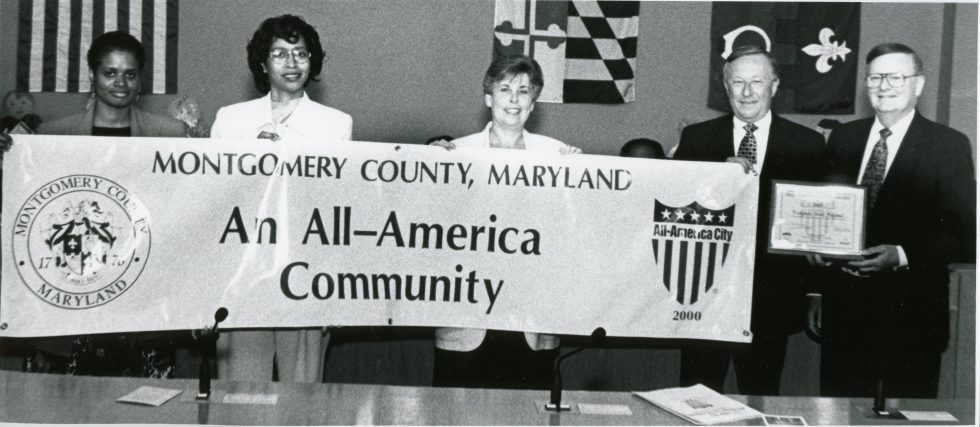
- Montgomery County declared “An All-America Community”
Montgomery County declared “An All-America Community”
2000
The All-America Community award, given by the National Civic League, recognizes communities that leverage civic engagement, collaboration, inclusiveness and innovation to successfully address local issues.
2001
- Gilchrist Immigrant Resource Center opened in Wheaton
Gilchrist Immigrant Resource Center opened in Wheaton
2001
The Charles W. Gilchrist Center for Cultural Diversity was established to serve the growing immigrant population, offering free classes, referrals to support services, citizenship application assistance, and more.

- September 11th attacks
- Eleven county residents killed on 9/11
Eleven county residents killed on 9/11
2001
Eleven Montgomery County residents were killed when a hijacked plane crashed into the Pentagon during the September 11 terrorist attacks. In 2003 the City of Rockville unveiled the “Memorial to the Events of 9/11/01,” featuring eleven benches bearing inscriptions reflecting the character of each person.
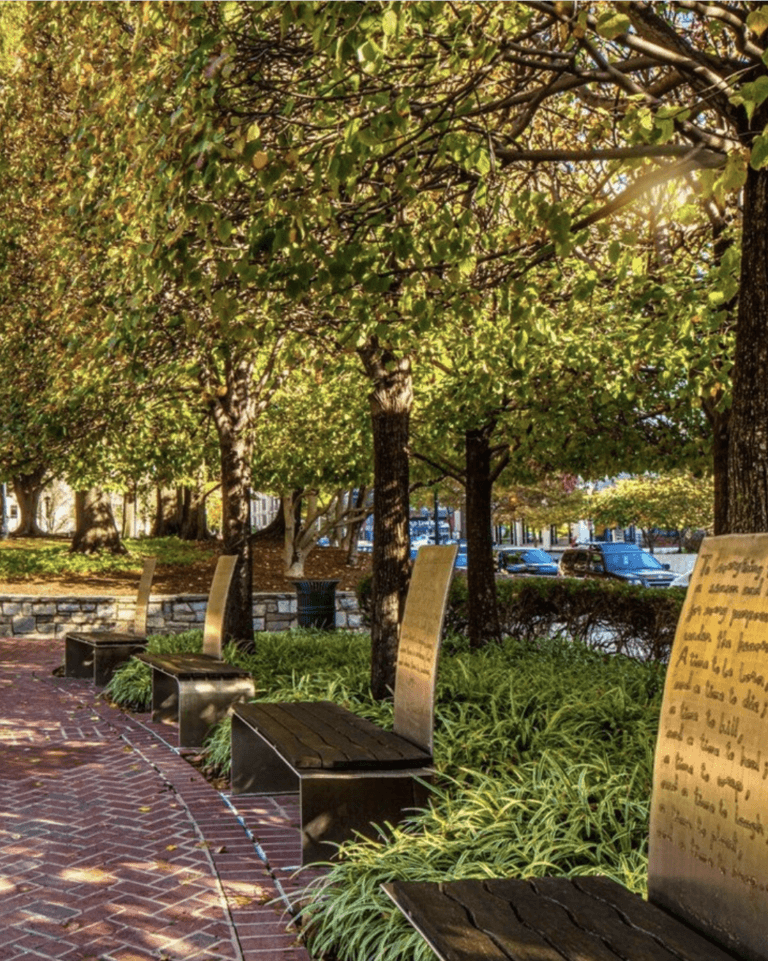
Montgomery County’s Memorial to the Events of 9/11/2001, located in Rockville at the corner of Jefferson St. and Maryland Ave.
2002
- Sniper attacks kill six county residents
Sniper attacks kill six county residents
2002
In the fall of 2002, a pair of snipers terrorized the Washington area by shooting and killing innocent citizens apparently at random. The first victim was killed on October 2, 2002, followed by nine more individuals murdered over the next several weeks until the perpetrators were captured. Six of the victims were residents of Montgomery County. In 2004 a Reflection Terrace was dedicated at Brookside Gardens as a memorial to the victims.
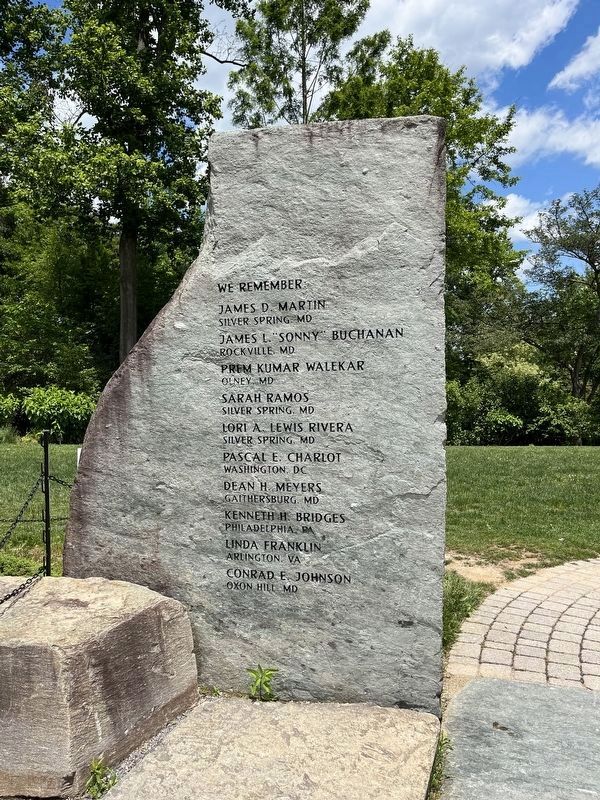
DC Area Sniper Victims Memorial, Brookside Gardens, Wheaton
2004
- Annual Heritage Days started
Annual Heritage Days started
2004
The county-wide celebration was created by Heritage Tourism Alliance of Montgomery County (Heritage Montgomery) to raise the profile of the county’s cultural and historical resources.
2006
- Isiah “Ike” Leggett elected the first Black County Executive
Isiah “Ike” Leggett elected the first Black County Executive
2006
Isiah (Ike) Leggett served three consecutive terms as Montgomery County Executive (2006-2018). Prior to that, Leggett was the first African American to be elected to the County Council, serving four terms as an At-Large Member (1986 – 2002). He also served as the Council’s President three times (1991, 1998, 1999) and as its Vice-President three times (1990, 1997 and 2002). As a Council Member he also chaired the Council’s Transportation and Environment Committee and served on the Education Committee. He has received more than 200 honors and awards from a variety of organizations, and the County Executive Building was christened in his honor in 2025.
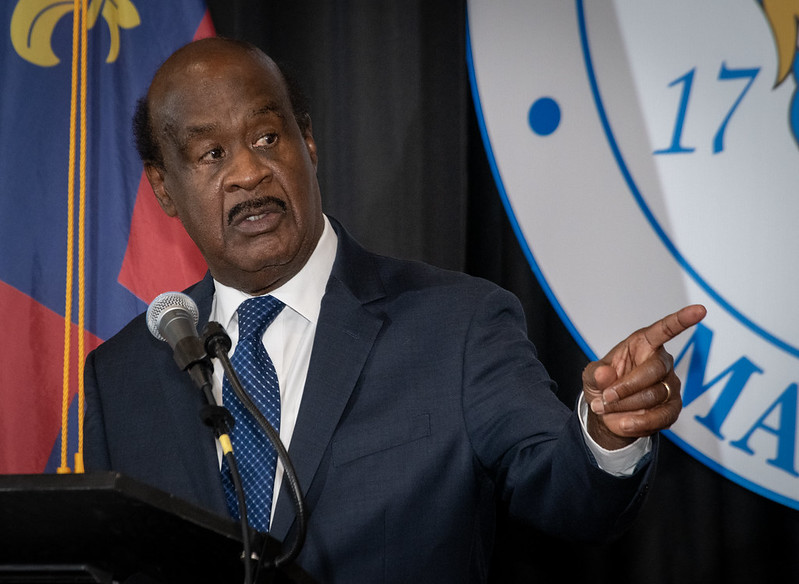
Ike Leggett, speaking at the 2025 ceremony naming the County Executive Building in his honor
- Valerie Ervin first Black woman to win a County Council election
Valerie Ervin first Black woman to win a County Council election
2006
Valerie Ervin was the first Black woman to win a seat on the council in 2006. She was elected as president of the council starting in 2011, making her the first Black woman to hold that position as well. Ervin had started her career as a union organizer, she was then elected to the Montgomery County Board of Education in 2004. She resigned from the council in 2014 after nearly a decade of elected public service.
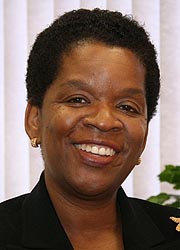
Valerie Ervin, c. 2006 (Maryland State Archives)
2008
- Barack Obama elected first African American President
2009
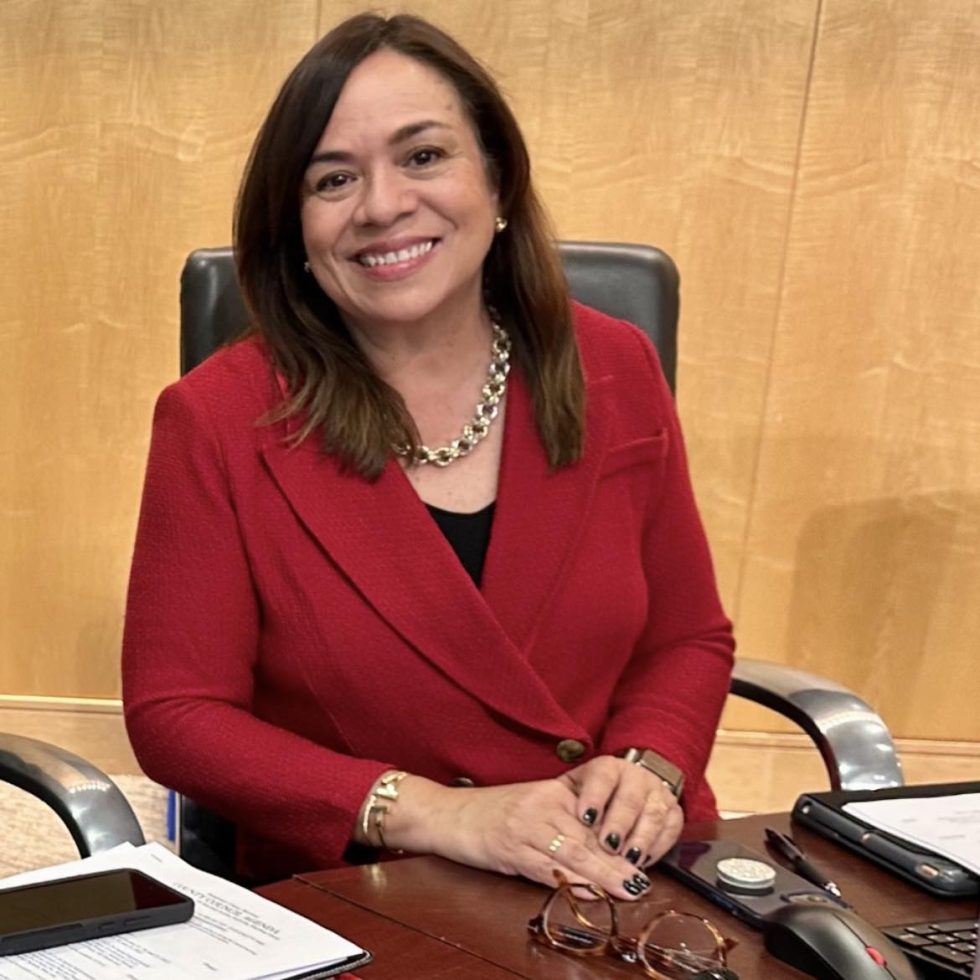
- Nancy Navarro the first Latina elected to County Council
Nancy Navarro the first Latina elected to County Council
2009
Nancy Navarro, born in Caracas Venezuela, was the first Latina county council member elected in Montgomery County, Maryland. She served on the county council from 2009 to 2022, representing District 4, the largest and most diverse district in the county, and also served two terms as the council president in 2012 and 2018.
2011
- Inter-County Connector MD 200 opened
Inter-County Connector MD 200 opened
2011
The first segment of the Intercounty Connector (ICC) opened in 2011. Originally proposed in the 1950s by the National Capital Planning Commission as a northern highway around the Capital Beltway, the plan was eventually modified to be a route to connect Route 1 in the east to Route 270 in the west.

2012
- Recognition of Piscataway Native American presence
Recognition of Piscataway Native American presence
2012
The State of Maryland officially recognized the Piscataway Indian Nation and the Piscataway Conoy Tribe, the indigenous people with which Montgomery County’s land is most closely associated. Piscataway means “place where the waters blend.”
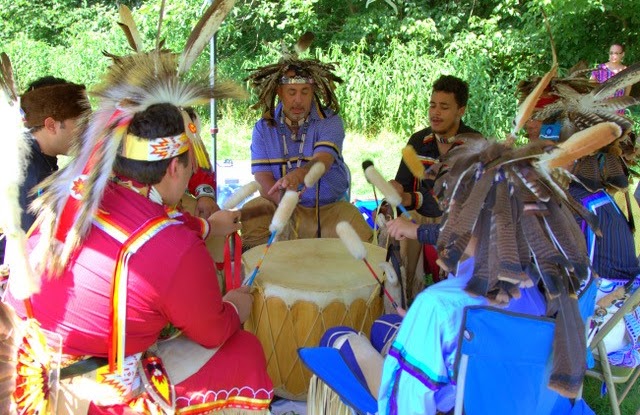
Piscataway drummers at the Native American Trail dedication by Sugarloaf Regional Trails in 2016 (Photo by Lynne Bulhack)
2015
- U.S. Supreme Court rules that bans of marriage equality at the state level are unconstitutional
2017
- Confederate statue in Rockville relocated
Confederate statue in Rockville relocated
2017
A monument to Montgomery County’s Confederate soldiers who died during the Civil War, erected in 1913 by the United Daughters of the Confederacy, was removed from display on the grounds of the Red Brick Courthouse and reinstalled at White’s Ferry in 2017 at the behest of County Executive Isiah Leggett and others in county government. During the Black Lives Matter protests in 2020, the statue was toppled by protesters and removed to storage by the owners of White’s Ferry, who also removed a sign on the ferry bearing the name of Confederate General Jubal A. Early.
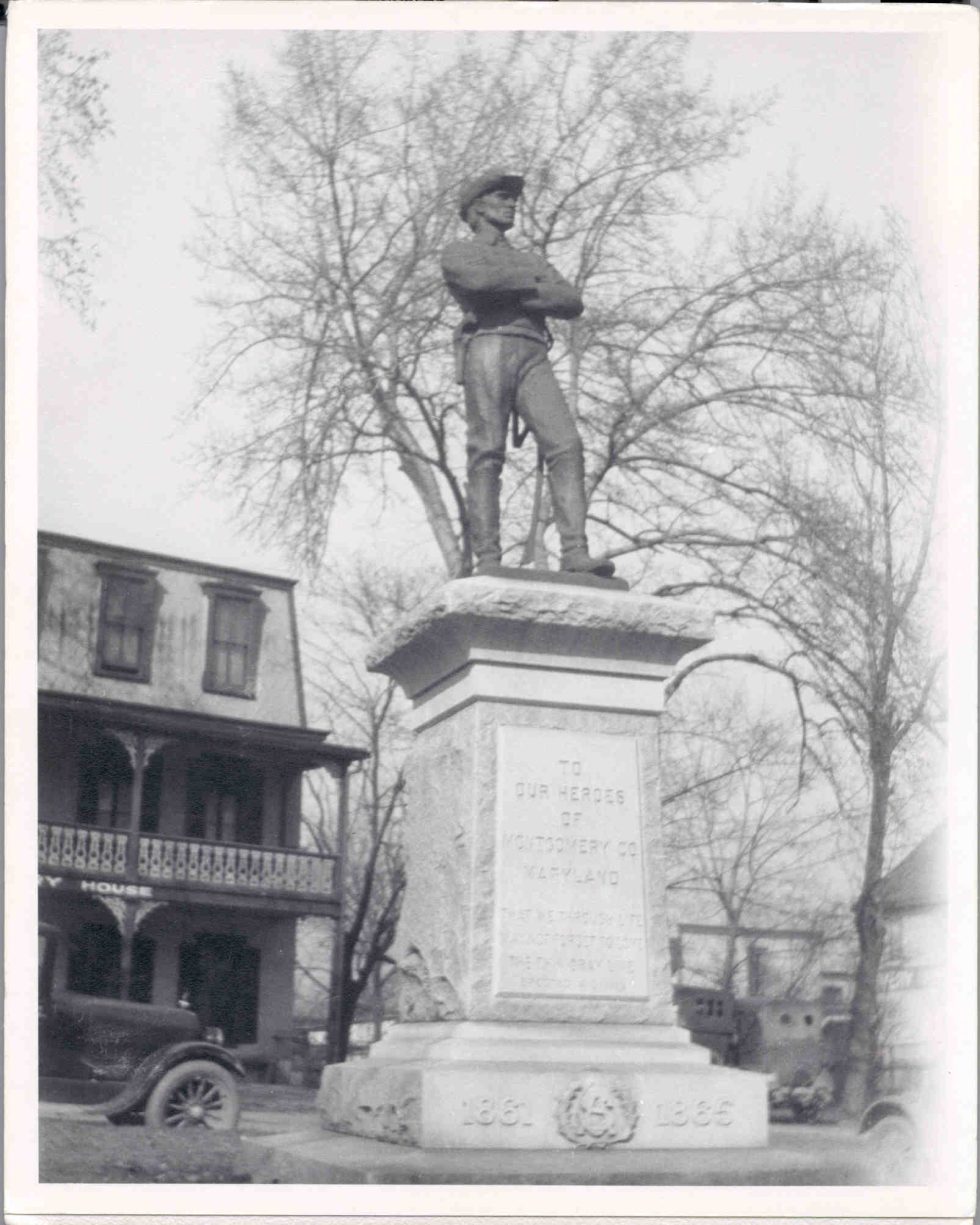
The Confederate statue pictured in its original location in front of the Montgomery House Hotel c. 1915, only a few years after it was first erected
- Groundbreaking for Maryland Purple Line
Groundbreaking for Maryland Purple Line
2017
The project was first approved by the Montgomery County planning board in 1990 as a 16-mile, 21-station light rail system connecting Montgomery and Prince George’s counties. It was designed to alleviate traffic on the Capital Beltway by offering an alternative route for commuters in the close-in DC suburbs. Originally expected to be completed in 2022, it faced delays due to cost overruns, construction issues and lawsuits by property owners and environmental groups. As of 2025 it was expected to be completed in 2027.
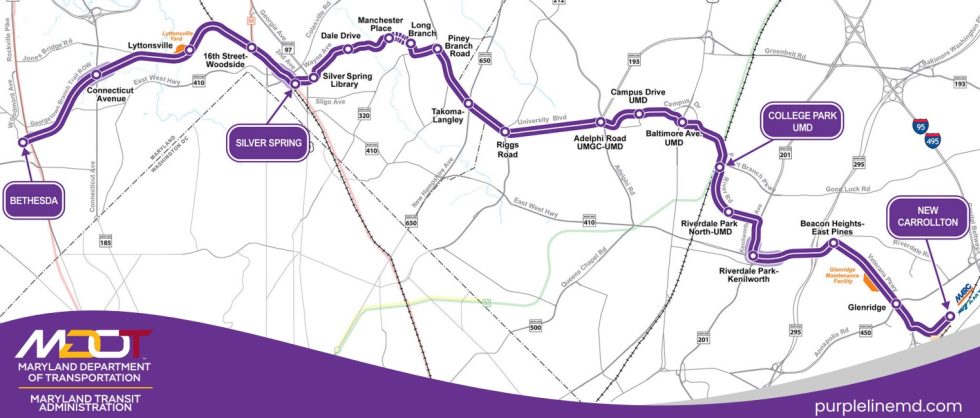
The map shows the final plan for 21 stations connecting New Carrollton in Prince George’s County to Bethesda in Montgomery County
2019
- First Pride flag flown on county property
First Pride flag flown on county property
2019
In June, 2019 a Pride flag was raised for the first time on county property in Rockville’s Veterans Memorial Plaza in front of the County Executive Office Building in celebration of Pride month.
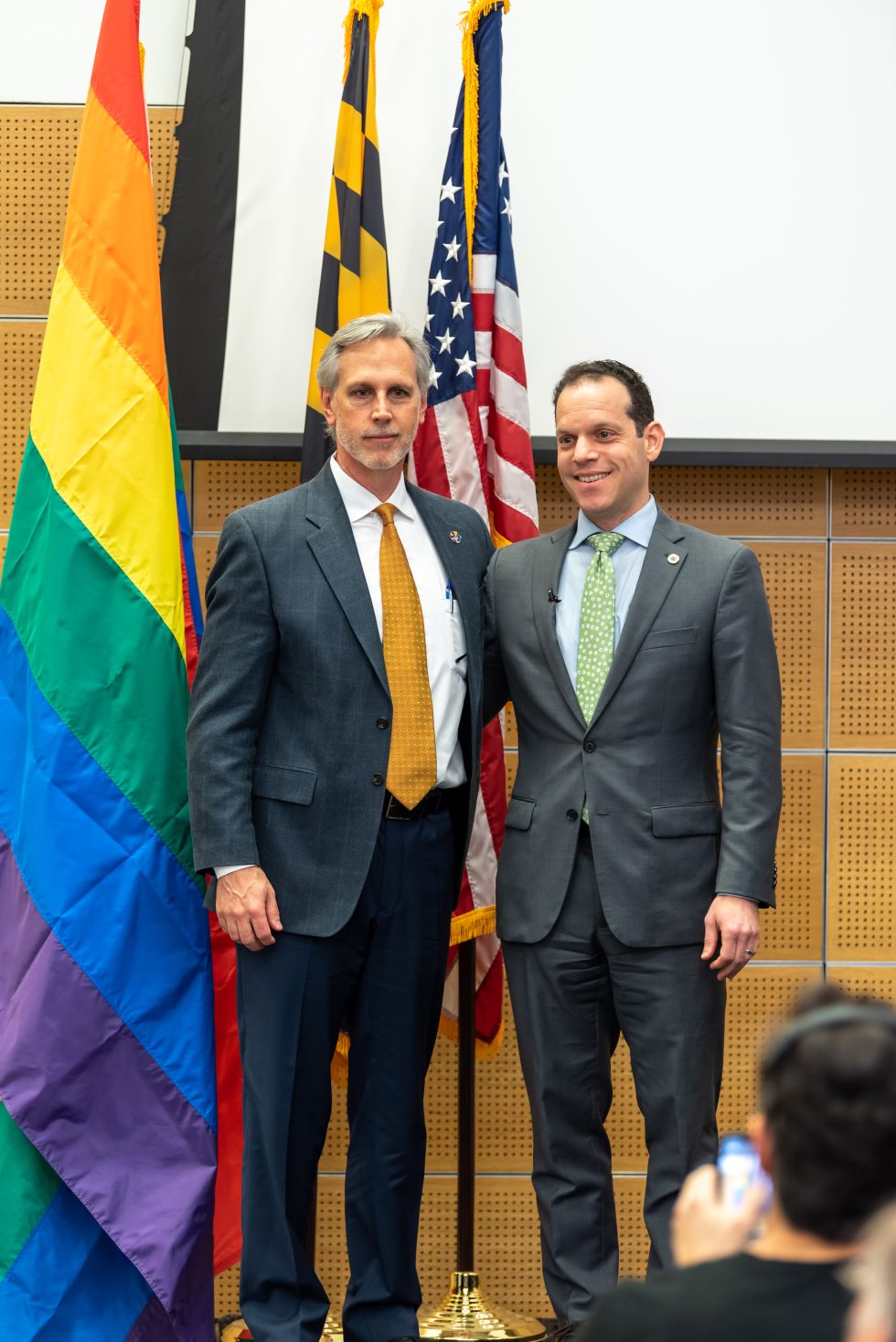
Councilmember Evan Glass donated the first Pride flag flown from the County Executive building to Montgomery History’s collections in 2020. Pictured with Montgomery History’s Executive Director Matt Logan at the January 2020 History Conference
2020
- Montgomery County’s population exceeds one million
Montgomery County’s population exceeds one million
2020
According to recent census data, 1/3 of Montgomery County’s residents were born in another country and nearly 40% speak another language besides English. As of 2022, four of Montgomery County’s cities made the top-ten list of most diverse places in the United States: Germantown, Gaithersburg, Silver Spring, and Rockville.
- COVID-19 Pandemic Begins in March
- COVID-19 cause of death for thousands of Montgomery County residents
COVID-19 cause of death for thousands of Montgomery County residents
2020
Of the 18,466 confirmed deaths from COVID-19 in the State of Maryland, 2,710 were in Montgomery County.

Signs outside a Trader Joe’s in Montgomery County during the height of the pandemic, encouraging mask use and social distancing (Photo by Michele Egan)
2022
- “Thrive Montgomery 2050” Master Plan adopted
“Thrive Montgomery 2050” Master Plan adopted
2022
This Master Plan for Montgomery County was approved and adopted in October 2022. The first General Plan was adopted in 1964 with amendments in 1969 and 1993. Thrive Montgomery 2050 revised earlier county development in light of recent shifts for land use, transportation, and public infrastructure.
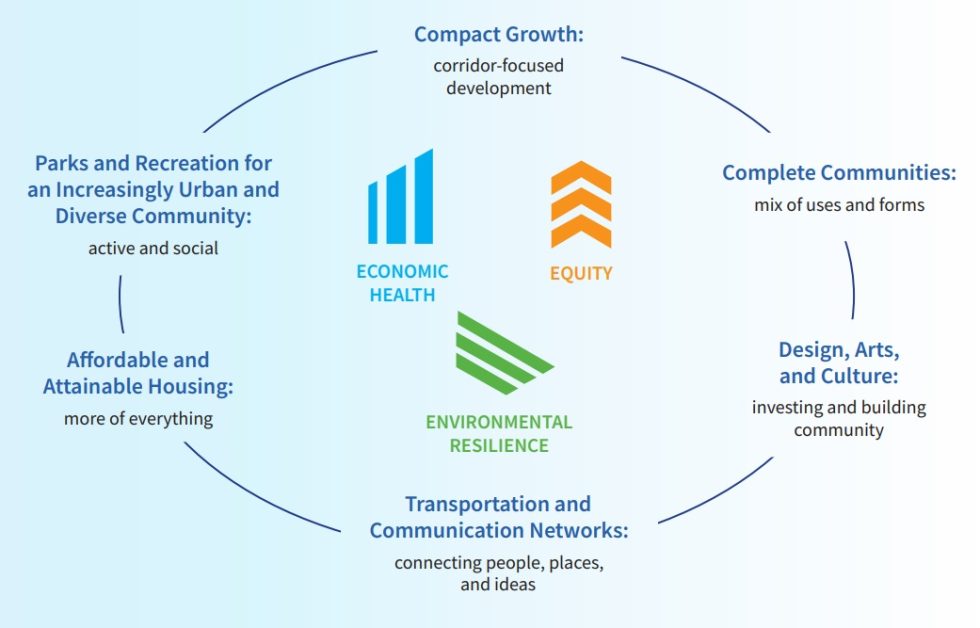
- County Council expanded
County Council expanded
2022
The council had been expanded in 1990 from the original seven-member council to nine members. In 2022 it expanded again to eleven members, reflecting redistricting and population growth. This was also the first elected council in which the majority of the members were women.
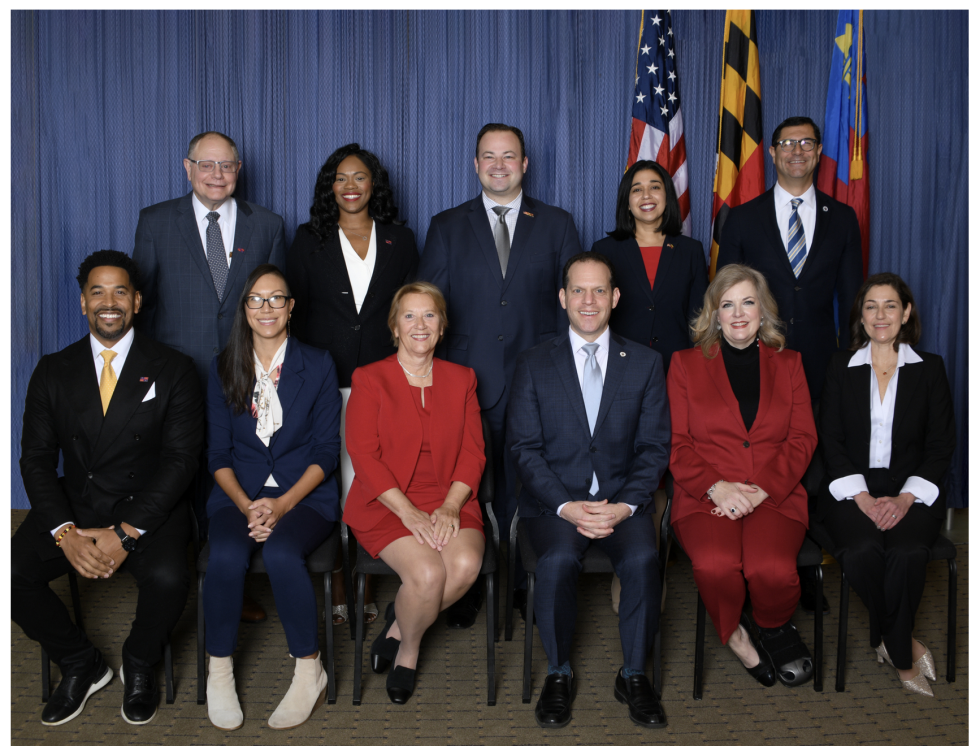
The newly expanded elected council, December 2022 (from the Montgomery County Council website)
Back row, left to right: Sidney Katz, Laurie-Anne Sayles, Andrew Friedson, Natali Fani-González and Gabe Albornoz.
Front row, left to right: Will Jawando, Councilmember Kristin Mink, Marilyn Balcombe, Evan Glass, Dawn Luedtke and Kate Stewart.
- Kristin Mink first Asian American elected to County Council
Kristin Mink first Asian American elected to County Council
2022
Kristin Mink was elected to represent District 5 on the Montgomery County Council in 2022. A first generation Chinese-American born and raised in Montgomery County, she was the first Asian American to serve on the council. Prior to her election, Kristin worked as a teacher in Montgomery County Public Schools and most recently as the Senior Legislative Organizer at the Center for Popular Democracy, a nationwide nonprofit fighting for justice at the local, state, and federal levels.
Kristin Mink, 2022 (Maryland State Archives)
2025
- Scotland AME Zion Church reopened after renovations
Scotland AME Zion Church reopened after renovations
2025
The African Methodist Episcopal Church that was established in 1905 in the historically Black community of Scotland dedicated its church building in 1924. The building fell into disrepair over many decades as a result of poorly planned drainage systems caused by the surrounding housing developments and the rerouting of Seven Locks Road. Extensive renovations on the church were accomplished with support from local and state leaders through the 2nd Century Project.
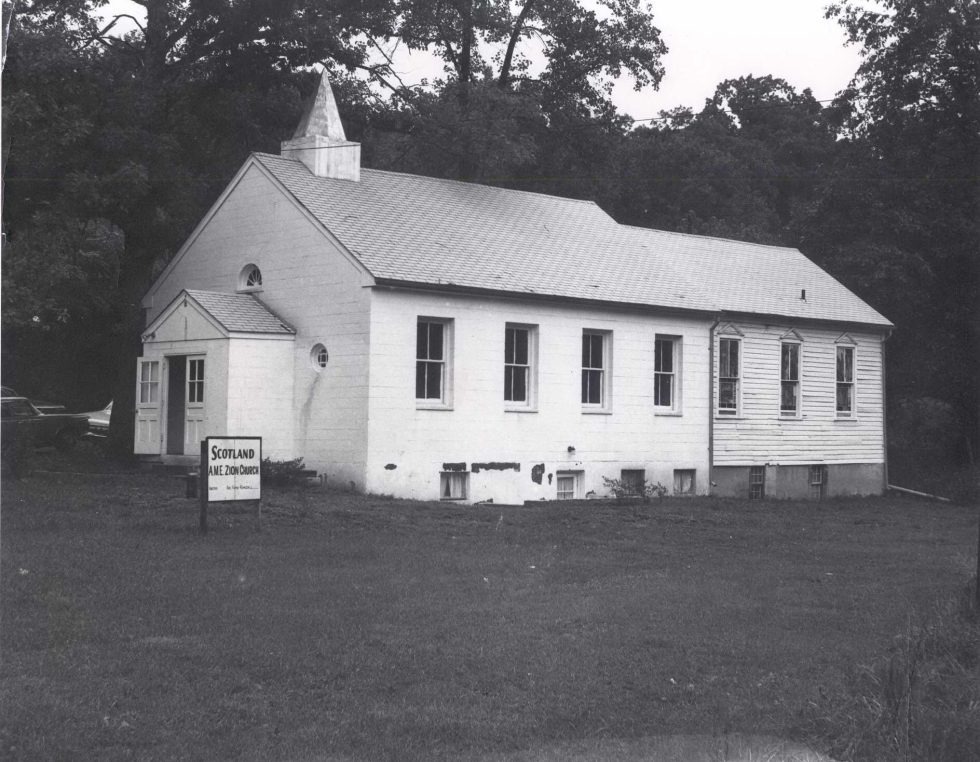
The original Scotland AME Zion Church building, photographed by Alan Siegel in 1967
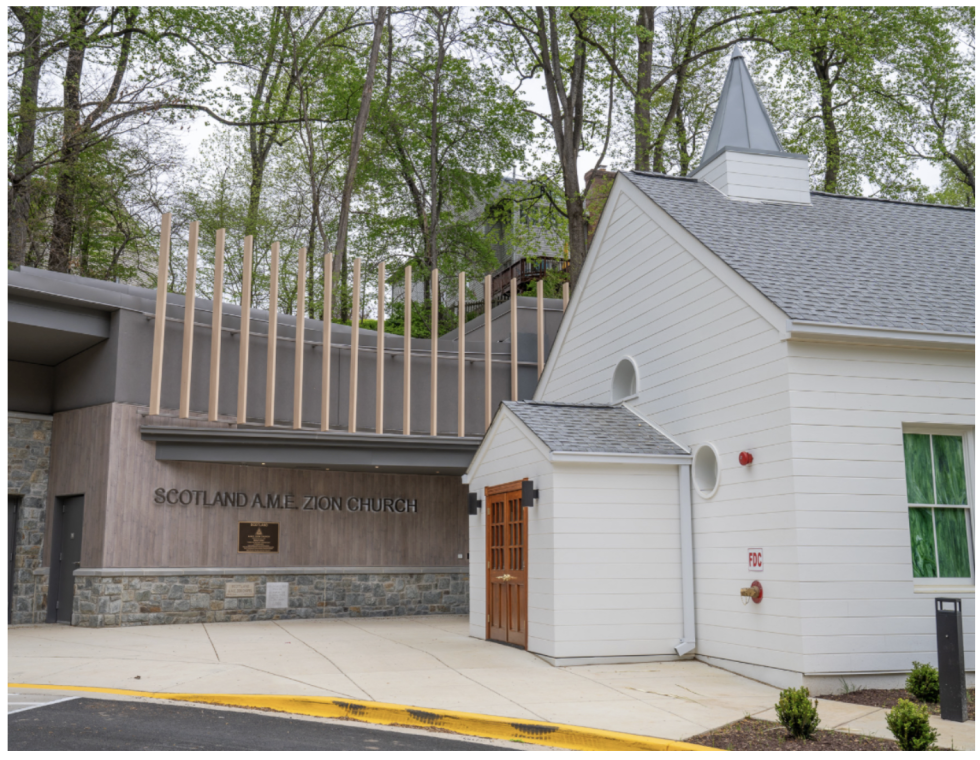
The restored and revitalized Scotland AME Zion Church, opened in 2025 (photo from The Moco Show)